Coimbra is a small city with one very large attraction and a long tail of things that are either free or genuinely cheap. That shape should determine how you plan it. Buy the university ticket, book the library slot, and then spend almost nothing for the rest of the day.
What follows is ordered by what we would actually do, not by what sells. It includes the two museums that are shut, the paid attraction that rates below four out of five on the platform that sells it, and the free botanical garden that is bigger than everything ticketed in the city put together.
The city is walkable and it is steep. Everything on this page sits within about twenty-five minutes of everything else on foot, and the good half is uphill. That is the other planning constraint, and we have written it up separately because it decides the order of the day.
The university, and the one booking that matters
Start here, and start with the ticket rather than the building. There is no Joanina Library ticket. The library is sold only inside combined university programmes: 16.50 EUR for the self-guided Joanina + University + Science Museum, stated average three hours, or 25.00 EUR for the 1h30 guided Palace of Schools tour at 11:00 and 15:00.
Entry to the Joanina is fifty people every twenty minutes at a fixed time printed on the ticket. That time cannot be moved, there are no refunds, and a visit outside it is refused. Everything else on the ticket is flexible across two days. Book the slot first and hang the trip off it.
What you get for it is not really a library visit. It is a vault built to preserve books — walls 2.11 metres thick, oak shelving chosen for an insect-repelling odour, two colonies of bats eating what gets in — that happens to be the finest Baroque interior in Portugal. You reach it by walking through the Academic Prison, the oldest preserved prison in the country, because that is the entrance. And you may not photograph the Noble Floor.
The same ticket opens the Royal Palace, the Sala dos Capelos with its 172 ceiling panels and its deliberately missing Spanish kings, St Michael’s Chapel, the Pombaline Chemistry Laboratory and the Museu Académico — which covers the black capes and the student rituals and which almost nobody who pays for it bothers to enter.
If the Joanina slots have gone for your date, the fallback is the 12.50 EUR University + Science Museum programme, stated at 2h30, which covers every space on the 16.50 EUR ticket except the library itself. It is not a consolation prize. It is also the ticket to buy if you are travelling with children, for whom twenty silent minutes in a camera-free room is not a treat.
The University Tower is closed, with no reason and no date published, so do not build a day around the view from it. The full ticket guide sets out all six programmes, including the 16.00 EUR one that costs nearly the same and excludes the Palace of Schools entirely.
The free half of the city
Coimbra gives away more than it sells, and this is the section most guides compress into a sentence.
The Botanical Garden is free and it is thirteen hectares. Created on the Marquis of Pombal’s initiative in 1772, part of the same 2013 UNESCO inscription as the university, running downhill from the Alta toward the river. It opens 09:00–20:00 from 1 April to 30 September and 09:00–17:30 from 1 October to 31 March. The only thing you pay for is an optional 10.00 EUR guided tour. It is the largest free attraction in the city by an enormous margin and it is the right way to come down off the hill after a morning of interiors.
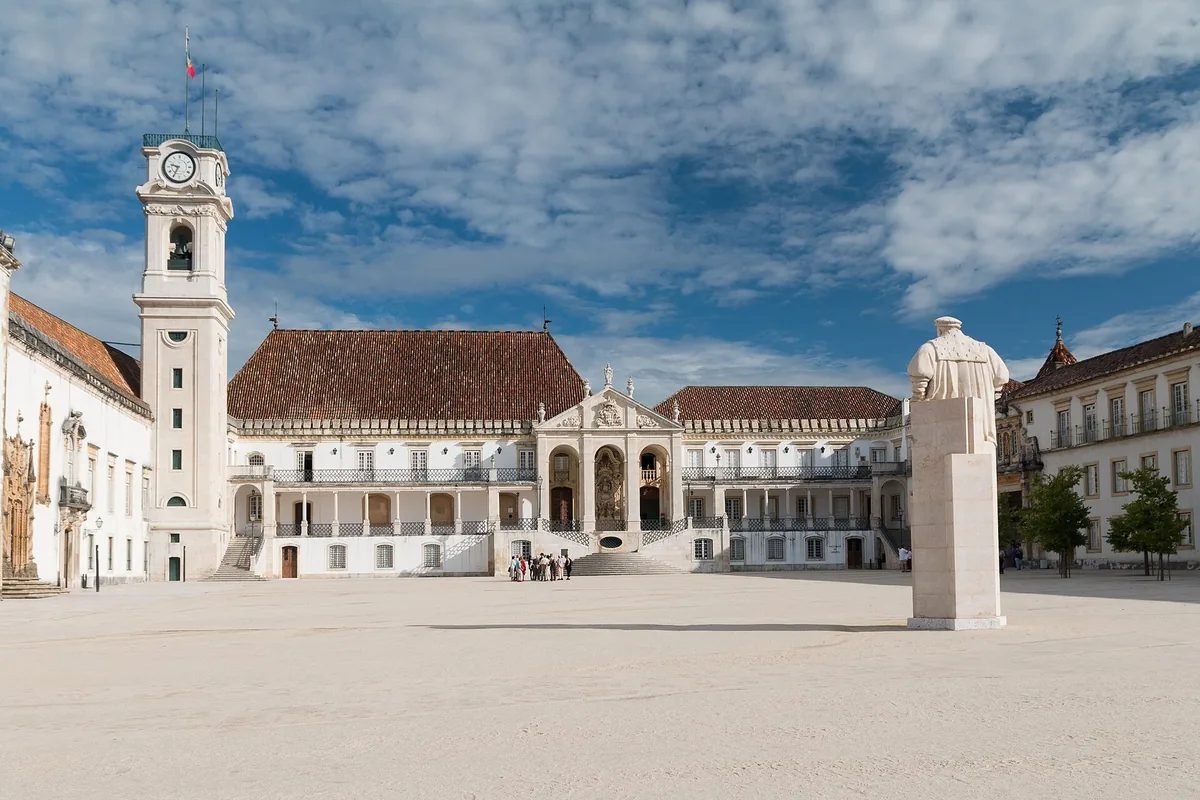
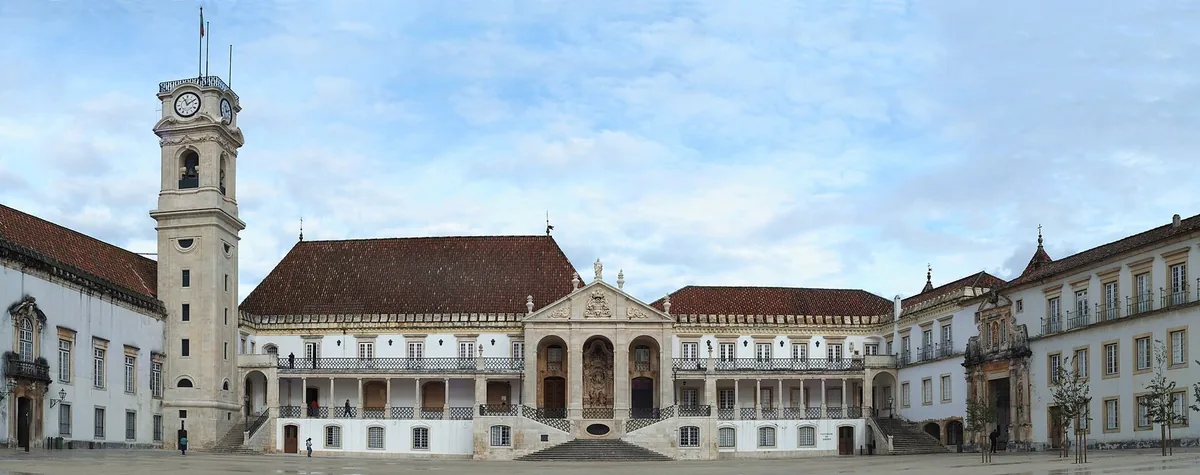
The Paço das Escolas courtyard is free, open, and photographable — the library facade, the Via Latina colonnade and the closed clock tower all within a few metres of each other. If you only want the photograph, you do not need a ticket.
The Arco de Almedina is a public street. Coimbra’s surviving town gate, permanently walkable, free at any hour. The museum in the tower above it is not free and is not open much — Tuesday to Saturday, 10:00–13:00 and 14:00–18:00, closed Sundays and Mondays, which is precisely when day-trippers have time.
The nave of Santa Cruz is free, and it contains the tombs of Portugal’s first two kings. The 5.00 EUR ticket buys the Claustro do Silêncio, the chapter house, the sacristy paintings, the museum of sacred art and the high choir stalls — the only place you get the view down the length of the church. Most visitors look at the tombs and leave without it.
The Penedo da Saudade is an unenclosed clifftop garden east of the centre where generations of students have left verses on the rock. No hours are published anywhere official, and we are not copying the “open 24 hours” line from a mapping app, because that is user-generated rather than sourced.
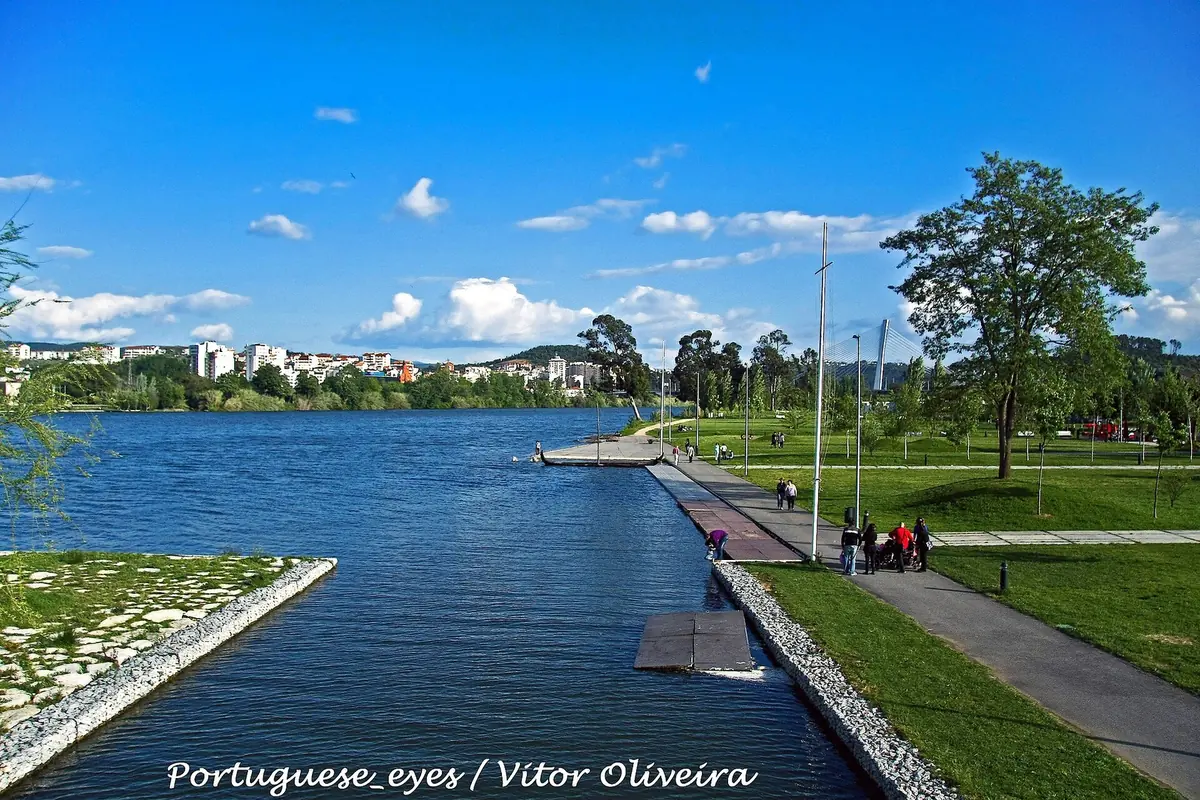
And the riverside, both banks and the Pedro e Inês footbridge, which is flat, free, and the only angle from which the shape of this city makes visual sense.
Get on the river
Coimbra is a hill town with a river at the bottom and most visitors never touch the water. Two things change that, and one of them is the best-rated activity in the city.
Kayaking on the Mondego is a four-to-five-hour downriver trip and it carries the strongest rating of any Coimbra product with a meaningful sample — 4.7 across 373 reviews on GetYourGuide when we checked on 15 September 2026. It is also the only thing on this page that is not a monument, which is exactly its value on a second day. Prices and review counts on that platform moved between page loads on the same day we read them, so we are not printing a figure.
The Mondego river cruise is fifty minutes on the Basófias, past the university hill, the Old Cathedral and Santa Clara-a-Velha. It rates 4.2 to 4.4 across a small sample of 32 to 43 reviews — middling rather than settled, and worth reading as “pleasant, cheap, not transformative”. It is the easiest hour in Coimbra and the best value if the hill has beaten you.
The riverside park along both banks is the flat half of the city and it is where Coimbra actually relaxes. No official page publishes hours for it — the municipal parks pages now redirect to the tourism homepage, so the source that used to carry them is gone — but it is an unenclosed public park.
Across the water, the Santa Clara side holds the gardens of Quinta das Lágrimas, where Inês de Castro was murdered in 1355. Entry 3.50 EUR, or 2.00 EUR reduced for under-15s and over-65s, Tuesday to Sunday, closed Mondays, 10:00–19:00 in summer and 10:00–17:00 in winter. A correction worth carrying with you: the Fonte das Lágrimas is not a carved stone fountain. The foundation’s own text says it comes straight out of the rock, and the channel is lined with red algae that local tradition insists is Inês’s blood.
Music, and what to do after six
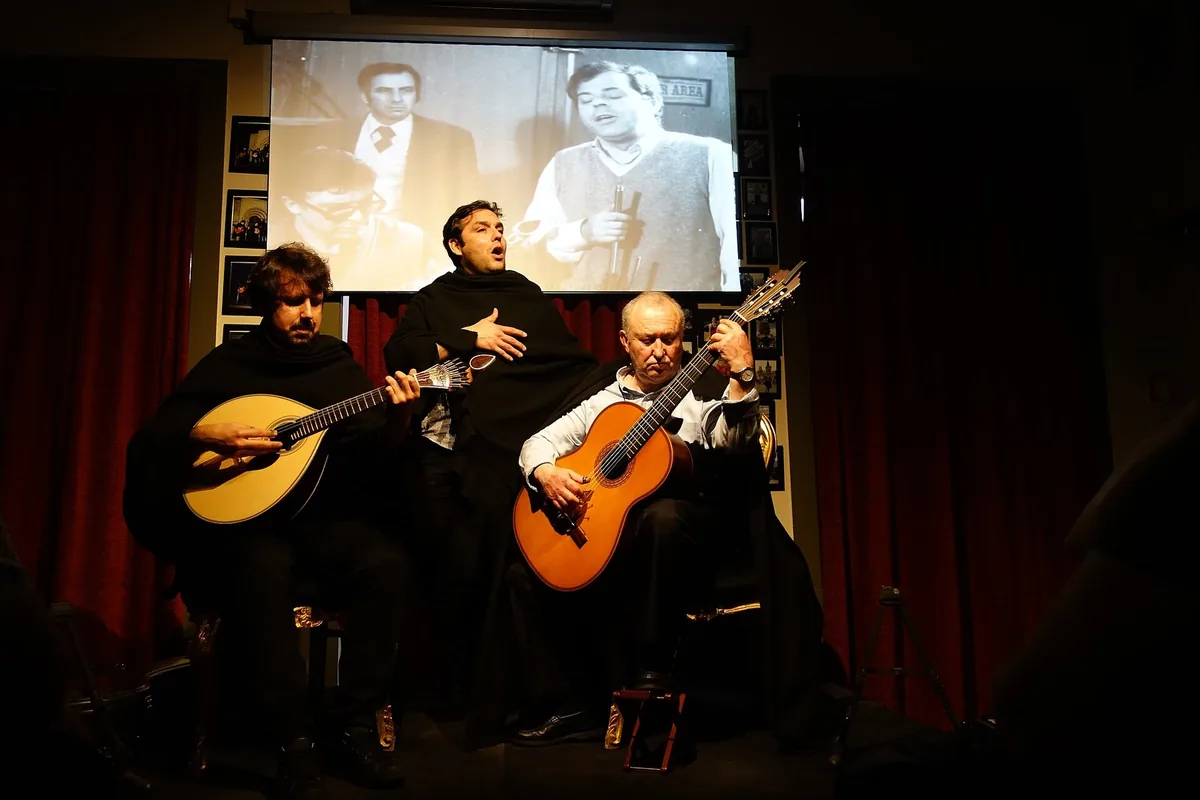
Coimbra fado is not Lisbon fado in a different city. It is a serenade tradition out of the university, sung by men in the black academic cape, on a teardrop guitar that is tuned one tone lower than the Lisbon instrument. That tuning is why it sounds darker, and it is the single most useful fact anyone can give you about this music.
Hear it free first. Café Santa Cruz, inside a church deconsecrated in 1834 and converted into a café in 1923, lists Coimbra fado at 18:00 and 22:00 daily, with no 22:00 session on Sundays, admission free. Buy a coffee and decide whether you want the ticketed version.
Then pay if you do. Fado ao Centro, on the stepped lane below the cathedral, runs a roughly 50-minute show at 18:00 every day of the year: 16.00 EUR adult, 9.00 EUR for ages 7–17, free under 6, 45.00 EUR family, with a glass of Port included and first-come seating. University of Coimbra bachelor’s and master’s students get in free, capped at two a day. À Capella performs in a chapel of 1364, listed daily at 21:30.
Book ahead. The regional tourism body states plainly that it is normally difficult to get a place on the day.
After that, honestly, the city thins out. Passarelle is the one nightclub any guidebook we trust documents, reported to get going after 22:30 and run to 03:00 or to dawn at weekends. Frommer’s recommends bar-hopping around Largo da Sé Velha, where the bars are packed with students, professors and locals, and pointedly declines to name individual venues. We could not find a reputable named source that does either, so we are not going to pretend to an insider list we do not have.
Our fado guide covers the venues, the prices and the two nights a year when the music takes over a cathedral square instead.
Out of town, and the timetables that decide it
Coimbra is a good base, and the day trips are genuinely better than a second day in the city. Every one of them turns on a timetable rather than on a decision.
Conímbriga is the best-preserved Roman town in Portugal: mosaics in situ, and a house whose water gardens still run. 10.00 EUR, open daily 10:00–18:00 with the ticket office closing at 17:15, and closed on 1 January, Easter Sunday, 1 May, 24 July and 24–25 December. The catch is the bus: SIT line 209 runs three services each way on weekdays and only two back at weekends. Take the 09:00 out and the 17:55 back and the site is yours for the morning. Miss the 17:55 and you are paying for a taxi across open country.
Buçaco is a walled Carmelite forest, and it charges the vehicle rather than the head. On foot and by bicycle it is free; a car is 7 EUR regardless of how many people are inside it. Almost every guide reports this as a per-person fee. It is not. What we could not verify at all is how to get there from Coimbra by public transport — the foundation publishes nothing.
Lousã became a public-transport day trip again this month. The railway closed in 2010; the Metrobus opened on its alignment in December 2025, lost a section to a landslide in January 2026 and resumed it on 1 September 2026. Since 10 September the network reaches central Coimbra. Timetables and fares are not published anywhere we could reach, and the Metrobus reaches Lousã town, not the schist villages up the mountain.
What none of the five publishes is a fare. SIT lists line timetables and no prices; Metro Mondego’s own site returned nothing when we fetched it; and no official source gives a road distance from Coimbra to Conímbriga, Buçaco, Aveiro or Figueira. Those are five gaps we would rather show you than fill, and they are exactly the numbers competing guides invent most freely.
Figueira da Foz is the Atlantic, on Coimbra’s own CP urban rail line, 19 stations. Aveiro is canals and Art Nouveau, on the Linha do Norte. Both start from Coimbra-B rather than the central station, which is a consequence of the shuttle train that ended in January 2025.
What we would skip
Four things, with reasons.
The tourist train. Coimbra’s Timeless Tracks is the worst-rated Coimbra product on GetYourGuide — 3.9 across 307 to 315 reviews when we checked on 15 September 2026, which is enough of a sample for the score to mean something. Every guided walking tour of the university on the same platform rates between 4.6 and 5.0. It is also one of the cheapest products, which is presumably why it sells. We could not read the negative reviews — the product pages would not render — so we can report the score but not characterise why people disliked it. If what you want is help with the hill, the 51-metre lift costs the price of a bus ticket.
Portugal dos Pequenitos, unless you have children. The 1940s miniature-Portugal park is genuinely charming for under-tens and rates 4.1 across 225 reviews, the second-weakest score with a real sample, on a family attraction where expectations run high. Adult entry is 14.95 EUR, ages 3–13 are 9.95 EUR, over-65s 11.95 EUR, and the park states a minimum visit time of 90 minutes. One genuinely useful rule nobody else prints: the combined ticket with the University exists only in October and March. See the park page and the kids guide.
A third day, without a reason. Two days covers the city and one day trip. If you are adding a third, add it for a festival, for the schist villages, or because you like one bed — not because a list told you to.
Anything you have read that was written before September 2026 about arriving here. Coimbra converted a railway into a busway through the middle of itself and the switchover landed on 10 September 2026. Weekday runs went from 291 to 452. Advice older than that is describing a different city.
The honest verdict page puts all of this into a single yes-or-no, including who should skip Coimbra entirely.