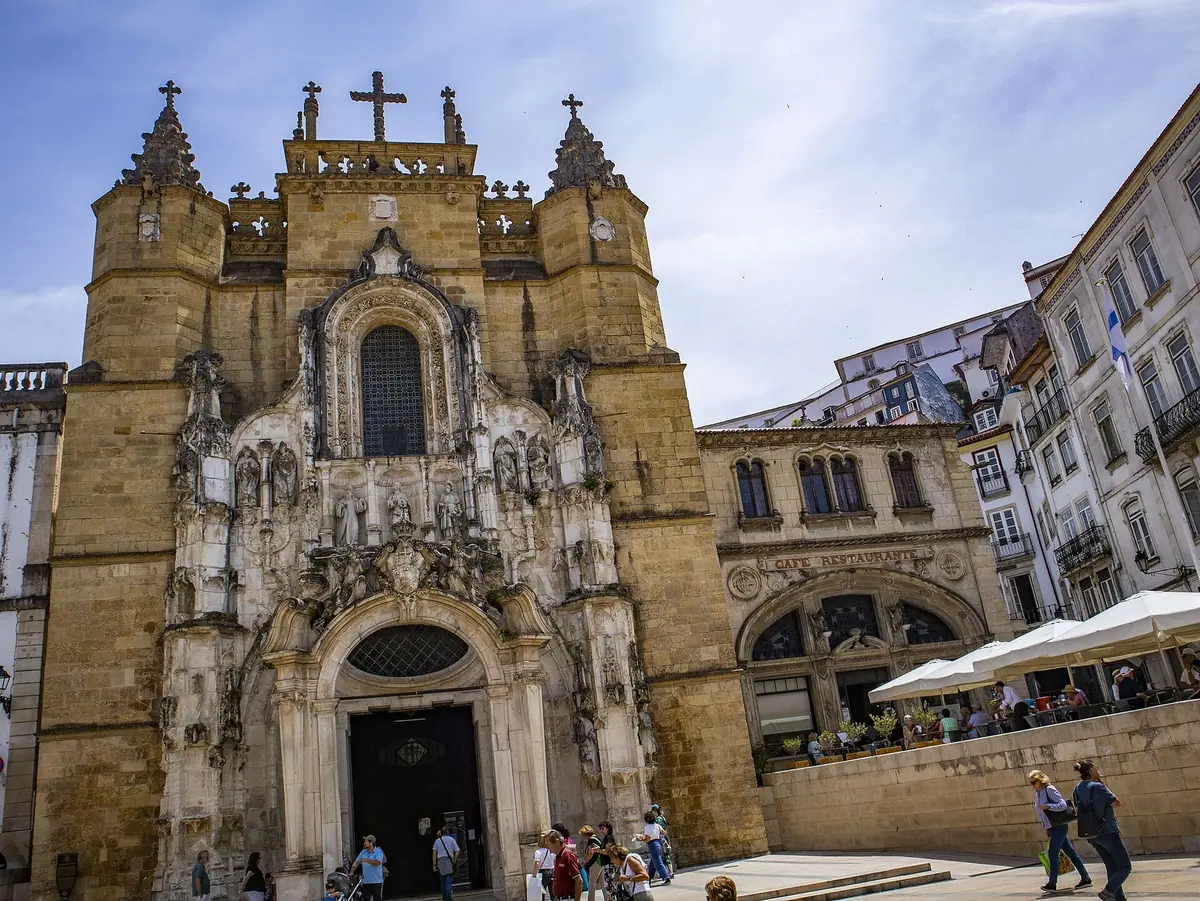
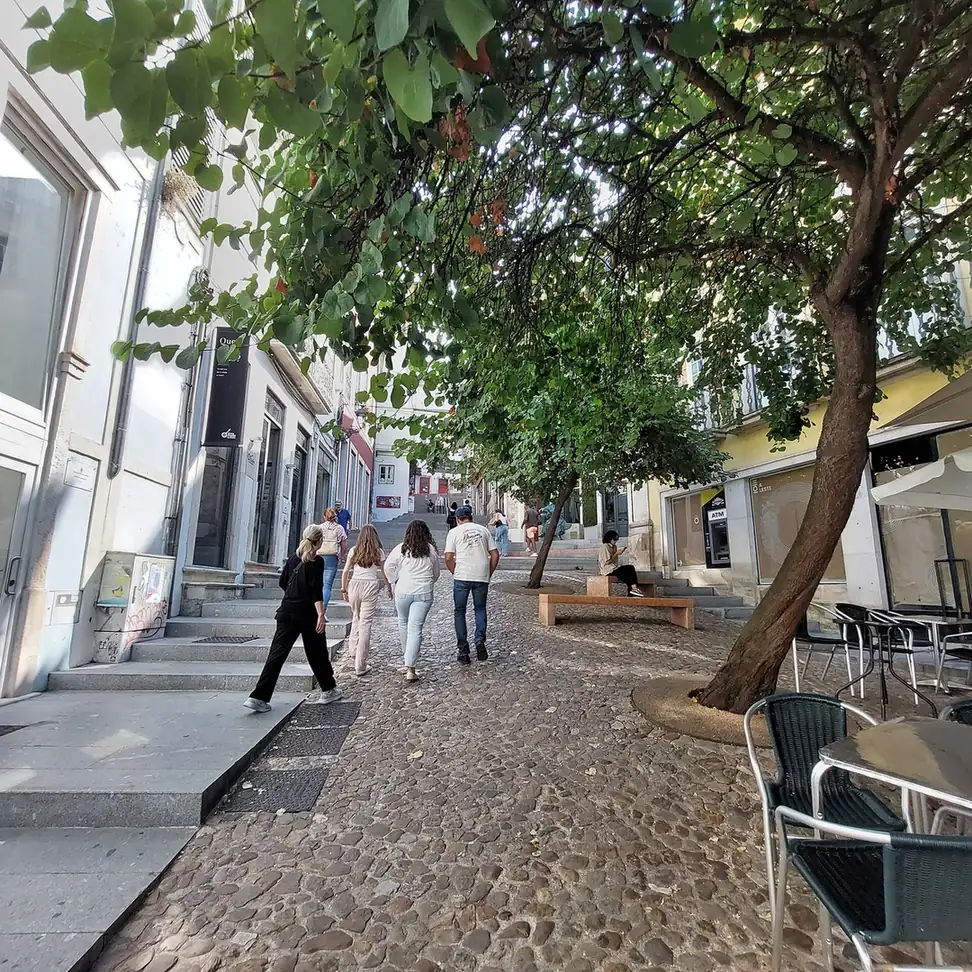
Coimbra is small. The distance from the river to the top of the university is a few hundred metres of map and about twenty minutes of lungs, and that sentence is the whole transport problem in one line. Nothing in the historic city is far away. A good deal of it is directly above something else.
The city spent 2025 and 2026 rebuilding how it moves — a railway turned into a busway, a new Metrobus network that reached Coimbra-B and Praça da República on 10 September 2026. For a visitor, though, the practical answer has barely changed: walk, and use the lift when the hill wins.
On foot, which is the answer
The Baixa is flat, compact and holds most of the restaurants. The Alta holds the university, the Sé Velha and the UNESCO inscription, and it is on top of the hill. Everything you came for is in one of those two places, connected by a set of stepped lanes.
The famous one is Rua do Quebra-Costas — literally Back-Breaker Street — running from the Arco de Almedina up toward the Old Cathedral. The city named its main tourist climb after what it does to you and then built a lift a few hundred metres away. Both facts are useful.
Walking times inside the core are short enough not to plan: the Alta to Baixa descent is the route most visitors end up doing twice a day, and doing it downhill is a different walk from doing it up.
The lift, and the number nobody publishes
The Elevador do Mercado is the honest measure of the climb. SMTUC publishes its specification: it links Rua Olímpio Nicolau Rui Fernandes, beside the municipal market, to Rua Padre António Vieira, in a mixed route of a 20-metre vertical lift followed by an inclined-plane lift to the top, at 51 metres.
That 51 metres is the only officially published vertical measurement of the Baixa–Alta climb anywhere. It understates the full haul to the Paço das Escolas, which is higher again, but it beats every guide’s vague “it’s hilly”.
Hours: Monday to Saturday 07:30–21:00, Sundays and public holidays 10:00–21:00. The fare rule is that any valid SMTUC transport ticket works — SMTUC does not publish a standalone single-ride price for the lift, and we are not going to guess one. If you saw an older guide calling the lift broken: it was out of service and returned in January 2026.
Buses and the Metrobus
SMTUC runs the city buses; Metro Mondego runs the Metrobus on the converted rail alignments. From 10 September 2026 the Metrobus urban section serves Coimbra-B and Praça da República, weekday runs rose from 291 to 452, and average frequency on that section is five minutes at peak and 7.5 minutes off-peak, on vehicles carrying 136 passengers.
Two things follow for a visitor. First, arriving from Coimbra-B is now a turn-up-and-go journey rather than a wait. Second, the Lousã line on the old Ramal da Lousã alignment now connects into the centre and the mainline station, which makes a day trip possible that was not possible for sixteen years.
The ticketing is the gap. SMTUC monthly passes were being honoured on Metro Mondego validators only until the end of September 2026, as a transition measure, and we could not source a clean visitor fare table for the new network. Two weeks after a system-wide switchover, that is exactly the sort of figure that should come from the city’s own live mobility page rather than from us.
Taxis, Uber and the tourist train
Uber operates in Coimbra — it runs an official city page for it. Fares, waiting times and coverage are not something we could verify, so treat the app as the source. The genuinely useful question is not whether Uber exists but whether you need it between the stations, and the answer is no: that transfer is free with a CP ticket.
Where a car is worth paying for is luggage plus hill, late at night, or the top of the Alta. Everything else is a walk you would have enjoyed.
The tourist train is the one to think twice about. It is cheap and it does climb the hill for you, and it also carries the weakest rating of any Coimbra product on GetYourGuide — 3.9 out of 5 across more than 300 reviews, against 4.6 to 5.0 for the guided walking tours. We set out the trade-off honestly on the tourist train page; it is a mobility aid with a commentary, not a sightseeing highlight.
Accessibility, honestly
The Alta is medieval, cobbled and steep, and no amount of good intention changes that. The lift is the serious piece of accessible infrastructure in the historic centre, and it is a real one: it exists precisely because the climb defeats people.
Inside the monuments the picture is uneven. Entry to the Joanina Library is through the historic Academic Prison staircase, and the university warns visitors with walking difficulties, dizziness or heart conditions about the circuit; it publishes no step-free route to the Noble Floor. Contact Turismo UC before booking if this matters.
Out of town, Conímbriga states the position plainly and usefully: the museum is accessible with no architectural barriers and a wheelchair available to borrow, while the ruins are not. That is the kind of specific answer worth having before you commit to a day out — see the Conímbriga guide.