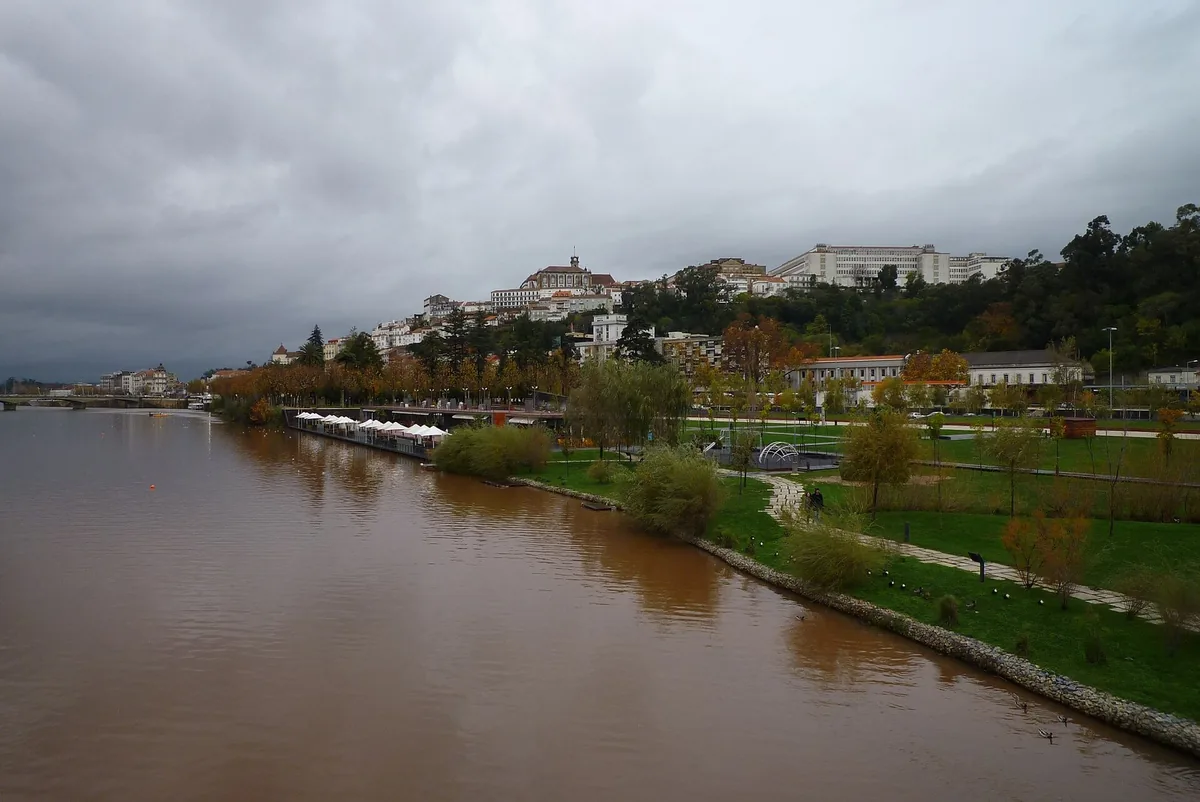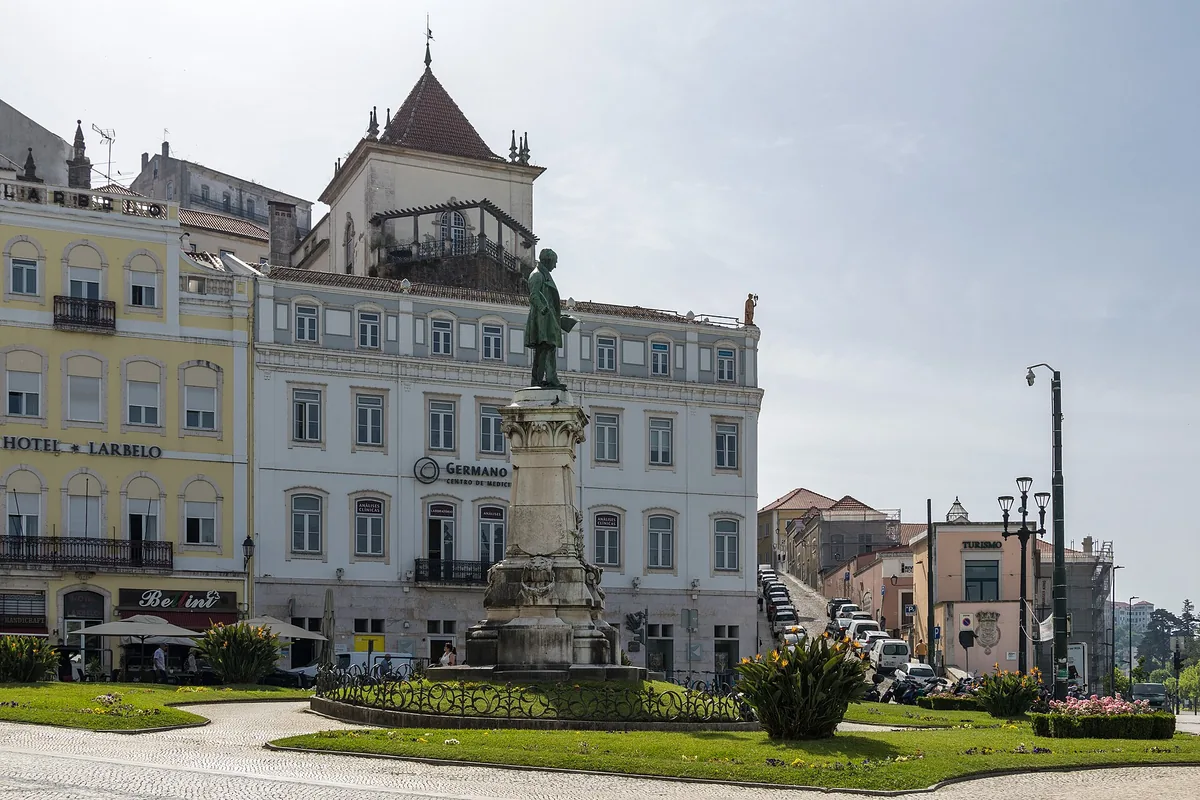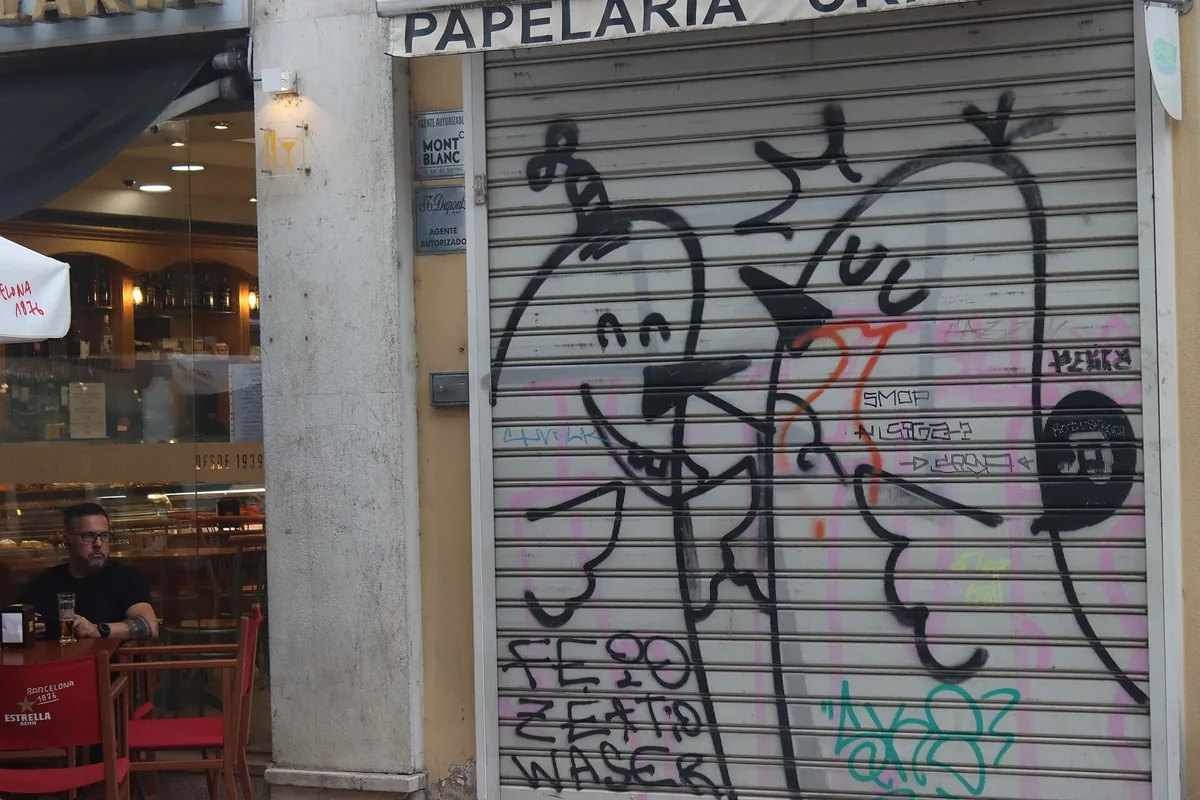

Come out of the Baixa’s main street at seven in the evening and the noise is shops closing, not monuments. Shutters, delivery vans, three generations of one family walking four abreast, somebody carrying a tray of pastries flat on one hand. The ground is level under your feet, which after a day on the hill registers as a physical relief. Then you look up and the university is sitting on the skyline like a decision somebody else made.
This is the lower town, wedged between the hill and the Mondego. Its spine runs along Rua Ferreira Borges and Rua Visconde da Luz, from Largo da Portagem by the bridge up to Praça 8 de Maio. Julie Dawn Fox calls it the most convenient and walkable choice for a first visit, on flatter ground than the Alta and close to the restaurants, the shops and the transport. She also notes it is visually more mixed than the hill. Both halves of that are true.
The shape of the Baixa
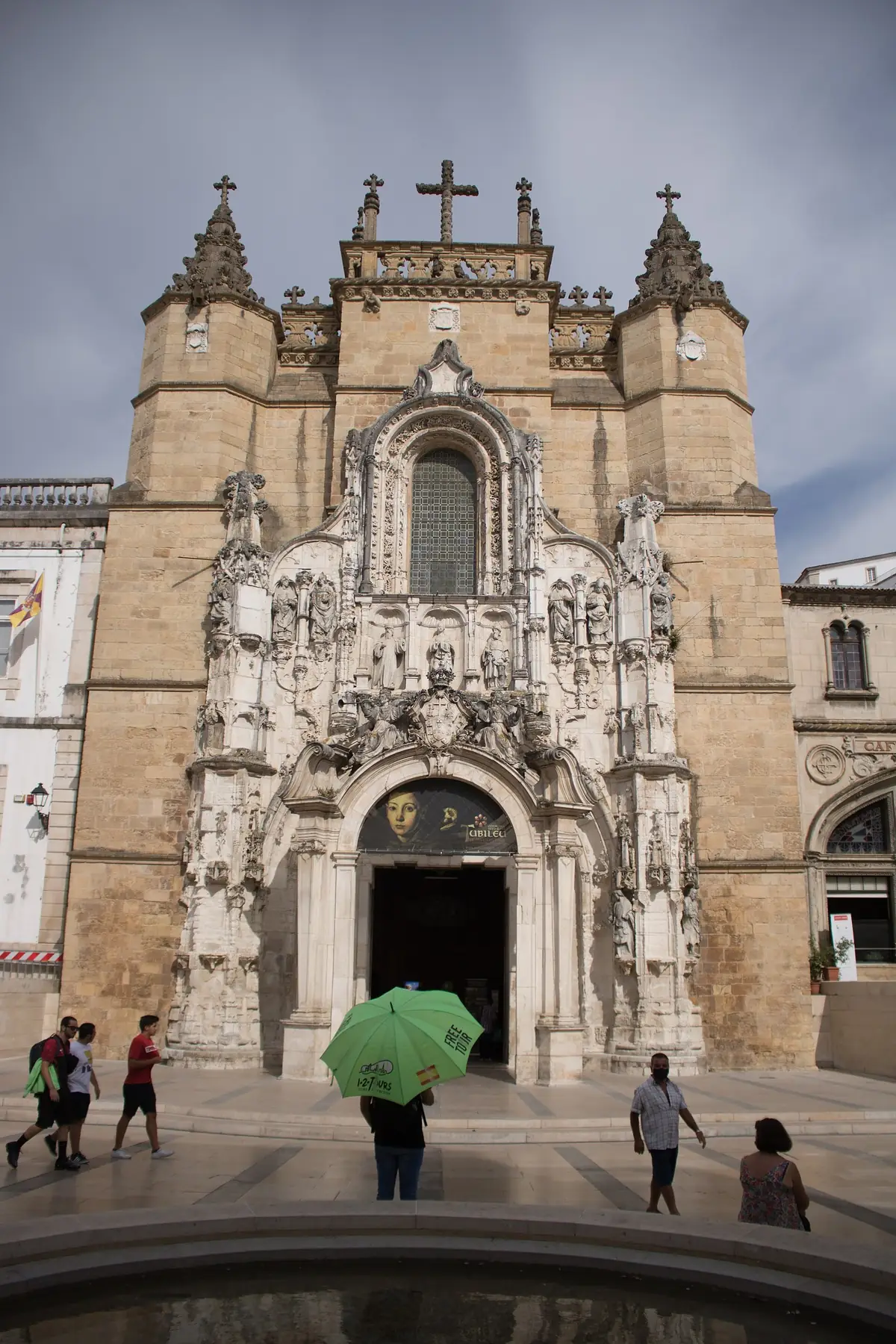
Learn three anchors and you will not need a map. Largo da Portagem at the south end is the hinge toward the Santa Clara bridge and the river. Praça 8 de Maio at the north end holds the Mosteiro de Santa Cruz and the square that shares its name. Between them runs the shopping spine.
Everything else hangs off that line in short lanes: Rua da Sota, Rua das Azeiteiras, Rua Direita, Terreiro da Erva, Praça do Comércio. Those five street names account for most of the restaurant addresses in this guide, which tells you where the city actually eats.
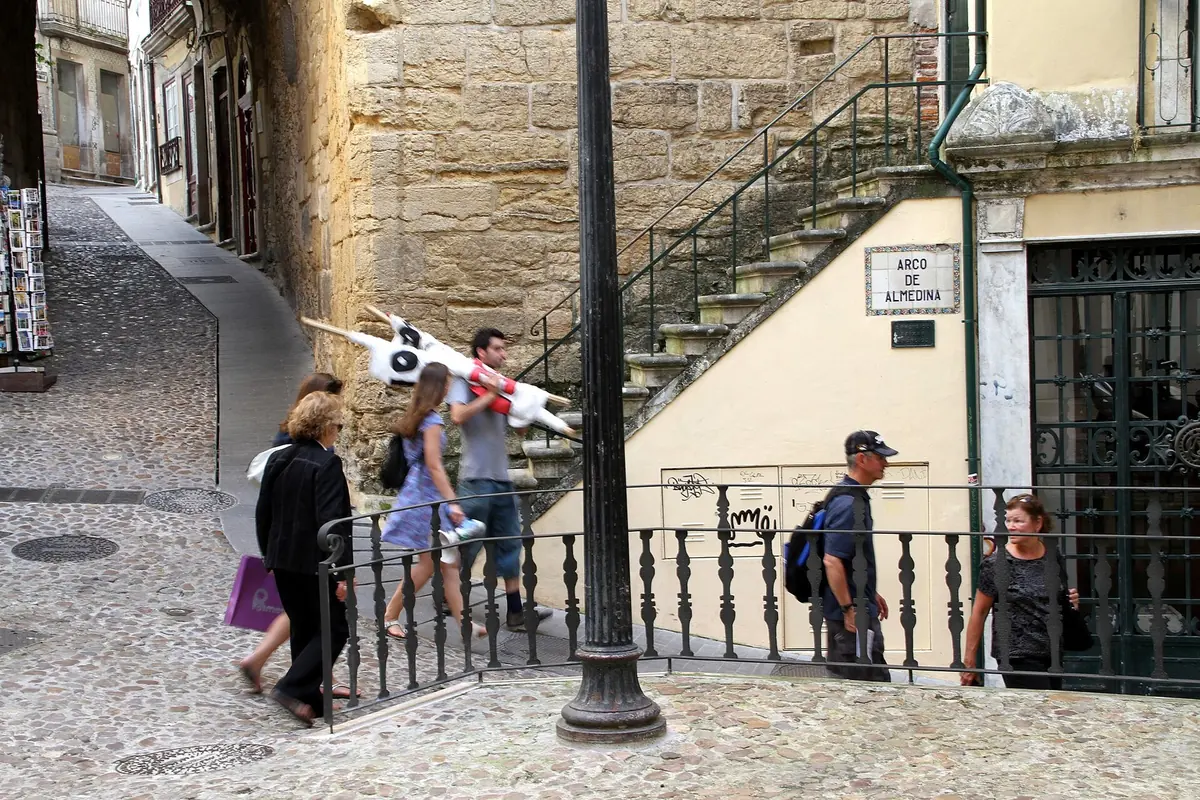
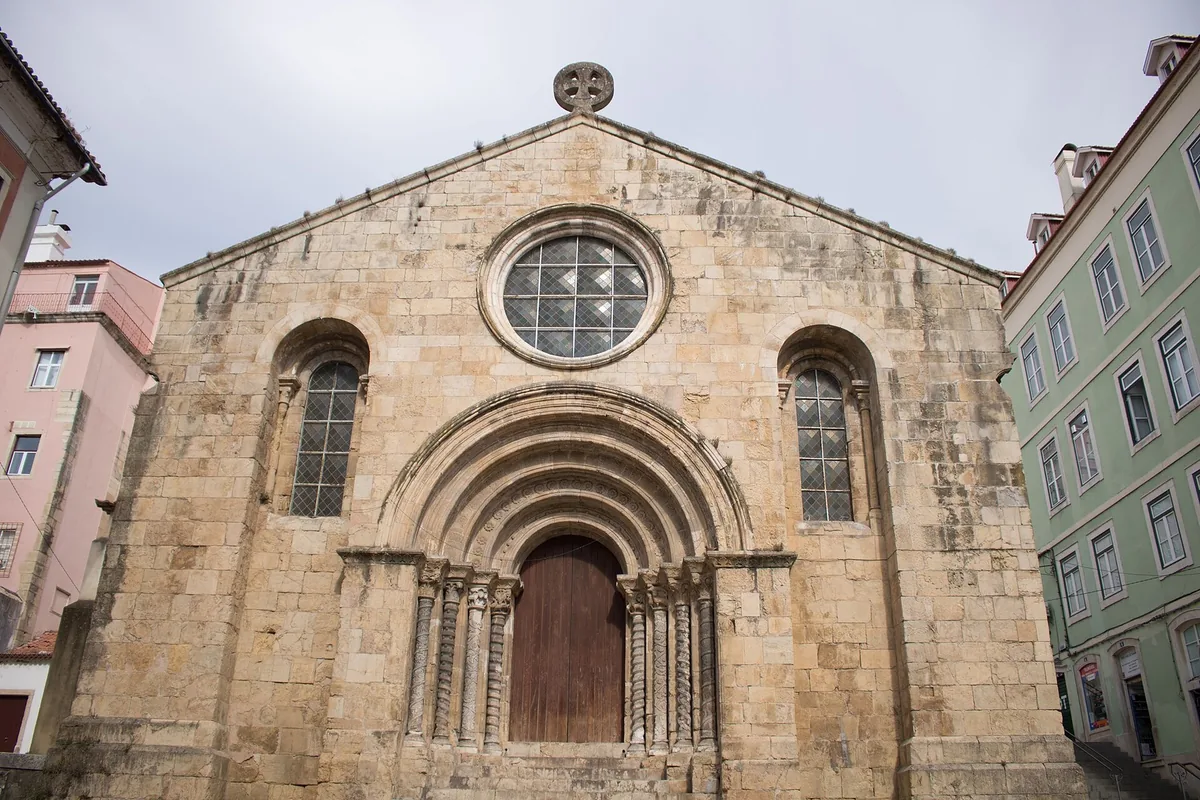
The Arco de Almedina opens off Rua Ferreira Borges and is the gate through to the hill. The Igreja de São Tiago stands on Praça do Comércio, and the Museu Municipal sites are scattered through the same streets.
No published elevation figure separates the Baixa from the Alta, so ignore any number you see quoted. What matters in practice is simpler: the Baixa is flat and the Alta is not.
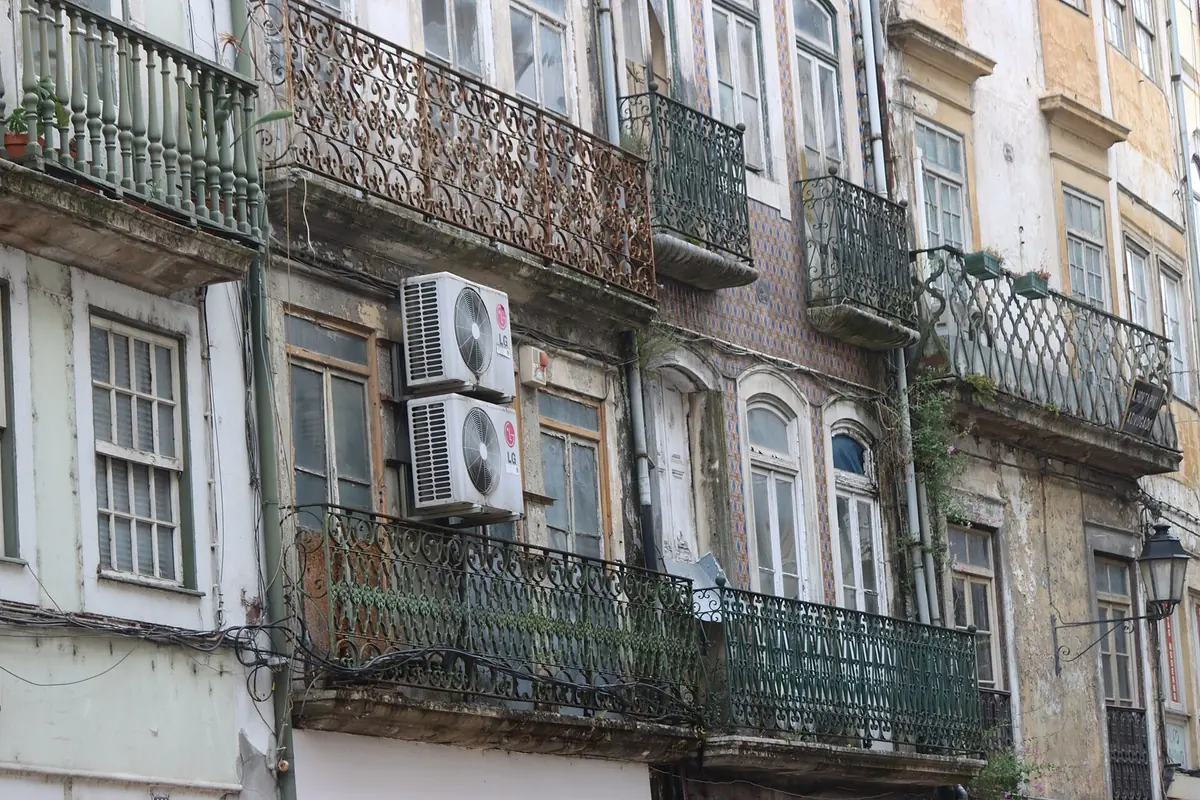
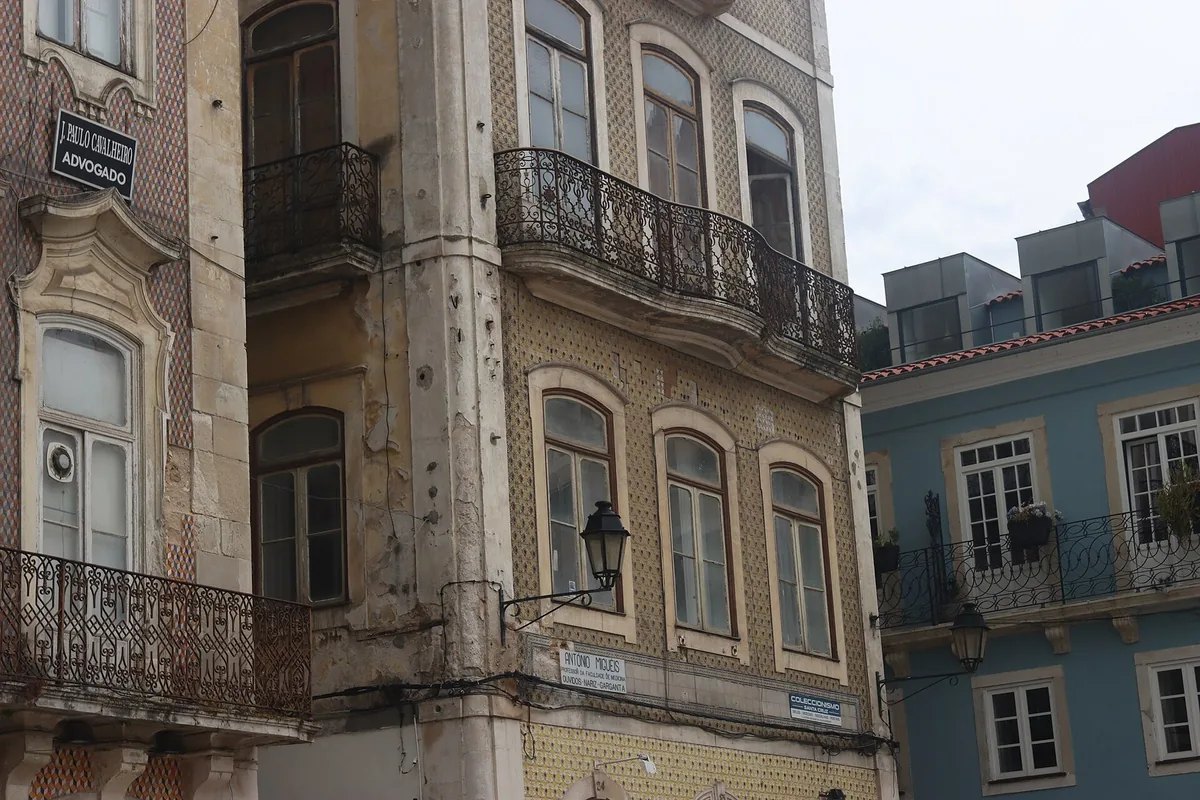
The quarter is also honestly mixed. Julie Dawn Fox describes it as visually more varied than the hill, which is a polite way of saying that fine nineteenth-century frontages stand next to indifferent twentieth-century ones, and some of the lanes are scruffy. Nobody comes to the Baixa for the architecture. They come because everything is here and none of it involves a climb.
Eating in the Baixa
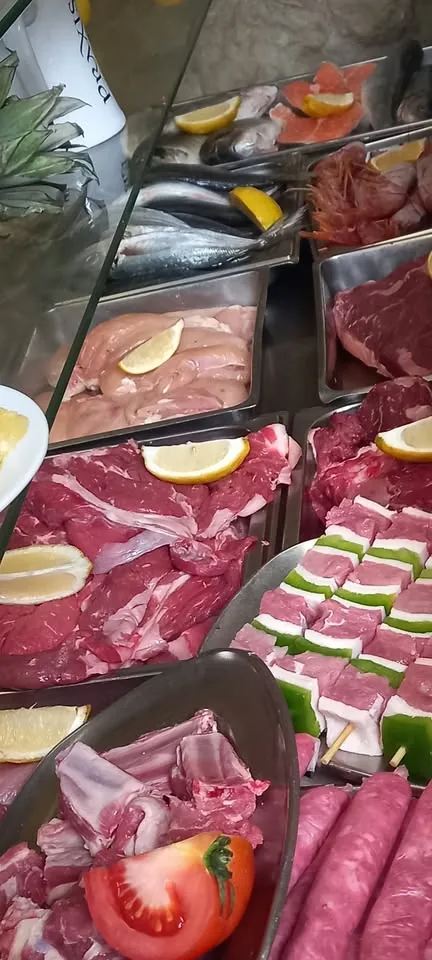
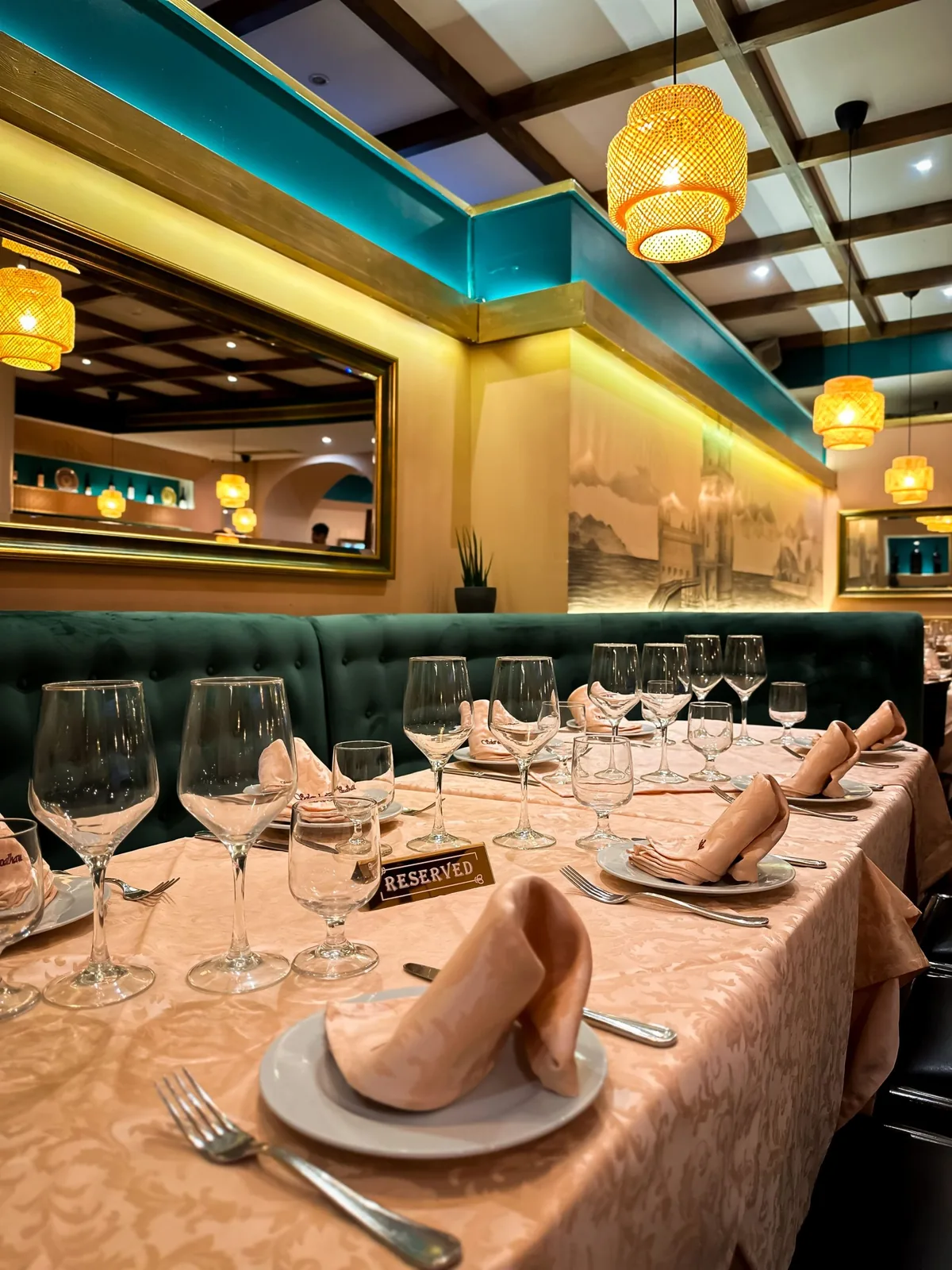
This is the reason to be here. The densest cluster of restaurant addresses in Coimbra sits within five minutes of Praça do Comércio, and it covers the full range.
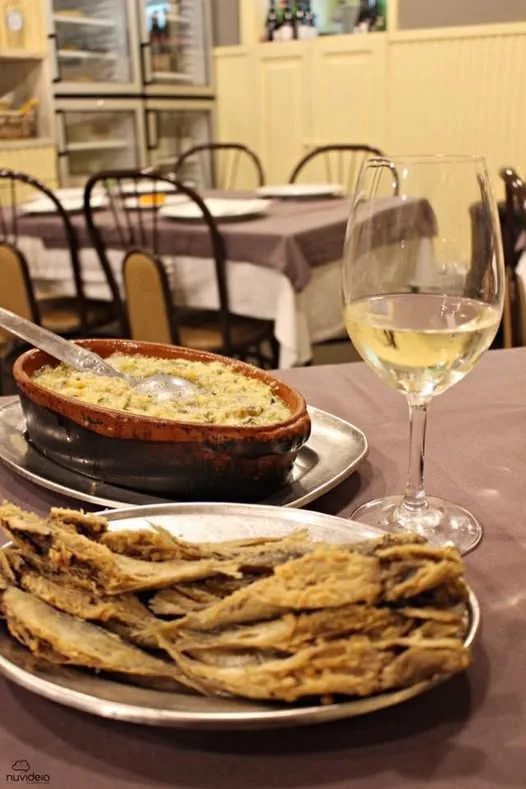
Cod at Solar do Bacalhau on Rua da Sota. Grilled meat and jugs of wine at Adega Paço do Conde. Chanfana, the hill-country goat stew, at A Cozinha da Maria and at Zé Neto. Modern petiscos at Dux and a contemporary kitchen at Refeitório da Baixa on Terreiro da Erva.
Be careful with addresses down here. Three of those restaurants have conflicting street numbers between two reputable sources each, and one pair of sources disagrees on the street entirely. Each page says which numbers are in dispute. Coimbra’s small businesses are not diligent about publishing their own details, and the honest thing is to tell you so rather than pick one and look confident.
Pastries have an address too. Pastelaria Briosa at Largo da Portagem is the documented place for pastéis de Santa Clara and for the pastel de Tentúgal that comes from 20 km west of here.
The Baixa after dark
Here is a gap we are not going to fill with adjectives. No reliable source characterises Baixa nightlife as distinct from Baixa dining, and we have not found one. What is documented is a great many restaurant addresses and a club, Passarelle, at Praça Machado Assis, which Frommer’s reports gets going after 22:30 and runs to 03:00 or dawn at weekends.
In practice the lower town does dinner and the hill does drinking. If you want a bar-hopping night, walk up to Largo da Sé Velha in the Alta, where the student bars cluster. If you want a long table and a bottle, stay down here.
The exception is Café Santa Cruz on Praça 8 de Maio, which runs free Coimbra fado at 18:00 and 22:00 daily, with no 22:00 session on Sundays. That is the cheapest serious fado in the city and it is at the top of this street.
Staying in the Baixa
Stay here on a first visit, on a short visit, with children, with luggage, or with any doubt about knees. You are flat, central, near the buses and the riverside, and twelve minutes from the university gate.
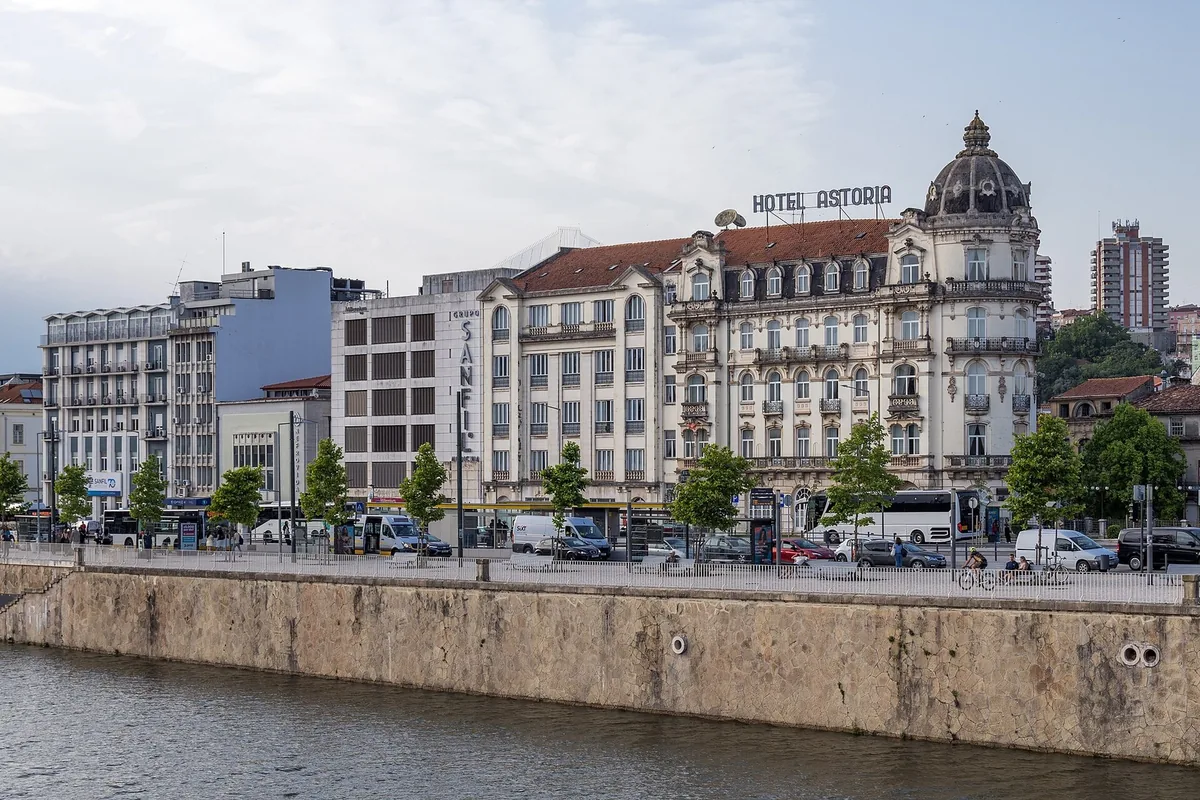
The building worth knowing is the Hotel Astória on the riverfront avenue: a flat-iron block designed in 1919 by Adães Bermudes and opened in 1926, which its operator describes as Parisian Art Nouveau. You will see it called art deco all over the internet. The operator’s own history page does not, and the dates support Art Nouveau.
The mid-range options in the lower town — CBR Boutique, Hotel Mondego and Pharmacia GuestHouse — are each documented by one named writer and almost nothing else. Their pages here say exactly that, because a hotel page with invented details is worse than a short one.
The full quarter-by-quarter comparison is in where to stay in Coimbra.
Getting around from the Baixa
The Baixa is where the city’s transport touches ground. Coimbra-A station sits at the river end of it, and the question of which station your train actually stops at is worth settling before you arrive — see Coimbra-A vs Coimbra-B.
For the climb, the Elevador do Mercado rises 51 metres in two stages, Monday to Saturday 07:30–21:00 and Sundays and holidays 10:00–21:00. From the lower town it turns the university into a ten-minute trip rather than a twenty-minute effort.
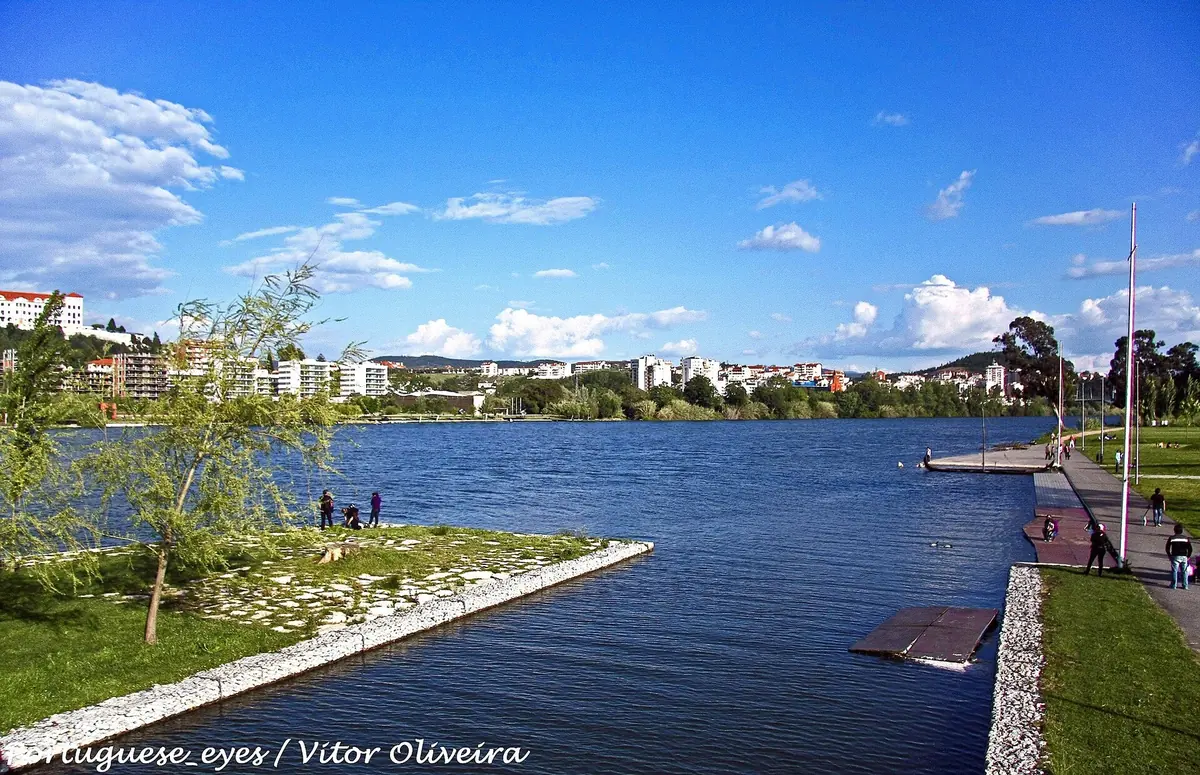
Across the bridge is Santa Clara, with the two monasteries and Portugal dos Pequenitos; that side is easier for drivers and quieter at night. The riverside path along this bank is covered in the Mondego riverside walk.