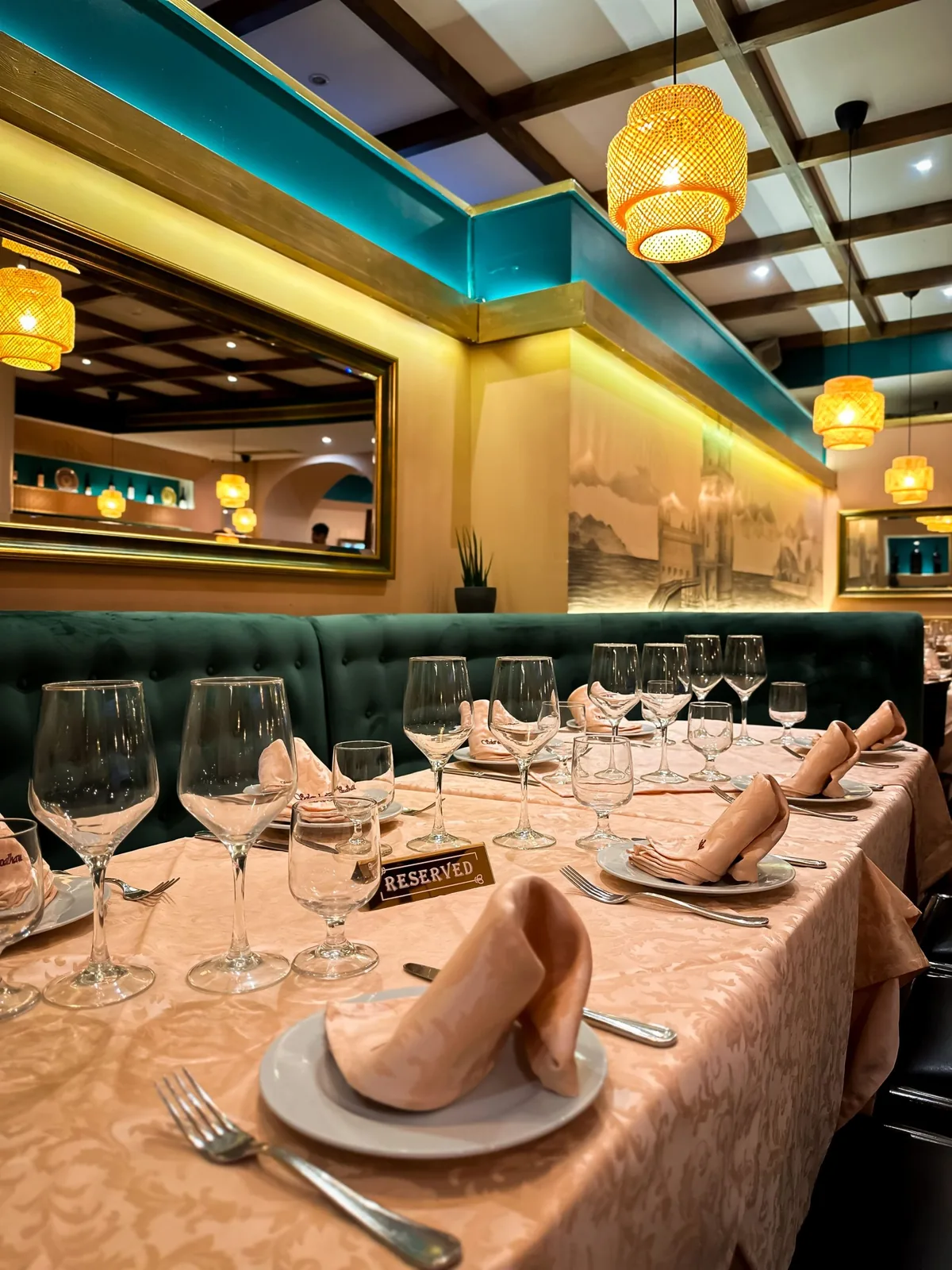

Rua da Sota is one of those short Baixa lanes that does nothing at eleven in the morning and everything at eight in the evening: shuttered, then suddenly full of tables, waiters crossing between doorways, the smell of olive oil going into a hot pan. Solar do Bacalhau is on it, and it is named after a fish that arrives in Portugal dried flat as a board and salted white.
That name is a commitment. Bacalhau is salt cod, the fish Portugal built an Atlantic economy on and then refused to stop cooking, and a house that puts it on the sign is telling you what its kitchen does. What the house does not do is publish anything: no website, no menu, no hours, no prices. This page is therefore less a review than a set of instructions for eating well somewhere that has told you nothing in advance.
What a cod house actually cooks
Salt cod is not one dish. It is a raw material that has to be soaked for a day or more before anything can be done with it, and Portuguese kitchens have spent four centuries doing different things.
The preparations you will meet most often across the country are bacalhau à Brás (shredded with onion, straw potatoes and egg), à Lagareiro (a thick loin roasted under olive oil with smashed potatoes), com natas (baked with cream), à Gomes de Sá (with potato, onion and egg) and the plainest and often the best, cozido — boiled with potato, cabbage, egg and chickpeas, dressed at the table with oil and vinegar.
We are not telling you which of these Solar do Bacalhau serves. No named source we trust has published a dish recommendation for this restaurant, and we are not going to assemble a plausible menu out of national averages and present it as local reporting. Ask what the kitchen is doing today, and ask which one they are proud of; in a cod house that is a real question with a real answer.
The general rule holds anywhere in Portugal: the thicker the cut, the more the kitchen is showing off. A loin roasted à Lagareiro is a statement. À Brás made well is harder and more honest.
One more piece of general advice that applies here as everywhere: salt cod wants a white with acid behind it, or a light red served cool. The Bairrada and the Dão are both within an hour of Coimbra and both do the job, so ask for something regional rather than accepting the house default.
About that Michelin listing
Solar do Bacalhau has a page in the MICHELIN Guide. That is a fact worth stating carefully, because it is routinely inflated.
A MICHELIN Guide page is a listing, not a star. The guide lists a great many restaurants it has not awarded anything to. We confirmed that a Michelin page exists for this restaurant, but we could not read what it says: Michelin’s Coimbra pages would not render when we tried on 15 September 2026, so no description, no price band and no distinction from that guide appears anywhere on this site.
If you see a Coimbra guide attributing a Michelin quote or price band to this restaurant, ask where they got it. We could not get it, and we looked.
What this does tell you is that the house is on the radar of a serious guide, in a city where most of the good tascas are on nobody’s radar at all. Read it as a signal of competence rather than as an award.
The street it sits on
Rua da Sota runs in the Baixa, the flat lower town, in the cluster of lanes that holds most of Coimbra’s restaurant addresses: Rua das Azeiteiras, Rua Direita, Terreiro da Erva and Praça do Comércio are all within a few minutes’ walk.
That density is the practical point. If the door here is shut, or the room is full, or the evening is not going the way you hoped, you are sixty seconds from Zé Neto on Rua das Azeiteiras, from Adega Paço do Conde, and from Dux. No other quarter of the city gives you that many second chances.
It also means you should come down here to eat rather than trying to eat on the hill. The Alta is thin on kitchens and the ones it has are small. The Baixa is where the city actually feeds itself, and this street is at the centre of it.
Walking down from the university, the natural approach is through the Arco de Almedina and along the shopping spine — the last section of the Alta to Baixa descent deposits you two minutes from the door.
What is not published, and what to do about it
The gaps here are wide enough to need listing plainly.
No official website. No published opening hours. No published prices or price band — not in the local press, not from any named travel writer we read. No sourced dish recommendation. No rating we are prepared to reprint: aggregator scores exist, as they do for everything, but a number assembled from anonymous reviews is not a fact and we do not treat it as one.
What exists is an address in a list published by Coimbra Coolectiva, a local title, for a citywide cod-week promotion, and a Facebook page run by the business. That is the whole documentary record.
The practical response: check the Facebook page for the day you are going, or walk past in the afternoon and read the door. Portuguese restaurants of this kind put the day’s dishes on a board, and the board is more current than anything on the internet.
Go at Portuguese hours — lunch from about 12:30, dinner from about 19:30 — and expect the room to fill an hour after you think it should. Coimbra is a student city and it eats late.
And take the absence of information for what it is, rather than as a warning. A great many of the best small restaurants in Portugal have no web presence at all, because the owners are cooking rather than posting. The silence is not a red flag; it just means the research has to happen on the pavement.
Is it worth going?
On the evidence available, it is a reasonable choice and not a pilgrimage. A cod house on the city’s densest restaurant street, listed by a local publication and carried in the MICHELIN Guide’s directory, is a solid bet for an ordinary good dinner.
Go here if you want salt cod cooked by people who do it every day, and if you are comfortable ordering by conversation rather than from a menu you have read in advance. Go elsewhere if you need certainty about price before you sit down, which is a legitimate requirement that this restaurant does not meet.
If cod is the mission rather than this address, note that the Coimbra region’s own specialities are different animals entirely — chanfana, the red-wine goat stew from the hills south of the city, and leitão from the Bairrada to the north. Salt cod is national rather than local, and a cod house in Coimbra is doing Portugal, not Coimbra.
For the full picture of what is genuinely from here and what is merely served here, read what to eat in Coimbra before you book anything.