
You will not research your way into this one. There is no website, no menu online, no published hours and no photograph of the room that we can vouch for. What exists is a door on Rua Paço do Conde, in the flat lanes of the Baixa, and a listing in a Coimbra publication that printed the street number. Everything else you will find out by walking there.
That is not a criticism of the restaurant. It is a description of how a great many good Portuguese kitchens operate: the owner is in the kitchen, the wine comes out in a jug, and nobody has ever felt the need to explain the arrangement to the internet. It does mean this page has to work differently from the rest. Instead of telling you what to order here, it tells you what an adega is, what is on the record, and how to eat well in a place that has told you nothing.
What an adega is
An adega is, literally, a wine cellar. As a restaurant name it signals the kind of place that grew out of one: wine sold from the barrel, food put on to go with it, and over time the food becoming the reason people came.
In practice, in a Portuguese city, an adega means a low-ceilinged room, paper on the tables, a jug of house red that arrives without being discussed, and a short menu built around whatever goes over charcoal. It is the same lineage that produced Zé Manel dos Ossos up the hill, which began as a tavern serving pig bones alongside barrel wine.
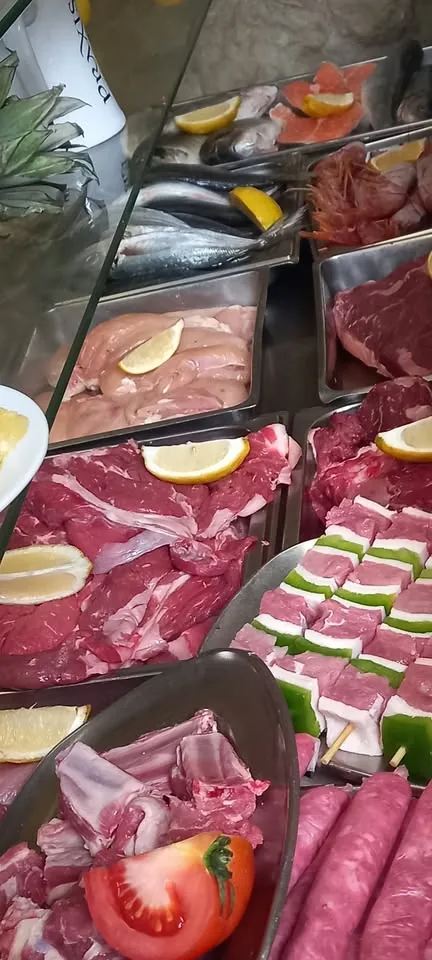
Adega Paço do Conde is widely spoken of in Coimbra as a grill house. We could not confirm that from a named source, and there is a difference between a thing everybody says and a thing somebody has published. We are flagging the reputation and marking it as unverified rather than repeating it as fact.
The name gives you the other clue. Paço do Conde — the Count’s Palace — is the street, one of those Baixa lanes whose name is grander than its buildings, running through a quarter that has been commercial for centuries.
The distinction matters when you are choosing where to eat. An adega and a marisqueira and a churrasqueira are three different promises, and Portuguese restaurants still largely honour the word on the sign. Whatever else is unclear about this address, the sign is telling you to expect jug wine and simple food rather than a tasting menu.
What is on the record
Here is the complete documentary basis for this entry, so you can judge it yourself.
The address. Rua Paço do Conde 1, published by Coimbra Coolectiva, a local title, in a list of thirty-six restaurants taking part in a citywide cod-week promotion. That list is useful precisely because a local publication was printing street numbers.
That is it. No price band. No opening hours. No dish recommendation. No official website. No rating we will reprint. Aggregator scores exist for this restaurant as they do for every business with a pin on a map, but a score assembled from anonymous submissions is not a fact and we do not treat one as evidence.
We are including the entry anyway, for one reason: a local publication put it on a citywide list, which is a meaningful vote from people who eat here all year. That is a weaker signal than a named food writer’s recommendation, and you should weigh it as such.
If you want a Baixa dinner where somebody has actually been on the record about the food, Dux and Refeitório da Baixa both have named writers behind specific dishes.
How to order in a room like this
General advice, clearly labelled as general, because it applies to every unlisted adega in central Portugal and it is the most useful thing we can give you here.
Ask what the prato do dia is. The dish of the day at lunch is almost always the best value in the room and frequently the best cooking, because it is what the kitchen committed to that morning.
Order the house wine in a jug rather than a bottle. In a room like this the jug is the point, it costs a fraction of the list, and refusing it marks you out as someone who has misread the establishment.
Portions are large and shared by default. A Portuguese dose feeds two people who are not especially hungry; a meia dose, a half portion, is a normal order and not an embarrassment. Two half portions and a salad between two is the local move.
And the couvert — the bread, olives and cheese that arrive unasked — is chargeable. You may send it back without offence. Nobody will mind and you will save a few euros, though the cheese is often worth keeping.
Go at Portuguese hours. Lunch from 12:30, dinner from 19:30, and the room will not look busy until an hour after you expect it to.
The street, and your alternatives
Rua Paço do Conde sits inside the tightest restaurant cluster in Coimbra. Within a few minutes’ walk on flat ground: Solar do Bacalhau on Rua da Sota, Zé Neto on Rua das Azeiteiras, A Cozinha da Maria, and the lanes around Praça do Comércio.
That is the practical value of eating in the Baixa. You can walk to a closed door, look at it, and be sitting down somewhere else ninety seconds later. Do not attempt the same thing in the Alta, where the kitchens are few and small.
If you are coming down from the university, this quarter is the natural end of the Alta to Baixa descent, and the restaurant guide ranks the whole field with the evidence for each one set out.
One regional note. If you have come to Coimbra to eat the specialities, an adega is not where you will find them. Chanfana has documented addresses in this city; leitão properly belongs twenty kilometres north in Mealhada. A grill house is for an ordinary good dinner, which is a perfectly respectable thing to want.
The cheapest hot meal in the city, incidentally, is not in this quarter at all. The university’s canteen system publishes real prices — and one real ambiguity about who is entitled to use them — and that is set out in full in what to eat in Coimbra.
The verdict
Worth a try, not worth a detour, and impossible to promise anything about.
Go if you are already in the Baixa, want a straightforward Portuguese dinner at a low price, and are content to find out what is on when you arrive. That describes a lot of good evenings.
Do not go if you need to know the price before you commit, if you are feeding a group with dietary requirements, or if this is your one dinner in Coimbra and it has to count. For a single decisive evening, choose a restaurant where somebody has been on the record about the food.
And phone ahead if you can find a number, or walk past in the afternoon and read the door. In this quarter the board outside is more reliable than anything published about the place, including this page.
We would rather say that plainly than dress an address up as a recommendation we have no basis for making.