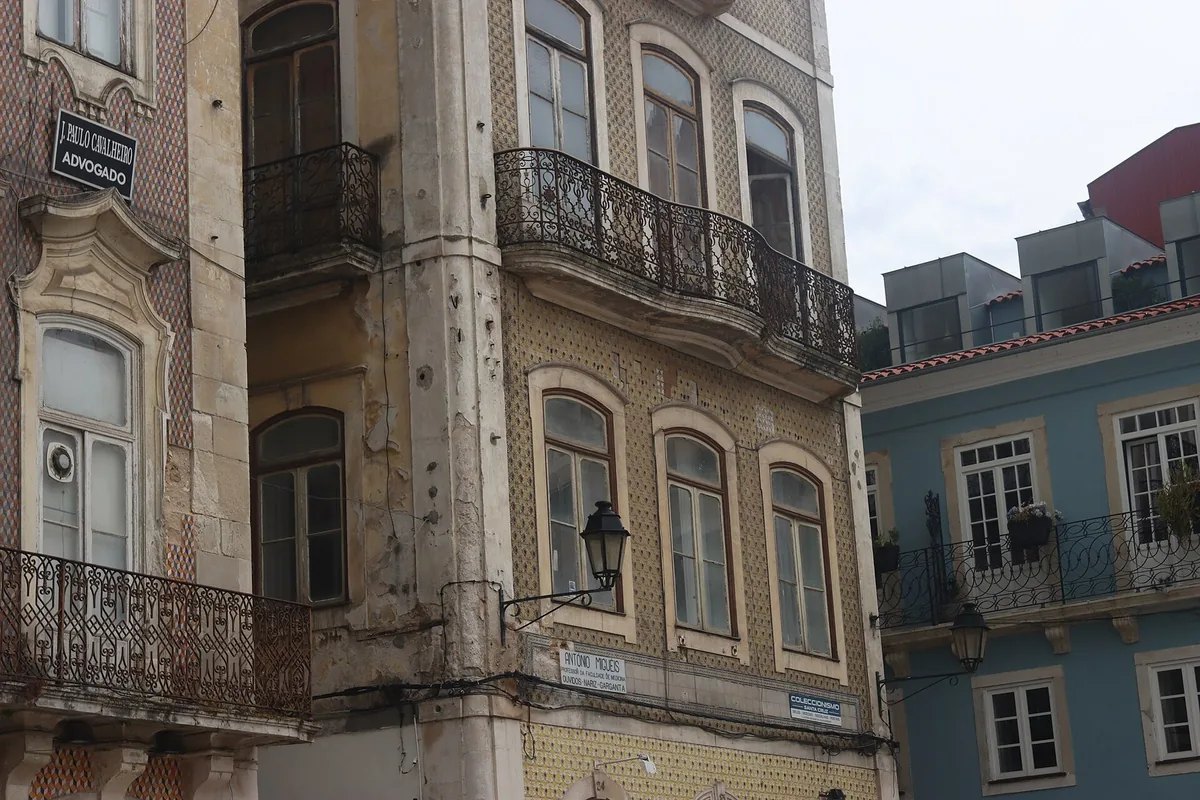

Terreiro da Erva is a small square off the Baixa’s eating lanes, and Refeitório da Baixa is the address on it that is not doing salt cod the way the street next door does salt cod. The word refeitório means refectory — a monastic dining hall — which in a city with two monasteries in walking distance is either a good joke or a large claim.
This is the top price band in the lower town. The travel writer Ola Daniela puts it at €€€ on her own scale and names three dishes: tuna ceviche, confit cod, and local rice dishes from the Mondego. That combination — one international technique, one classic treated carefully, one thing from the river valley outside the window — describes a contemporary Portuguese kitchen fairly precisely, and it is the only one of its kind in this quarter.
What to order
Three dishes are documented and each tells you something different about the kitchen.
Tuna ceviche. Raw fish cured in citrus is a South American technique that arrived in Portuguese restaurants in the last fifteen years and has stuck, partly because the country has the fish for it. It signals a kitchen that reads outside its own tradition.
Confit cod. This is the interesting one. Bacalhau is the most heavily codified ingredient in Portuguese cooking, with a canon of preparations every household knows. Cooking it slowly in fat rather than boiling, baking or frying it is a deliberate step sideways from that canon, and it is the dish that will tell you whether this kitchen is confident or merely fashionable.
Rice from the Mondego. The river that runs past Coimbra irrigates a floodplain downstream toward Montemor-o-Velho, and rice has been grown there for centuries. A restaurant naming the valley on its menu is claiming a local supply chain, which is a more meaningful gesture than most regional branding.
Nothing beyond those three is published. There is no menu online, so treat them as the known quantities and ask what else the kitchen is doing.
What none of the three is, is a Coimbra speciality. That is worth saying because visitors sometimes book the smartest restaurant in a city expecting the local canon in a better jacket. This kitchen is doing contemporary Portuguese cooking, and the regional dishes — goat braised in wine, bones, roast suckling pig — live in cheaper rooms a street away.
What the €€€ band means here
Context matters, because €€€ in Coimbra is not €€€ in Lisbon.
On the same writer’s scale, Taberna Casa Costa is €, A Cozinha da Maria is €€, and this is €€€. The band tells you it is the most expensive restaurant she lists in the centre, not that it is expensive by the standards of a capital city.
The genuinely expensive room in Coimbra is Arcadas, across the river in a five-star palace hotel, and it publishes no price at all. Between the two, this one is the accessible ambitious dinner: the place you book for a good evening in the centre without crossing the Mondego or booking a car home.
No individual price is published anywhere, by any source, for any dish here. The band is one writer’s classification. Ask when you book, and ask again if there is a tasting menu, because that is where the difference between a band and a bill shows up.
For comparison at the other end of the same quarter: Zé Manel dos Ossos is a seven-table tasca with a queue and no prices either. Coimbra publishes remarkably little about what anything costs, at every tier, and the only reliable method is to ask.
The square it is on
Terreiro da Erva sits among the lanes that hold most of Coimbra’s restaurant addresses: Rua da Sota, Rua das Azeiteiras, Rua Direita, Praça do Comércio. All of it is flat, all of it is within five minutes on foot, and the density means a full room is an inconvenience rather than a crisis.
The two sources describe the address slightly differently — Ola Daniela as “Quintal do Prior, Terreiro da Erva 2–4”, Coimbra Coolectiva as “Largo Quintal do Prior nº 2-4”. Unlike the genuine disputes at A Cozinha da Maria and Dux, these two agree on the place and differ only in what they call the square. You will not get lost.
If you are pairing dinner with something, the Mosteiro de Santa Cruz and the free fado at Café Santa Cruz are at the top of the same shopping spine, four minutes away. An 18:00 fado session and a 20:30 table is a good evening and costs the price of one dinner.
Coming down from the university, this square is the natural end of the Alta to Baixa descent. You arrive on flat ground with the climbing already done, which matters more than it sounds after a day on cobbles.
How to approach it
Book. No telephone number or website is published in either source, which is a real obstacle for the most ambitious kitchen in the quarter, but it does not change the advice: find a number, ring it, reserve. A small contemporary dining room on a small square does not have spare tables at 21:00 on a Saturday.
Go on the night you want one good dinner rather than three cheap ones. This is not the address for a casual lunch between monuments; it is the address for the evening the trip is arranged around, if that evening is staying on this side of the river.
Ask about the fish. A kitchen doing ceviche and confit cod is buying fish daily, and what arrived that morning will be better than what is printed.
And go at Portuguese hours. The lower town fills from 20:30 and later still in term time, when the student population sets the tempo of the evening.
One more thing. If you are dressing for anywhere in Coimbra, dress for here. No dress code is published, and the room will not turn anyone away, but it is the one address in the lower town where the other tables will have made an effort.
The verdict
The best contemporary dinner in central Coimbra on the evidence available, and the only one of its type in the lower town.
Go if you want one ambitious evening, want to stay walkable from your hotel, and are comfortable with a price that nobody has published. Go especially if you have already eaten the traditional canon — the goat, the bones, the salt cod — and want to see what a Coimbra kitchen does when it is not repeating a recipe from the hill country.
Do not go for regional specialities. What is genuinely Coimbra’s is a short list of conventual sweets and not much else, and what to eat in Coimbra sets out which famous dishes belong to which town.
Do not go on the last night of a tight budget either. €€€ is the top of the local scale and the actual figure is unpublished, which is precisely the combination that produces an unwelcome surprise.
Ask, book, and go hungry. On the published evidence this is the best table in the centre of Coimbra, and the only thing standing between you and a good evening is a telephone number nobody has bothered to publish.