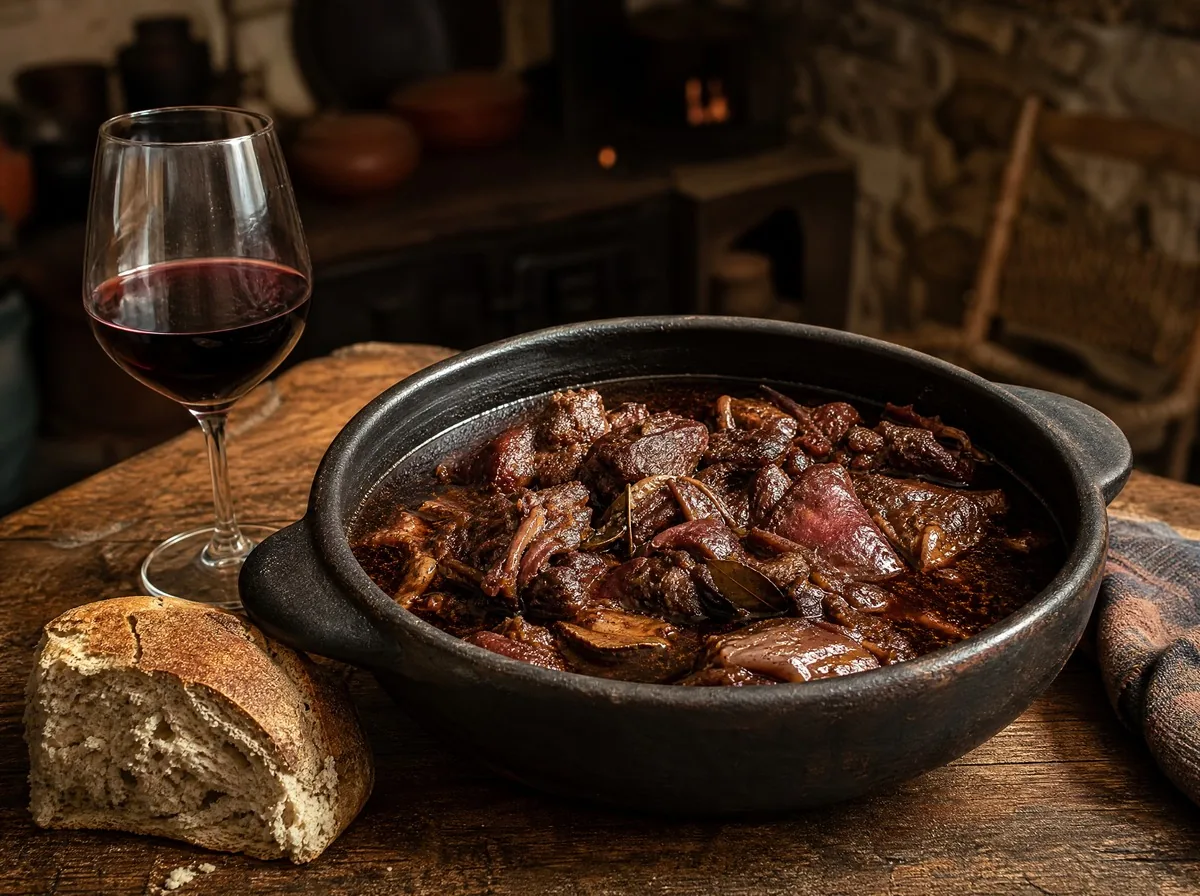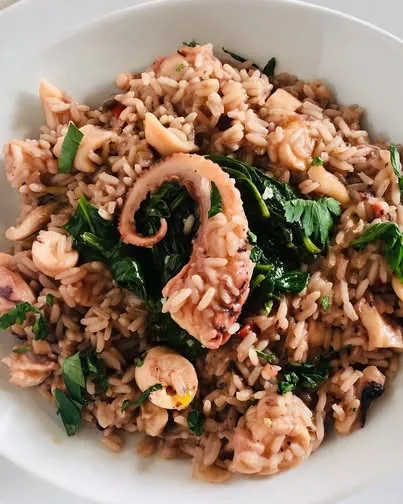

Chanfana comes to the table in the pot it was cooked in, black clay, still ticking with heat, and what is inside has been in a wood oven long enough that the meat gives up when the fork arrives. It is dark. It tastes of red wine reduced past the point of politeness, and underneath that of an animal that lived a full life. Nobody would design this dish today. It exists because it had to.
A Cozinha da Maria is the Coimbra address with a named writer behind its version. Ola Daniela, who has written about eating in this city, calls its chanfana the best she has ever eaten, and bands the restaurant at €€ on her own scale. That is the single most specific recommendation anyone has published about a chanfana in Coimbra, and it is why this entry exists. It comes with a complication about where the restaurant actually is.
The two addresses
Two reputable sources put this restaurant in two different places, and we are not going to quietly pick one.
Ola Daniela gives Praça do Comércio 110. Coimbra Coolectiva, the local title, gives Rua das Azeiteiras 65. Those are different streets, not different numbers on the same street, which rules out a simple typo in one of them.
There is a further wrinkle. Coolectiva’s own list also places a different business, Restaurante Rio Mondego, at Praça do Comércio 110–111. So at least one of these attributions is wrong, and possibly the restaurant has moved between the two publications’ research dates.
The practical answer is undramatic: the two addresses are ninety seconds apart. Rua das Azeiteiras runs off Praça do Comércio. If you are wrong at the first one you will be right at the second before you have finished being annoyed. Walk the square, then walk the lane, and read the doors.
We print Praça do Comércio 110 as the headline address because it comes from the source that actually ate here and wrote about the food. That is a judgement, not a verification, and you should treat it as one.
It is worth saying why this keeps happening in Coimbra. Small family restaurants here do not run websites, so the only addresses in circulation are the ones outside writers copied down on a visit, sometimes years apart. Where two of them disagree, the honest thing is to print both and send you to the right street rather than to a confident wrong number.
The chanfana
Order it. That is the whole reason to come.
Chanfana is cabra velha — old goat, past breeding age — cut up and braised for hours in red wine with garlic, bay, pepper and lard, traditionally in a sealed clay vessel in a wood-fired oven. The long cook and the acid in the wine do the work that youth would otherwise have done. Done properly it is one of the great braises of southern Europe. Done lazily it is a bowl of tough goat in gravy.
Be clear about where it comes from. Chanfana is not a Coimbra city dish. The documented origin claim points to the Mosteiro de Semide, near Miranda do Corvo, where nuns are said to have received goat meat as rent and preserved it by cooking it in wine. Three municipalities — Miranda do Corvo, Lousã and Vila Nova de Poiares — dispute primacy and each holds an annual gastronomic week for it. Coimbra is where you eat it; the hills south of Coimbra are where it belongs.
You will also hear that chanfana dates from the Napoleonic invasions, cooked up by villagers to feed or to poison French troops. The sourced account says that story lacks documentary support and prefers the practical explanation: old goats had to be used and this was how. We are with the goats.
What else is known
Not a great deal, and you should see the limits.
Price band €€, per Ola Daniela — her scale, not Michelin’s. That places it in the middle of Coimbra eating: above the jug-wine tascas, well below the palace dining room at Arcadas. No individual menu price is published anywhere and we will not estimate one.
No opening hours. No official website. No telephone number in any source we read. No rating we will reprint.
This matters more here than at a generic tasca, because chanfana is a dish cooked in batches. A restaurant serving it properly puts pots in the oven in the morning and runs out. If you arrive at 21:30 on a Saturday there may be none left, and nobody is publishing the answer to that in advance.
So: go at the start of a service rather than the end, and ask about the chanfana before you sit down rather than after you have read the menu. If it has gone, you have lost two minutes instead of an evening.
The same logic applies to the day of the week. In the towns where chanfana is a local institution it is a Sunday and festival dish, cooked when the oven is lit for a crowd. A city restaurant serving it midweek is making a smaller batch, and a smaller batch disappears faster.
Where it sits in a Coimbra week
Both candidate addresses are in the Baixa, on flat ground, inside the densest restaurant cluster in the city. Zé Neto is on the same lane at numbers 8–10; Solar do Bacalhau and Adega Paço do Conde are a couple of minutes away.
If chanfana is the mission, the other documented city address is Taberna Casa Costa, banded € by the same writer. Two addresses, two price levels, same dish — that is the whole documented field in Coimbra, and it is smaller than the internet suggests.
The purist option is to leave the city. The Lousã schist villages put you inside the disputed home territory, in the hill country where the dish is a local argument rather than a menu item.
And if you want to understand which of Coimbra’s famous dishes actually belong to Coimbra — a shorter list than you would guess — start with what to eat in Coimbra before you plan a single meal.
The verdict
The best-recommended chanfana in the city, at a middling price, at an address two sources cannot agree on. That is an unusual combination and it is worth the small inconvenience.
Go for the chanfana, early in a service, on a day when you can eat a heavy braise and then do nothing energetic. This is a lunch that ends afternoons.
Do not go if you need certainty about opening times, or if the only thing you eat is fish. There is no published menu and the single documented strength of the kitchen is a goat dish.
Take cash as well as a card. Nothing about payment is published here either, and the small family restaurants in this quarter are inconsistent about terminals.
One last calibration. A single writer’s superlative is a strong signal in a city with almost no published food criticism, and a weak one in absolute terms. Read it as a good reason to try this kitchen first, not as a guarantee that it is the best chanfana in the region — the people in Miranda do Corvo would have views about that, and they would be worth hearing.