Put the library slot on Saturday
The university opens daily, but everything around it closes on Sunday. Anchoring the fixed ticket to Saturday lets the rest of the ticketed programme cluster around it.
Practical guide
Coimbra closes badly on Sundays. A weekend here works if you accept that and put everything ticketed into Saturday.

Writes the transport and planning pages, and re-reads the operators’ own notices whenever Coimbra changes how you move through it.
UpdatedEvening only
The day the doors are open
Flat, green and across the river
Most city-break itineraries treat the days as interchangeable. In Coimbra they are not, and pretending otherwise is how a weekend here goes wrong.
On a Sunday you lose: the Torre de Almedina museum entirely, since it opens Tuesday to Saturday only; Santa Cruz until 13:00, and it shuts again at 17:00; St Michael’s Chapel from 11:45 to 14:00 for mass, even though it is on your university ticket; and three hours of the Elevador do Mercado, which starts at 10:00 rather than 07:30.
What is open every day: the university circuit 09:00–19:30, the free Botanical Garden, the Sé Nova at 1.00 EUR, Portugal dos Pequenitos, and the 18:00 fado show, which runs every day of the year without exception.
Hence the shape above: all the ticketed interiors on Saturday, and a Sunday built only from things that are genuinely open.
Reverse the problem rather than ignoring it. Monday closes the Almedina tower museum and the Quinta das Lágrimas gardens, but leaves the university circuit, Santa Cruz from 09:30, both cathedrals and the Botanical Garden open.
So run the Sunday plan above on your Sunday — garden, river, left bank — and put the whole ticketed programme on the Monday. The one thing you cannot recover either way is the Almedina tower, which is shut on both days. That is a genuinely annoying quirk for weekend visitors and worth knowing before you build an itinerary around a museum inside a medieval gate.
The compensation is that the arch itself is a public street: free, open and permanently walkable, whatever the tower above it is doing.
Two days is enough to eat the region properly, and the thing worth knowing first is what is not from here.
Leitão da Bairrada, the roast suckling pig, belongs to the Bairrada around Mealhada, north of the city. Pastéis de Tentúgal come from Tentúgal in Montemor-o-Velho, about 20 km west. Bairrada sparkling wine is likewise regional rather than local. Coimbra serves all three; Coimbra did not invent any of them.
What is actually Coimbra: arrufadas, the cinnamon-and-aniseed sweet bread that carries the city’s name, and pastéis de Santa Clara, which the national traditional-products register attributes to the Convento de Santa Clara here. Chanfana is from the hill country of the district rather than the city itself, and it is the dish to order at dinner.
For where, the restaurant guide ranks them properly.
A weekend lives on the arrival and departure, and Coimbra’s changed twice recently.
Every long-distance train stops at Coimbra-B, two kilometres north of the centre. The shuttle train that used to run into the city was permanently deactivated on 12 January 2025; a free Metro Mondego transfer for CP passengers replaced it, and since 10 September 2026 the Metrobus reaches Coimbra-B and Praça da República with a five-minute peak frequency.
For a Friday-evening arrival that matters: you are not waiting for a connection. Read the station guide and get off at the stop nearest your bed rather than the one nearest the map pin.
Sleeping flat is the other weekend decision. Two days of this itinerary is a lot of hill; the where-to-stay guide sets out the trade-off between atmosphere and stairs.
The university circuit, both cathedrals, Santa Cruz and an 18:00 fado show, in walking order and built around the one timed ticket you cannot move.
Day one is the city on foot. Day two is the best-preserved Roman town in Portugal, on a bus that runs three times a day and will leave without you.
Reporter notebook
The university opens daily, but everything around it closes on Sunday. Anchoring the fixed ticket to Saturday lets the rest of the ticketed programme cluster around it.
It opens Tuesday to Saturday only and shuts for two hours at lunch. On a standard weekend, Saturday morning is your single chance at the museum inside the medieval gate.
The suckling pig is a Bairrada dish from north of here. Chanfana — old goat braised in red wine, from the hills south of the city — is the regional plate worth a Coimbra dinner.
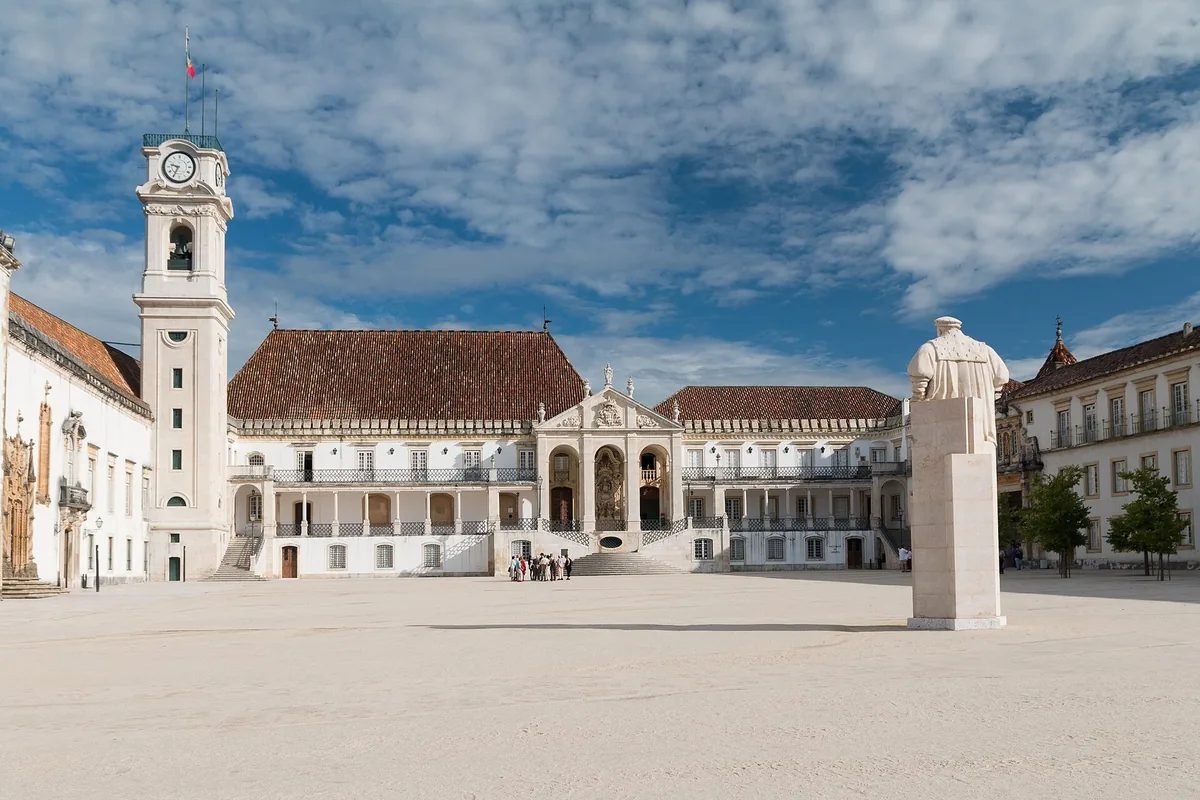
A guided circuit of the Paço das Escolas with admission included, timed so the Joanina slot does not clash with the rest of the visit.
Skip the line
✓ Verified GetYourGuide reviews
The Joanina runs on timed slots — 50 people every 20 minutes

Fifty minutes of Coimbra fado — sung by men, guitar tuned a tone lower than Lisbon’s — with the tradition explained as you go.
✓ Verified GetYourGuide reviews
The best-reviewed Coimbra product on the platform
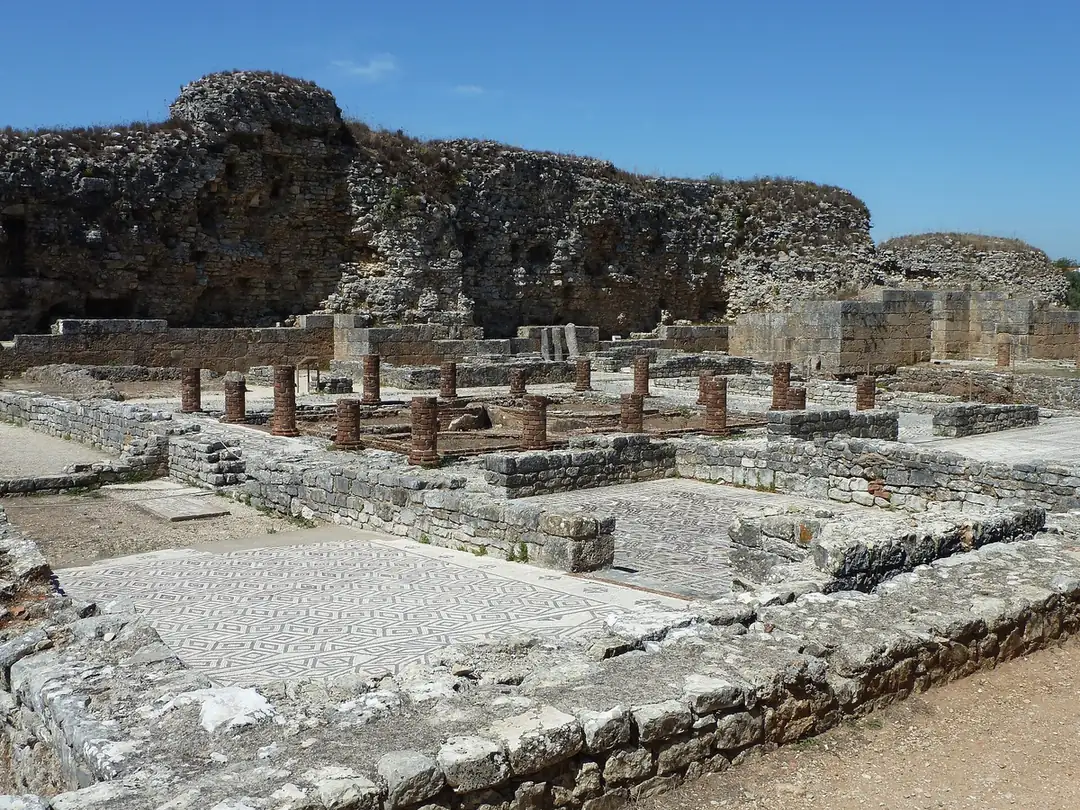
A private pairing of the Roman town and the library. Worth pricing against the bus: line 209 runs three times a day and the last weekday return is 17:55.
✓ Verified GetYourGuide reviews
Comfortably, for the city. Two full days covers the university circuit, both cathedrals, Santa Cruz, the gardens and the river, with an evening of fado. A day trip needs a third day.
The university circuit, the free Botanical Garden, the Sé Nova, Portugal dos Pequenitos and the daily 18:00 fado show. Santa Cruz opens only from 13:00 and the Almedina tower museum not at all.
The Joanina Library timed slot, and the fado show. The library slot is fixed to the minute and non-refundable; the fado venue advises booking ahead because same-day seats are normally hard to get.
The Baixa if you want flat convenience and the restaurants, the Alta if you want to wake up inside the World Heritage quarter and will accept the climb and the term-time noise.
Only by giving up most of the city. Conímbriga takes a full day because the bus runs three times each way and the last weekday return is 17:55. Two nights is really a city weekend.
Get off at Coimbra-B, the only station long-distance trains serve, and take the free Metro Mondego transfer or the Metrobus, which has served the station directly since 10 September 2026.
Further reading