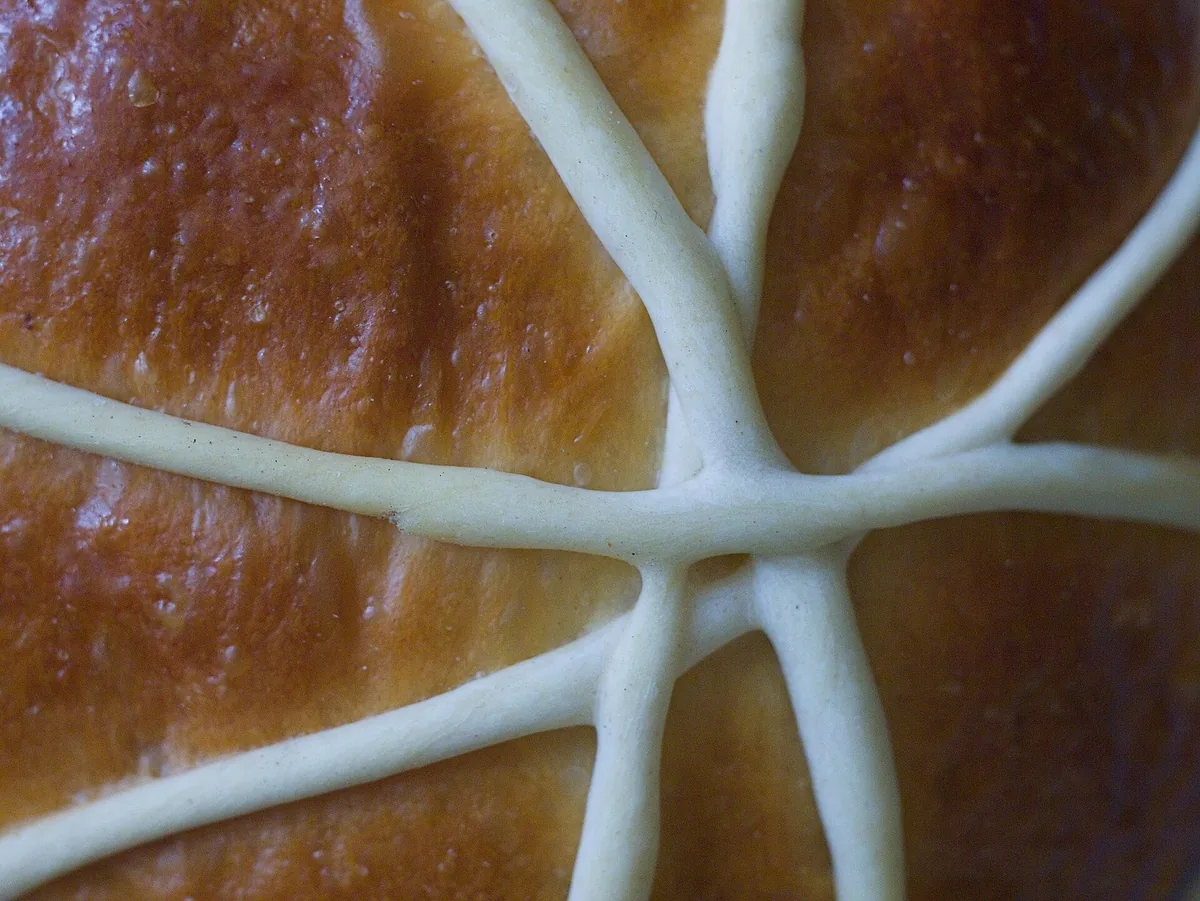

It arrives looking like nothing much: a round, pale-gold loaf with a soft crust, scored or plain, sitting on a counter beside far flashier pastries dripping with egg cream. Then you tear it and the crumb is light enough to see through, barely sweet, and the smell comes up — cinnamon, and underneath it the liquorice note of aniseed. That second flavour is the whole thing. It is what separates an arrufada from every other sweet bread in Portugal.
And here is the sentence that matters for a Coimbra guide. This is actually a Coimbra sweet. It carries the city’s name and it appears on Turismo de Coimbra’s own conventual-sweets page, which is more than can be said for most of the dishes sold to visitors here as local. Along with pastéis de Santa Clara, it is one of only two things in this guide that genuinely began in this city.
What it actually is
Turismo de Coimbra describes it precisely: a rounded sweet bread with a light, fluffy dough, lightly sweetened, and aromatizada com canela e erva-doce — flavoured with cinnamon and aniseed.
Every part of that description is doing work. Rounded, not plaited or loaf-shaped. Light and fluffy, which in practice means a long, slow, enriched dough rather than a dense cake. Lightly sweetened, which is the key to it and the thing that surprises people expecting a dessert. And the two aromatics, cinnamon and aniseed, which together produce a flavour that is warm and faintly medicinal in the best way.
Beyond that we are not going to publish a recipe. No exact proportions, no baking time, no weight are given by any source we read, and a conventual sweet with invented measurements is exactly the kind of small fabrication this site exists to avoid.
What you can safely expect: something closer to a brioche than a cake, sold whole or by the slice, eaten with coffee, and best on the day it is baked. Enriched breads of this kind go stale quickly and no amount of skill prevents it.
Where it comes from
Arrufadas belong to Portugal’s docaria conventual — the convent-sweet tradition, which is one of the strangest and most productive accidents in European food history.
Convents used enormous quantities of egg white, for starching habits and for clarifying wine, and were left with yolks by the bucket. What they did with them became a national cuisine of its own: doce de ovos, egg threads, yolk-and-sugar pastes, and a family of pastries built around them. Coimbra, with its monasteries and convents, produced a full local canon.
Turismo de Coimbra documents the rest of that canon alongside arrufadas: Arroz Doce de Coimbra, traditionally offered by newlyweds to wedding guests and served in vessels from Almalaguês; Barrigas de Freira, made with yolks, sugar and bread; Crúzios, thin crisp pastry with egg-and-almond cream; Manjar Branco; Pudim das Clarissas; Rosas da Rainha, egg threads shaped into roses; and Talhadas de Príncipe.
Arrufadas sit slightly apart from that list, because they are a bread rather than an egg-yolk confection. That is probably why they survived as an everyday item while several of the others became occasional pieces.
Where to find one, honestly
This is where we have to be straight with you. No named source we read attaches arrufadas to a specific pastelaria in Coimbra. Neither of the two food writers we relied on for this city names an address for them, and the official tourism page describes the sweet without recommending a shop.
So we are not printing a bakery recommendation, because we would be making it up.
What we can tell you is where to look. Pastelaria Briosa, at Largo da Portagem at the river end of the Baixa, is documented as selling several Coimbra sweets — pastéis de Santa Clara, pastéis de Tentúgal, queijadas de Coimbra and its own Suspiro Briosa. A house with that range is the obvious first place to ask.
Beyond that: ask in any neighbourhood pastelaria, and ask in Portuguese if you can — tem arrufadas? The lower town and the residential districts like Solum, where bakeries serve locals rather than visitors, are better hunting grounds than the monument streets.
Go in the morning. An enriched bread is a morning product everywhere in Portugal, and by five in the afternoon you are buying yesterday.
How to eat it
With coffee, in the morning, standing at a counter. That is the Portuguese default for almost everything of this kind and it is right here.
Ask for a café — an espresso — or a galão if you want milk. Portuguese coffee is small, strong and cheap, and it is priced lower at the counter than at a table, which is a distinction worth knowing in a tourist city.
Do not expect it to be very sweet and do not judge it for that. The whole register of this bread is gentle, and the aniseed is there to be noticed rather than covered. If what arrives is heavily sugared, you have been sold something else.
It also works at the other end of the day with a glass of Bairrada sparkling wine, which comes from the demarcated region just north of the city — though be aware, as our page on it explains, that we could not verify the basic facts about that wine from an authoritative source.
Why the provenance matters
Because almost everything else sold here as a Coimbra speciality comes from somewhere else, and knowing that changes how you eat in this city.
Leitão and Bairrada sparkling wine are from the Bairrada, centred on Mealhada, largely in the neighbouring district of Aveiro. Chanfana and negalhos come from the hill country to the south, around Miranda do Corvo and Lousã. Pastel de Tentúgal is from Tentúgal, in Montemor-o-Velho, about twenty kilometres west. Queijo Rabaçal’s protected zone does not include Coimbra city at all.
Coimbra serves all of them, and there is nothing wrong with eating them here. But a guide that lists six regional dishes and two local ones without telling you which is which is not describing a city’s food, it is describing a distribution network.
Arrufadas are the city’s. So are the pastéis de Santa Clara. Order both, and you have eaten Coimbra rather than the surrounding hundred kilometres. The wider picture is in what to eat in Coimbra.