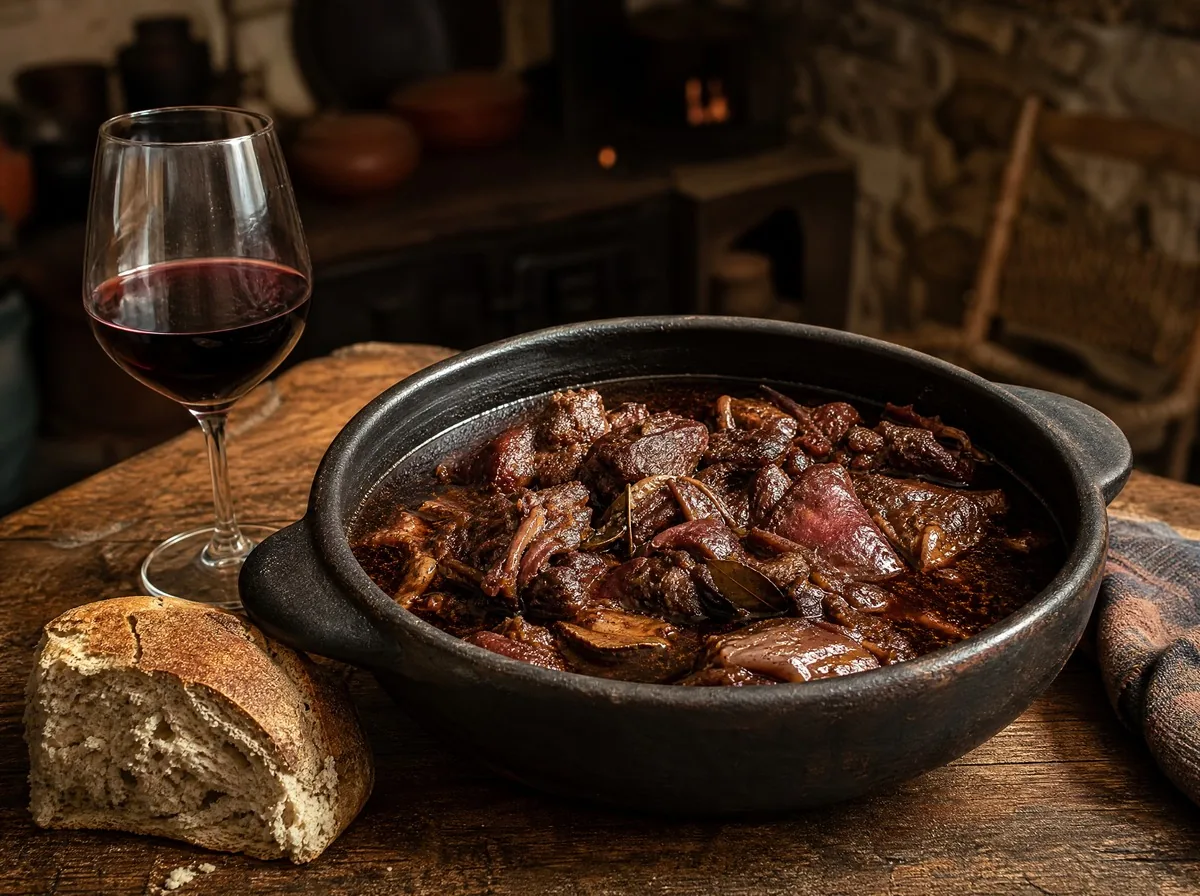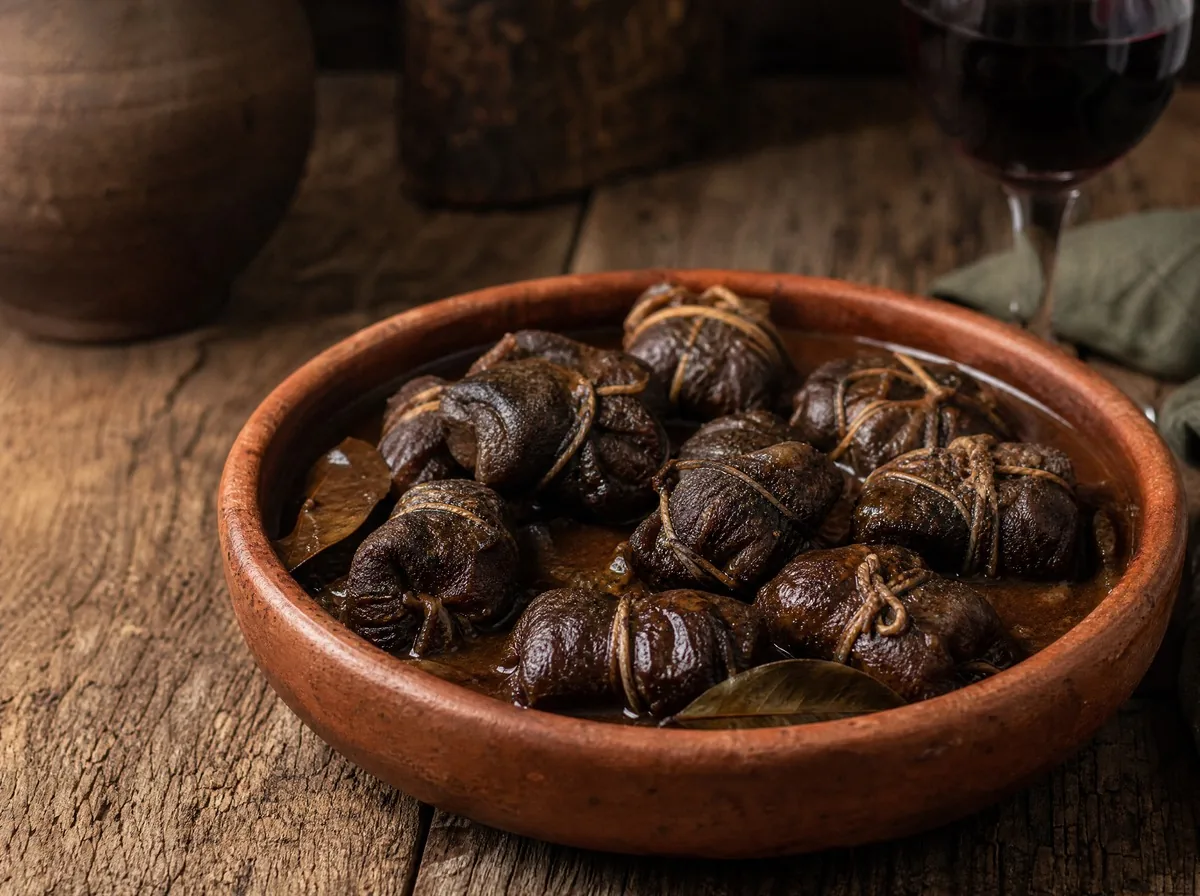

Negalhos belong to the same afternoon as chanfana, and to the same animal. When an old goat went into the wood oven in the hills south of Coimbra, the braise in the clay pot was only part of the accounting. The broth became sopa de casamento, the wedding soup. The feet became chispe. And the tripe became negalhos.
That much is documented. Beyond it, this page has to be unusually candid: we could not find a precise, sourced definition of the dish. The obvious authority — the Câmara Municipal de Miranda do Corvo, which publishes a negalhos page — returned an HTTP 404 when we tried it on 15 September 2026. We are not going to write a recipe from memory to fill the hole.
What is documented
One named source carries it. On-Centro, in its account of the origins of chanfana, describes negalhos as tripe-based, and names it alongside sopa de casamento — made with the chanfana broth — and chispe, from the goat’s feet, as the complementary dishes that used the rest of the animal.
That places negalhos firmly inside the whole-animal tradition of the hill country south of Coimbra: Miranda do Corvo, Lousã and Vila Nova de Poiares, the same three municipalities that dispute the origin of chanfana and each hold an annual gastronomic week.
What is not documented: exactly which offal is used, how the parcels are tied or wrapped, what goes into the cooking liquid, how long it cooks, and whether the tripe is goat or something else. Any page that gives you those details with confidence is working from somewhere we could not reach.
Also not documented: a single restaurant in Coimbra city serving it. Neither of the named food writers we relied on for this city mentions negalhos at any address, and no local listing we read includes it.
The whole-animal economy
What negalhos really represent is an accounting system, and it is the most interesting thing about them.
A goat past breeding age is a liability to a smallholding: it costs feed and produces nothing. The solution developed in this hill country was to kill it and convert every part into a named dish, each with its own occasion. The prime braise for the table. The broth for the soup at a wedding. The feet for one dish, the tripe for another.
That is not rustic charm. It is a society with no margin, building a cuisine out of necessity, and the reason these dishes are now celebrated with annual festivals is that the necessity has gone and the food turned out to be good.
The same logic runs through the region’s whole repertoire. Zé Manel dos Ossos in Coimbra is the urban version: a tavern built on serving pig bones, because bones were what there was and wine needed something salty beside it.
Offal cooking makes some visitors uneasy, which is worth being honest about. Tripe is a texture as much as a flavour, and nobody should order it out of duty. But it is not exotic in Portugal; it is Tuesday.
Where you might actually eat it
Not, on the evidence, in Coimbra. No city restaurant documented in this guide serves negalhos, and we are not going to point you at one on a hunch.
The honest instruction is to go to the source. The hill country south-east of Coimbra — reachable as a day trip through the Lousã schist villages — is where these dishes are made and eaten, and where the tavernas that cook them are.
Aim for the gastronomic weeks if your dates allow. Miranda do Corvo, Lousã and Vila Nova de Poiares each hold one, and a festival week is when the wood ovens are lit and the full repertoire — chanfana, negalhos, sopa de casamento, chispe — appears in one place. Confirm this year’s dates with the municipalities directly, because we could not verify a current calendar.
In the city itself, the closest you will get is chanfana, documented at A Cozinha da Maria and Taberna Casa Costa. Ask at either whether the kitchen does negalhos; they are the two most likely to.
Why this page is short
Because the record is thin, and the alternative would be to fill it with something that reads like knowledge.
It would be easy to write four hundred confident words about how negalhos are made. Tripe parcels tied with intestine, simmered in wine and garlic, served with the broth — that sounds right, it matches how similar dishes work across southern Europe, and we have no source for it. So it is not on this page.
The municipal authority that would settle it, Câmara Municipal de Miranda do Corvo, publishes a negalhos page whose URL returned a 404 on 15 September 2026. Other candidate sources exist and were not read. This is a gap we can name rather than one we can close.
If you eat negalhos in the hills and want to know what is in front of you, ask the kitchen. In a village taverna that question is welcome, and the answer will be better than anything we could print.
For the sorting of which dishes in this region belong to Coimbra and which belong to its hinterland, see what to eat in Coimbra. Negalhos are firmly the hinterland.