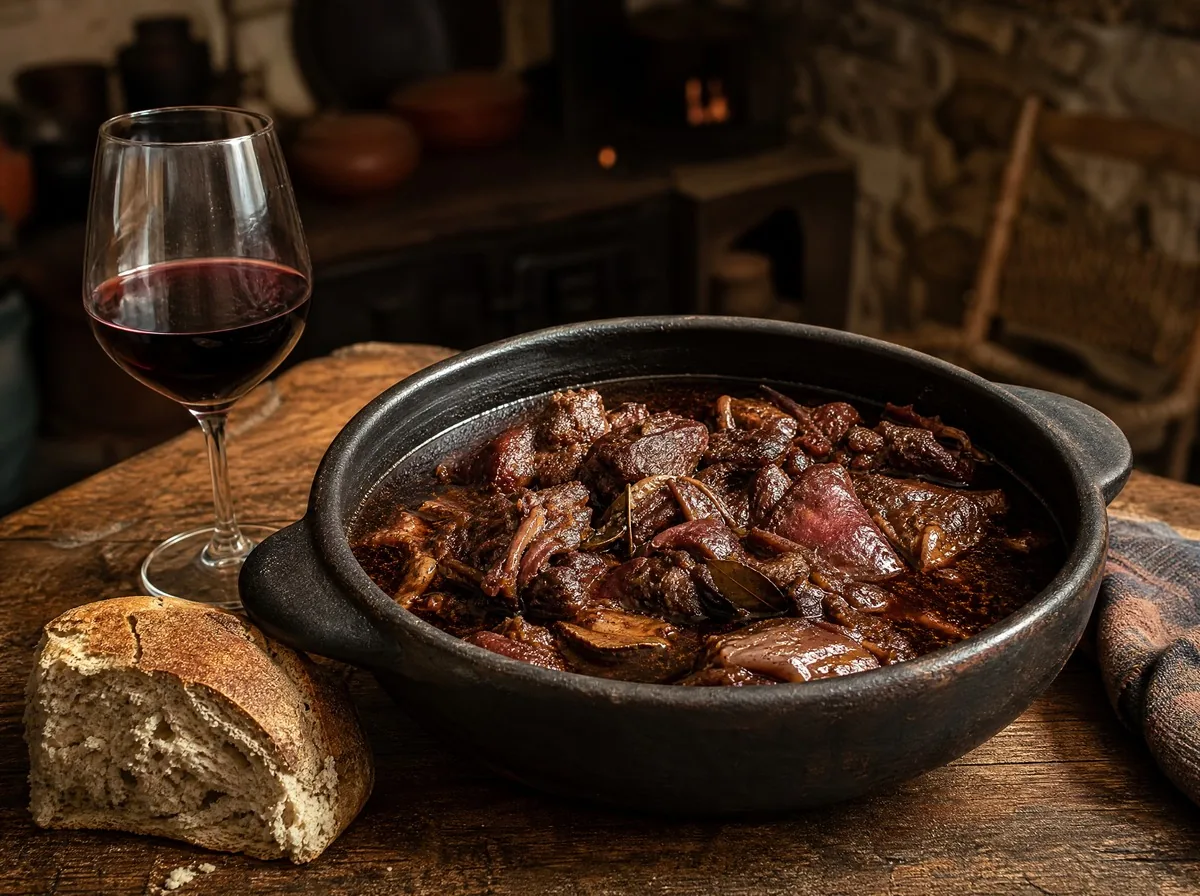

A taberna in Portugal is a promise about price before it is a promise about food. Wine measured out rather than listed, plates that arrive without ceremony, a room that was never renovated because nobody asked it to be. Casa Costa is one of these, and it is the cheapest documented place in Coimbra to eat the dish this region argues about.
The travel writer Ola Daniela puts it at Rua Augusto Filipe Simões, bands it € on her own scale, and names chanfana and traditional tavern fare as what it does. That is the entire published record for this address, and this page is honest about how thin that is. What it can do is tell you what chanfana should taste like, what a tavern like this costs you in practice, and what to establish before you walk.
The dish it is known for
Chanfana is cabra velha — old goat, past breeding age — jointed, covered in red wine with garlic, bay, pepper and lard, and left in a sealed black clay pot in a wood oven for hours. The acid and the time break down an animal that would otherwise be inedible. The result is dark, winey, faintly gamey, and it comes off the bone with no resistance at all.
A good one has body without being greasy and tastes of wine that has been reduced rather than wine that has been added. A bad one is tough goat in thin gravy, and the difference is entirely the length of the cook.
It is not a Coimbra city dish. The documented origin claim is the Mosteiro de Semide, near Miranda do Corvo, where nuns received goat meat as rent and preserved it by cooking it in wine. Three municipalities — Miranda do Corvo, Lousã and Vila Nova de Poiares — each claim primacy and each hold a gastronomic week for it. Coimbra restaurants serve it. The hills to the south made it.
The Napoleonic origin story, in which villagers invent the dish to feed or poison French soldiers, is not supported by the documentary record. The sourced account says so plainly and prefers the unglamorous explanation: you had an old goat and you needed to eat it.
That unglamorous version is the better story anyway. Chanfana belongs to the same whole-animal economy as negalhos and the wedding soup made from the braising broth: nothing from the goat was wasted, and each part became a named dish. A kitchen that still cooks this way is preserving an accounting system as much as a recipe.
What band € actually buys
Ola Daniela’s € band is her own scale, not Michelin’s, and there is no published menu price behind it. But a single-symbol band on a Portuguese tavern has a fairly consistent meaning and it is worth spelling out.
It means the wine comes in a jug and costs very little. It means portions are large and a meia dose — a half portion — is a normal, unembarrassing order. It means the couvert, the bread and olives that arrive unasked, is charged for and can be sent back. It means the room is functional rather than designed.
It also usually means cash. Nothing about payment is published here, and small taverns in this city are inconsistent about card terminals. Carry notes.
What it does not mean is worse cooking. The best chanfana in central Portugal is made in rooms exactly like this, by people who have made it a thousand times, for customers who would notice immediately if it slipped. Price and quality separate early in Portugal and this is one of the places where they do.
Compare it with the other end of the city’s range. Arcadas, across the river in a palace, publishes no prices at all; this tavern publishes none either, but for the opposite reason. One assumes you will not ask and the other assumes you already know.
The address problem
Two things about the location are genuinely missing, and you should plan around both.
There is no street number. Ola Daniela gives the street, Rua Augusto Filipe Simões, and nothing more precise. No other source we read carries this restaurant at all, so there is nothing to cross-check it against.
No source places the street in a named quarter. Every other restaurant in this guide sits in the Baixa, the Alta or Santa Clara. This one is filed under no quarter because assigning it to one would be a guess, and a guess in a listing looks exactly like a fact.
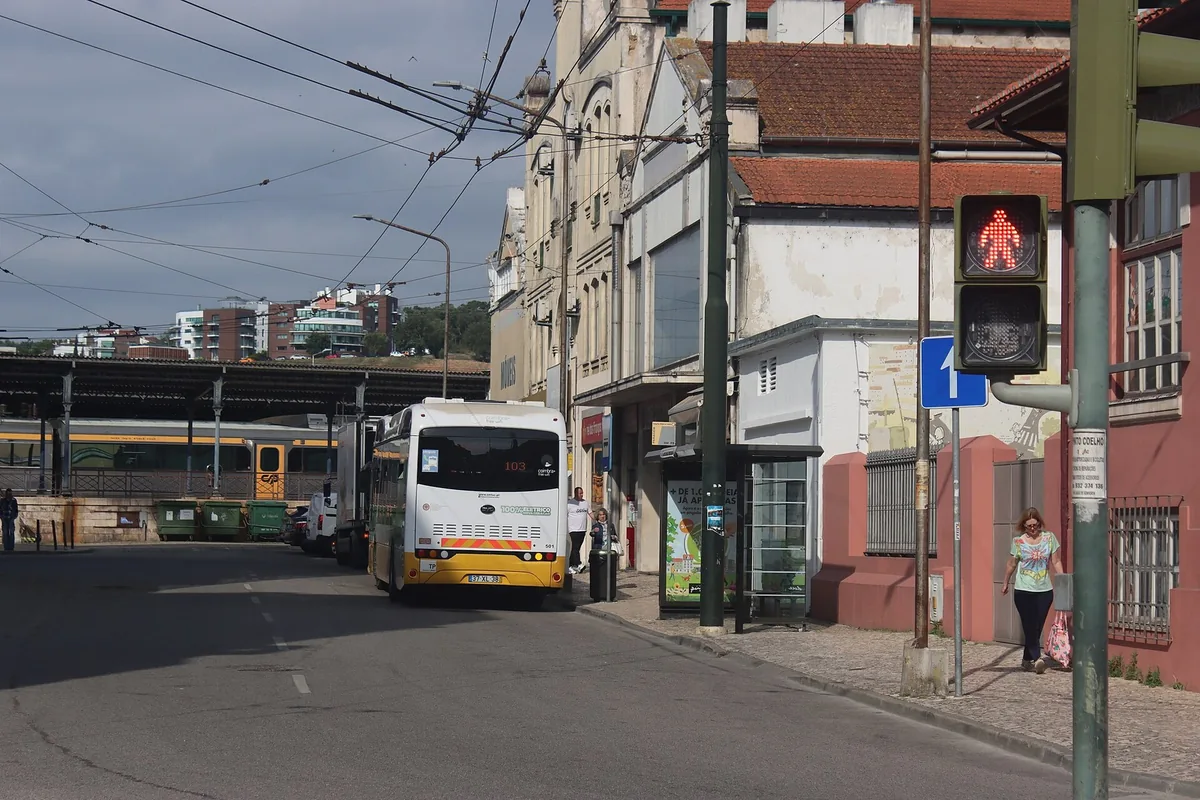
The practical consequence: put the street name into a map application before you leave your accommodation, and give yourself more walking time than you think. Coimbra’s centre is compact but its street grid is not, and the hill makes a short distance on a map into a long one on foot — see getting around Coimbra.
If you want a chanfana address you can find without effort, A Cozinha da Maria is in the middle of the lower town, banded €€, and carries the strongest published recommendation in the city for the same dish.
What is not published
A complete list, because it is short and it determines how you should use this page.
No opening hours. No closing day. No telephone number. No official website. No street number. No named quarter. No menu. No individual prices. No rating we will reprint.
One named travel writer ate here, liked it, and recorded the street, the price band and the fact that it does chanfana. Everything on this page beyond that is either about the dish itself, or about how taverns of this kind work in Portugal generally, and it is labelled as such.
That is a defensible page and an unusual one. Most guides would have filled those gaps with confident-sounding sentences assembled from nothing. The result reads better and sends you to a closed door at 15:00 on a Monday with no way of having known.
So the instruction here is old-fashioned: find the street, look at the door, and if it is shut, walk to the lanes off Praça do Comércio where a dozen kitchens are within a minute of each other.
None of that is a reason to skip it. It is a reason to treat it as the second half of a plan rather than the whole of one.
The verdict
Worth it if chanfana is the point of the evening and you want it at tavern prices. This is one of only two addresses in the city where a named writer has confirmed the dish, and it is the cheaper of them.
Not worth it if you need certainty. There is no number to ring and no timetable to consult, which in a city where you have two or three dinners makes this a gamble rather than a plan.
The purist alternative is to get out of Coimbra altogether. The dish belongs to the hill country and the Lousã schist villages put you inside the disputed zone, where chanfana is not a menu item but a local argument with three sides to it.
Before you build any food plan around this region’s famous dishes, read what to eat in Coimbra. The list of things that genuinely originate in this city is much shorter than the list of things sold as Coimbra specialities, and knowing which is which changes where you eat.