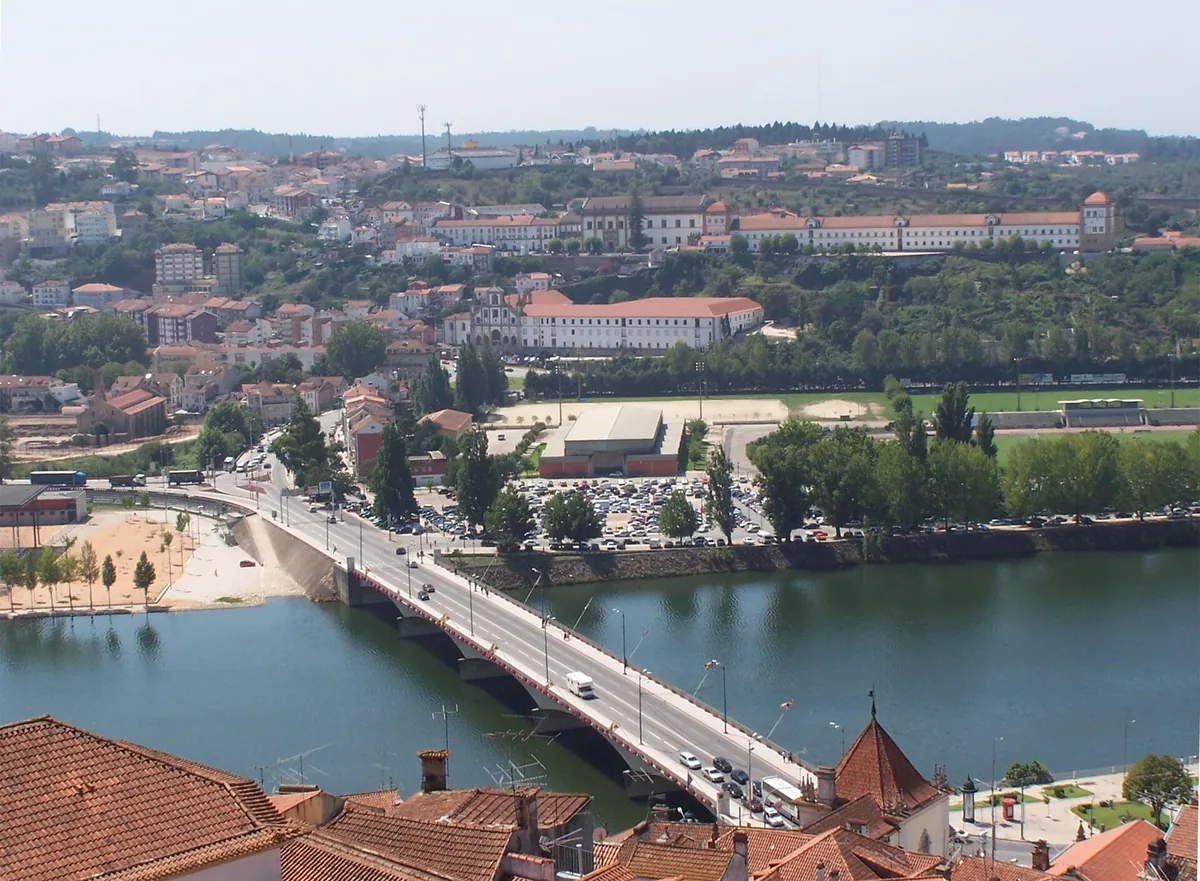

Cross the bridge and the noise drops by half. The pavement widens, the buildings step back, and for the first time all day you can see the city you have been walking around — the hill, the university block on top of it, the cathedral tucked under the ridge. Behind you the river runs flat and brown. Santa Clara’s best feature is the view of somewhere else, and it does not pretend otherwise.
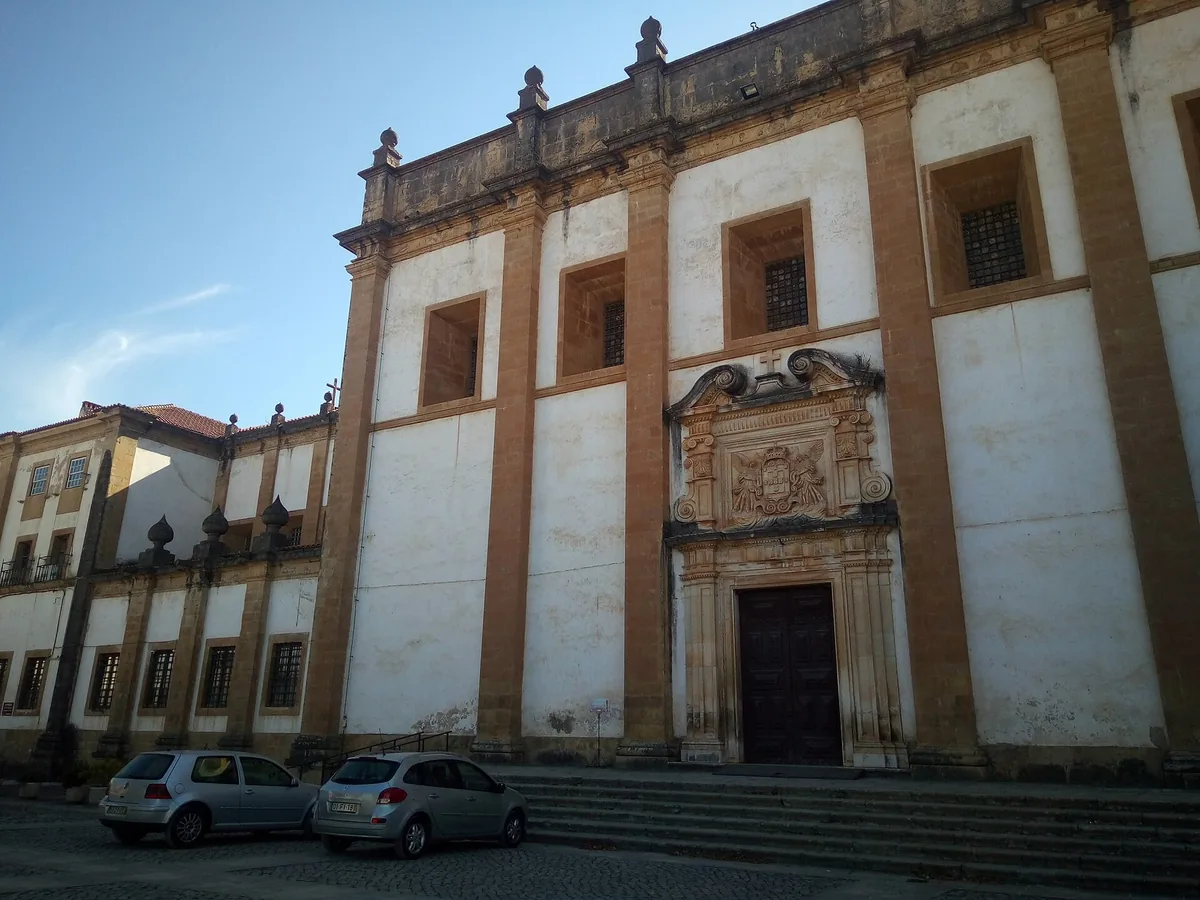
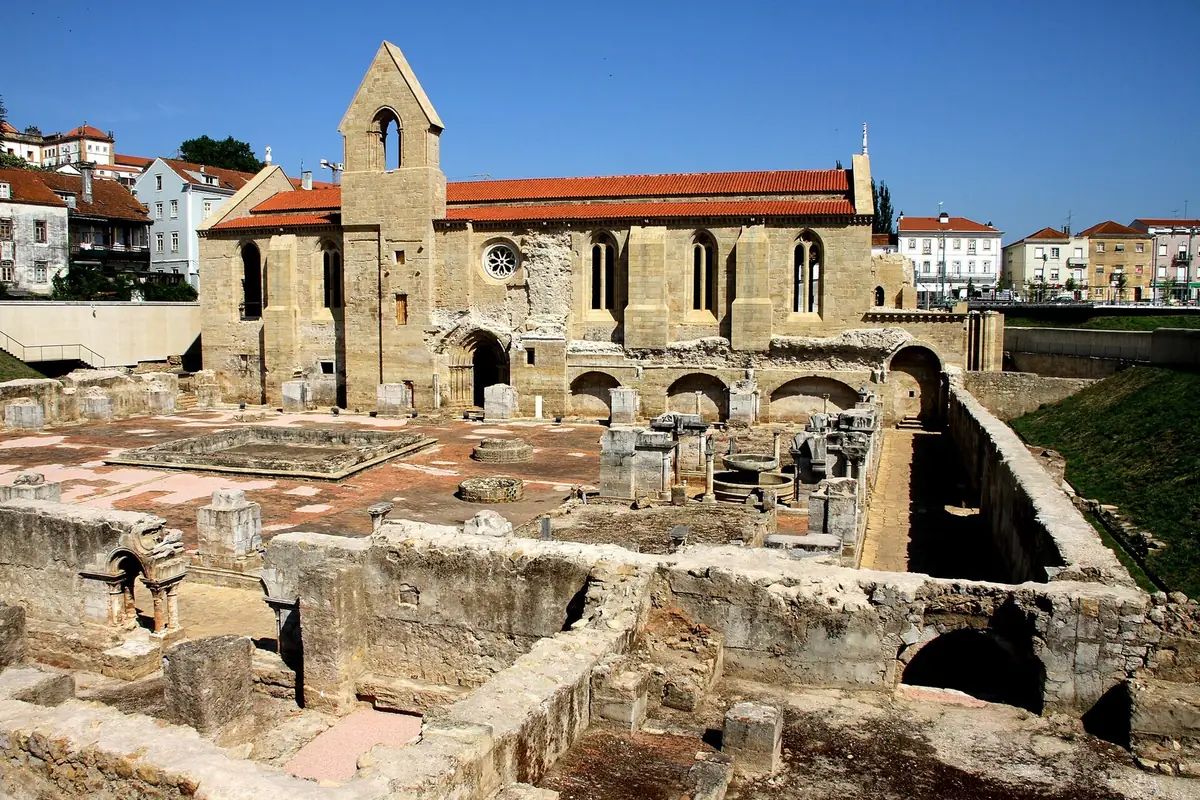
This is the left bank, and it holds two monasteries with the same name and very different fates. Santa Clara-a-Velha was built by the river, flooded repeatedly, and abandoned; Santa Clara-a-Nova sits high on the ridge above it, holding the body of Queen Isabel of Portugal in a silver-and-crystal urn and, in the lower choir, her original Gothic tomb. The nuns carried her uphill away from the water. That is the story of this whole bank in one sentence.
The two monasteries
Start with the bad news, because it changes the plan. Santa Clara-a-Velha has been closed since October 2025 and no reopening date is published. The excavated Gothic church by the river is the single most atmospheric ruin in Coimbra and you currently cannot go into it.
Santa Clara-a-Nova on the ridge is open, daily 08:30–17:00, extended to 18:30 in summer. Entry is 6.00 EUR, dropping to 3.00 EUR each for groups of six or more and for ages 12–18, free under 12; a guided visit adds a flat 10.00 EUR and has to be booked ahead. The site describes the charge as a donation toward upkeep.
Go for the double burial. Queen Isabel is above the altar in silver and crystal, and downstairs in the coro baixo is the Gothic stone tomb carved for her by Mestre Pero, which her nuns brought up from the flooding river bank. Seeing both in one visit is the point of the climb.
Her feast is the reason the city stops on 4 July, the municipal holiday, and the reason for the Festas da Rainha Santa Isabel — whose processions run in even-numbered years, not odd ones, whatever you read elsewhere.
Both monasteries belong to the same story, and the river is the villain of it. Santa Clara-a-Velha was founded on the flood plain in the fourteenth century and spent four hundred years losing ground to the Mondego; the church filled with silt until the community abandoned it in 1677 and moved to the hilltop. The excavation that recovered it is recent, which is why the ruin looks so raw. The river won for three centuries and then the archaeologists took it back.
Portugal dos Pequenitos, honestly
The other draw on this bank is Portugal dos Pequenitos, 1.3 hectares of miniature Portuguese architecture and ethnographic displays laid out as a park for children.
Here is the honest verdict. On GetYourGuide its entry ticket carries a rating of 4.1 out of 5 across roughly 225 reviews — the second-weakest score of any Coimbra product with a sample worth reading, on a platform where the university walking tours sit between 4.6 and 5.0. That is not a disaster and it is not a triumph. It is a park that delights small children and underwhelms adults who were told it was unmissable.
Go if you have children under ten and half a day. Do not reorganise a two-day trip around it. Ratings and review counts on that platform drift between page loads, so treat the figure as an indication rather than a verdict carved in stone.
Eating and staying on the left bank
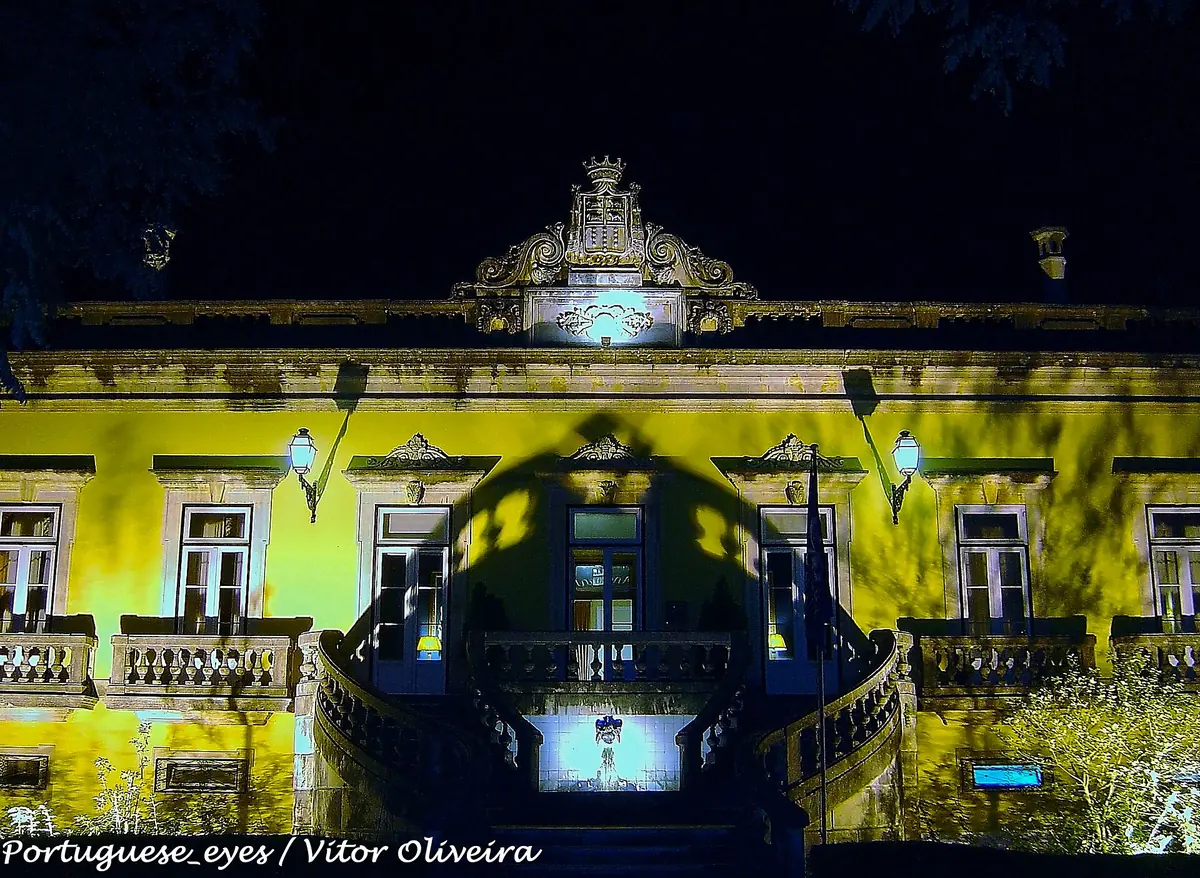
Santa Clara’s accommodation is dominated by one address. Hotel Quinta das Lágrimas is an eighteenth-century palace on grounds the hotel describes as twelve acres, a five-star member of Small Luxury Hotels of the World, with a spa, golf and the city’s most ambitious kitchen.
That kitchen is Arcadas, and it is the one restaurant in this guide where you should be careful what you believe. It is a serious fine-dining room. It does not currently claim a Michelin star on its own pages, whatever old headlines say, and its chef is named differently by different sources. Our page on it sets out exactly who says what.
Otherwise this bank is thin for eating, and that is the trade-off. There is no restaurant cluster here to compare with the lanes of the Baixa, and you will cross the bridge for dinner most nights.
There is one more reason this bank is quiet: it was never a commercial quarter. The right bank had the walled town, the gates, the markets and the university; this side had monasteries, farmland and later suburbs. That history is still legible in the street pattern, and it is why a ten-minute walk here passes nothing while the same walk in the lower town passes thirty shopfronts.
The compensation is the river. The Mondego riverside walk runs along this side, and the river cruise puts the Santa Clara-a-Velha ruins, the old cathedral and the university in a single sequence from the water.
Getting here, and the car question
Julie Dawn Fox puts the case for this bank plainly: it is often easier for parking and driving access than the centre, less atmospheric, and more practical if you have a car. That is the whole argument, and it is a good one.
Everything on the right bank is a bridge walk away — Largo da Portagem at the foot of the Baixa is the landing point, and the shopping spine starts there. Reckon on ten to fifteen minutes on foot from the near end of Santa Clara to the middle of the lower town, all flat.
What is not documented is this bank after dark. No source we trust characterises Santa Clara’s nightlife, and rather than invent one we will say what is observable: it is residential, it is quiet, and the bars are across the water. If you want to walk home from a late night out, sleep in the Alta instead.
No published figure describes how steep the climb from the riverbank up to Santa Clara-a-Nova is. It is a real climb on the Calçada de Santa Isabel, and in July it is worth a taxi.