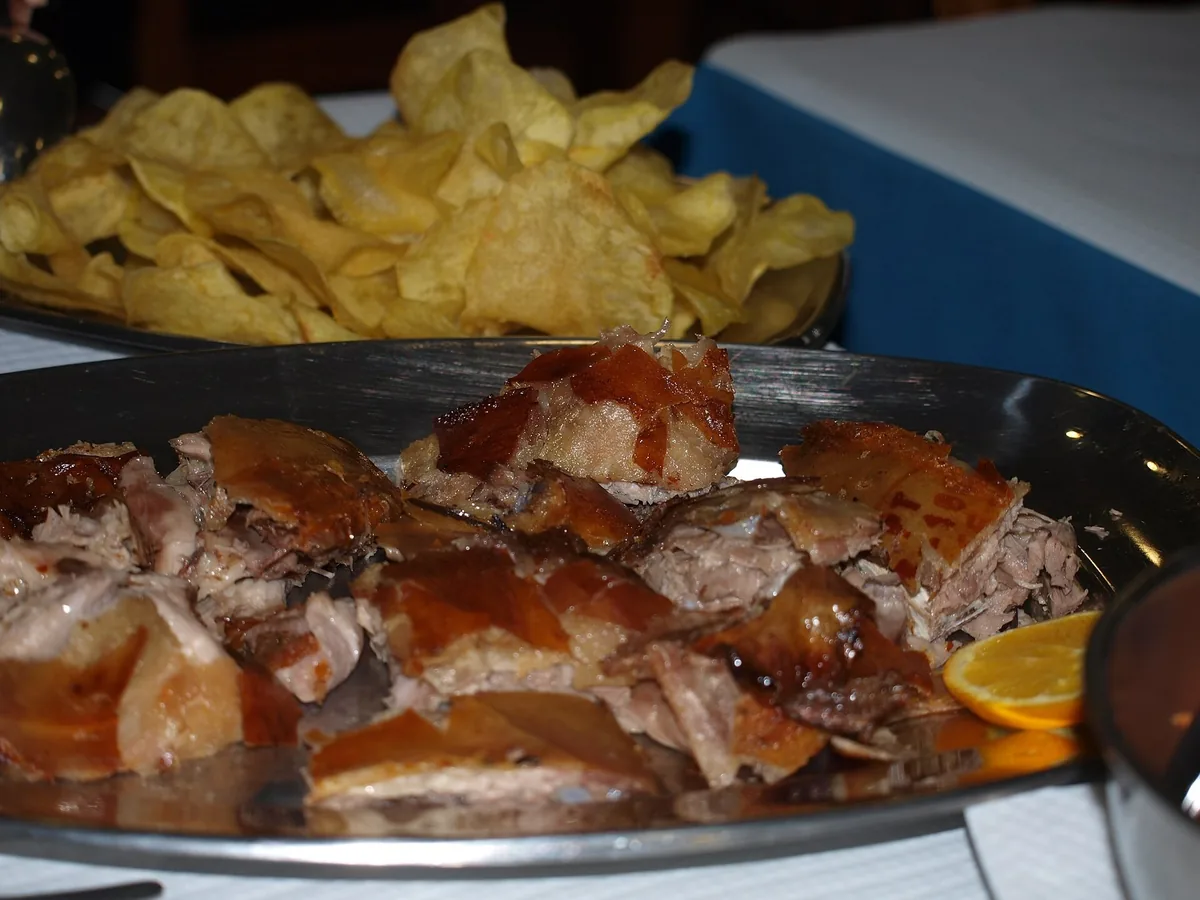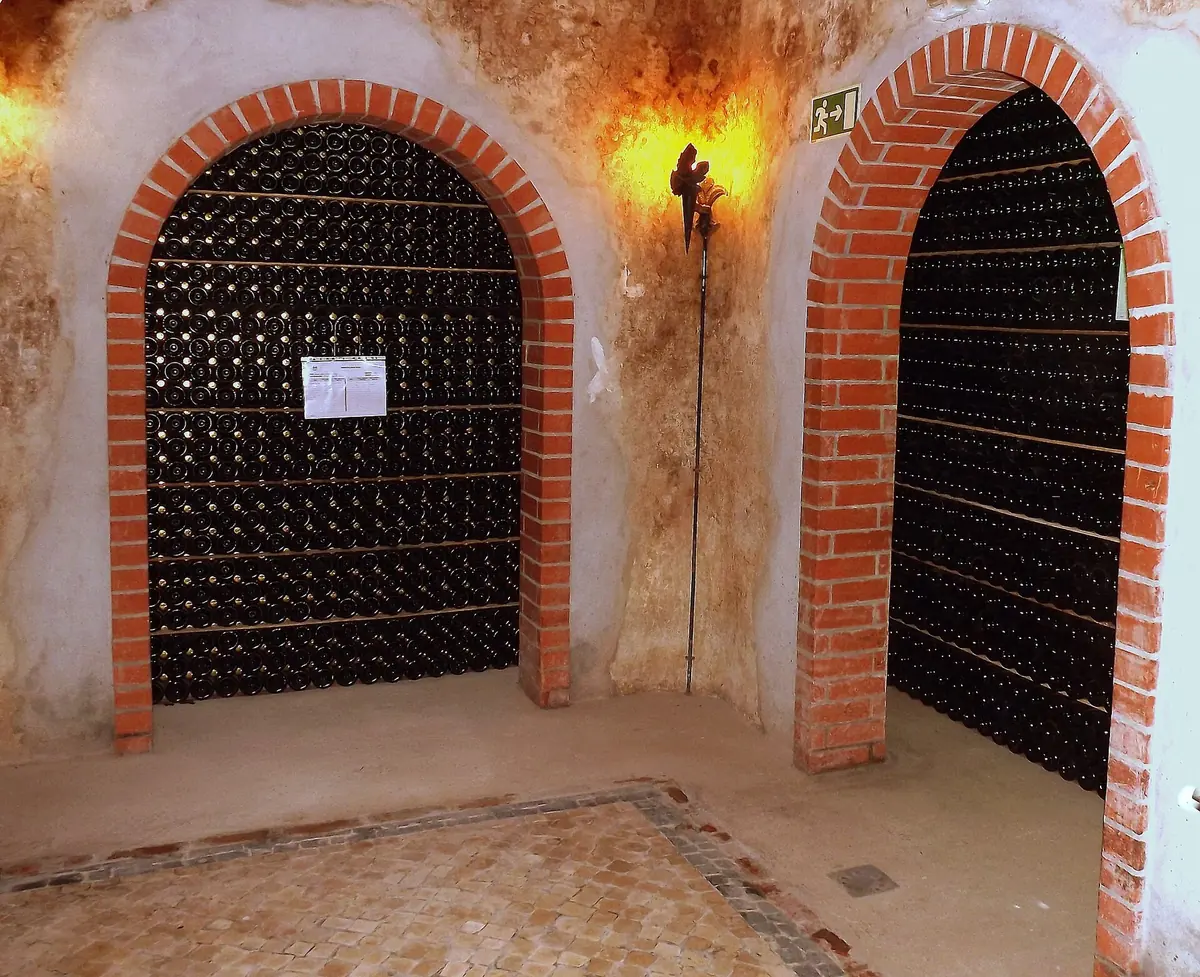

Order cured meat and cheese anywhere in this part of Portugal and someone will suggest something cold and fizzy to go with it. Not champagne, not prosecco — espumante, made in the Bairrada, the demarcated country between Coimbra and Aveiro, by the traditional method with a second fermentation in the bottle. It is the local aperitif and the standard partner for roast suckling pig, because acidity and bubbles are what a very fatty dish needs.
This page is going to be unusually short on facts, and it is going to tell you why. We could not verify the basics of this wine from an authoritative source. Not the demarcation date, not the appellation rules, not the permitted grape varieties, not the frequently repeated claim that the Bairrada is Portugal’s leading sparkling-wine region. So none of those appear here as statements.
What we can say
Three things, and we are confident in all of them.
The region exists and is defined. The Bairrada is a demarcated wine region lying between Coimbra and Aveiro, the same country that produces leitão da Bairrada, centred on Mealhada about twenty kilometres north of the city.
The style is traditional-method sparkling wine — a second fermentation in the bottle, the same technique used in Champagne — and the grape most associated with the region is Baga, a thick-skinned, high-acid, late-ripening red variety.
It is drunk here with fatty food. The named food writer Nelson Carvalheiro recommends Bairrada wine with cold cuts and cheese at Loggia, the terrace restaurant at the Machado de Castro museum, which is the one documented consumption link we have in Coimbra itself.
That is the extent of what this guide will assert. Everything beyond it is on the next section’s list.
What we could not verify
A plain list, because a reader is better served by knowing the shape of the gap than by a confident paragraph over the top of it.
The demarcation date. You will see a year quoted for when the Bairrada was formally demarcated. We could not confirm it from an authoritative source and we do not print it.
The DOC rules. What a wine must do to carry the appellation — minimum ageing on lees, permitted yields, labelling tiers — is not stated anywhere we read.
The permitted grape varieties. Baga is strongly associated with the region, but the full list of varieties allowed in the sparkling wines is not something we verified.
“Portugal’s leading sparkling-wine region.” This claim is everywhere. It may well be true. We have no source for it, so it does not appear here as a fact.
Two candidate authorities were identified and not read: a conference paper on the history of Bairrada sparkling wine hosted by DRAPC, and the Portuguese wine title Revista de Vinhos. Those are where a proper answer would come from, and we would rather point you at them than paraphrase them unread.
How to drink it
What we lack in appellation detail we can make up in practical use, because the way this wine is drunk locally is not in dispute.
Cold, and early. It is an aperitif before it is anything else, and the Portuguese convention is to open it with the cured meat and cheese rather than saving it for a toast.
With the pig. Leitão and Bairrada sparkling come from the same twenty kilometres of country and the pairing is functional: fat and crackling against acid and bubbles. If you are eating suckling pig anywhere in this region, ask for the local sparkling by name.
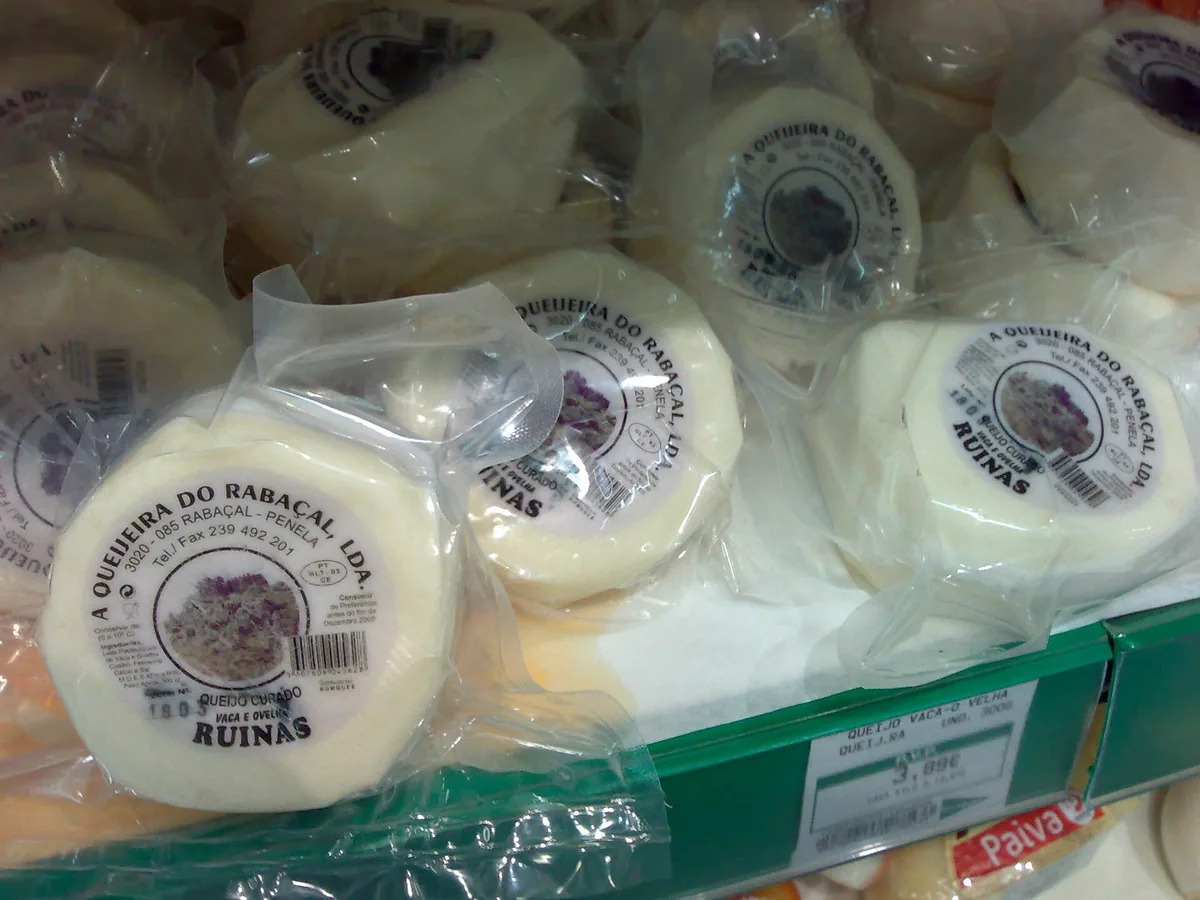
With cheese. Carvalheiro’s recommendation of Bairrada wine with cold cuts and cheese holds for Queijo Rabaçal and for the sheep’s-milk cheeses of central Portugal generally.
Ask for it by name. In a Coimbra restaurant the default sparkling on the list may be from anywhere. Espumante da Bairrada is the phrase, and it is a reasonable question in any decent house.
Where it fits in a Coimbra trip
Like most of the famous food around here, it belongs to a neighbouring place.
The Bairrada is north. Chanfana and negalhos come from the hills to the south-east. Pastel de Tentúgal is from Montemor-o-Velho to the west. Queijo Rabaçal comes from a DOP zone that excludes the city. Coimbra sits in the middle of four food regions and originated none of them.
What the city did produce is a set of convent sweets, of which arrufadas and pastéis de Santa Clara are the two documented as genuinely Coimbra’s. That is the honest local list, and it is shorter than any menu suggests.
Drinking Bairrada sparkling in Coimbra is entirely sensible — it is the regional wine, it is twenty kilometres away, and it goes with what you will be eating. Just do not let anyone tell you it is a Coimbra wine.
The complete sorting, dish by dish with the evidence, is in what to eat in Coimbra.
Why publish a page with a hole in it
Because the alternative is worse, and because you should know which of our pages to lean on.
We could have written eight hundred confident words about the Bairrada’s demarcation, its soils, its clones of Baga and its position in the Portuguese sparkling market. Most of it would probably have been roughly right. None of it would have been checked, and a reader has no way of telling a checked sentence from an unchecked one unless we mark them.
So this page marks them. Compare it with our pastel de Tentúgal page, which carries a dough specification of 0.06–0.15 mm, an EU registry number and a certifying body, because all three are on the record. That is what a verified page looks like on this site. This is what an unverified one looks like, and the difference is deliberate.
If you know the Bairrada well and this page is thinner than it should be, that is exactly right. It will be rewritten when the sources have been read rather than assumed.