Most pages that ask this question have already decided the answer, and the answer is always yes. So here is the version with the awkward parts left in.
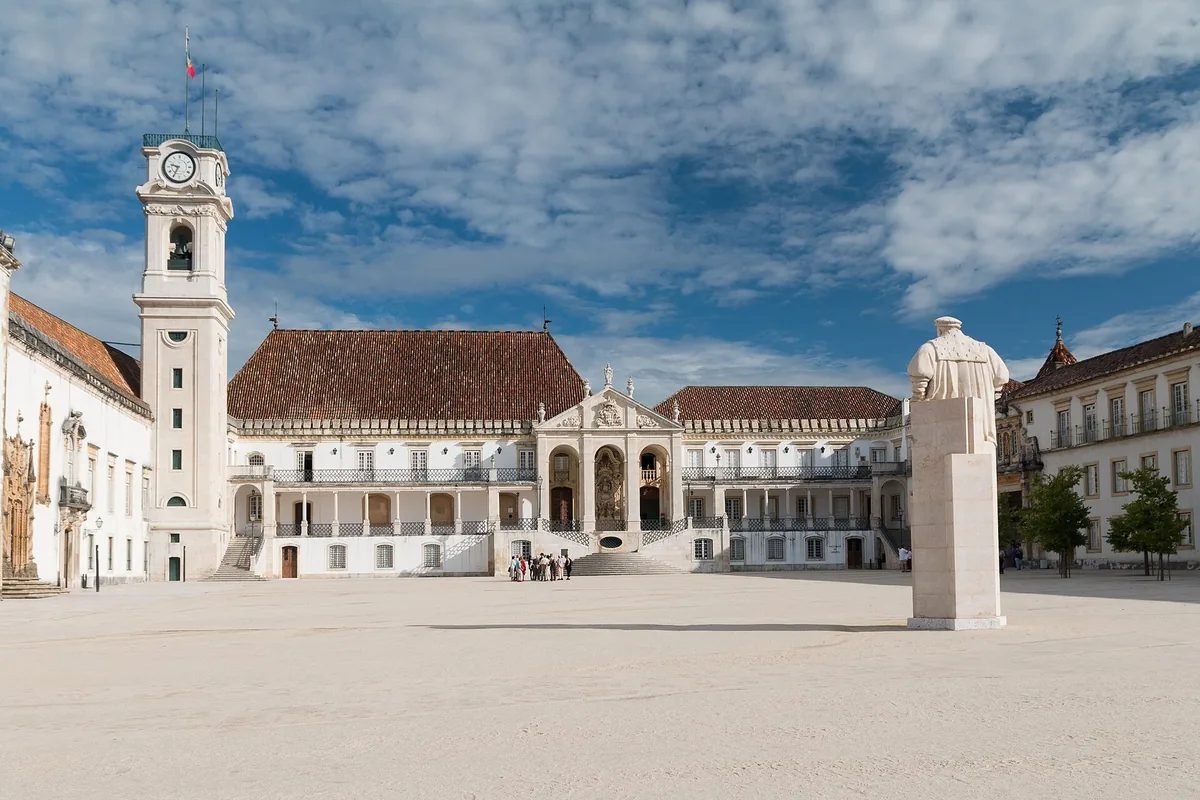
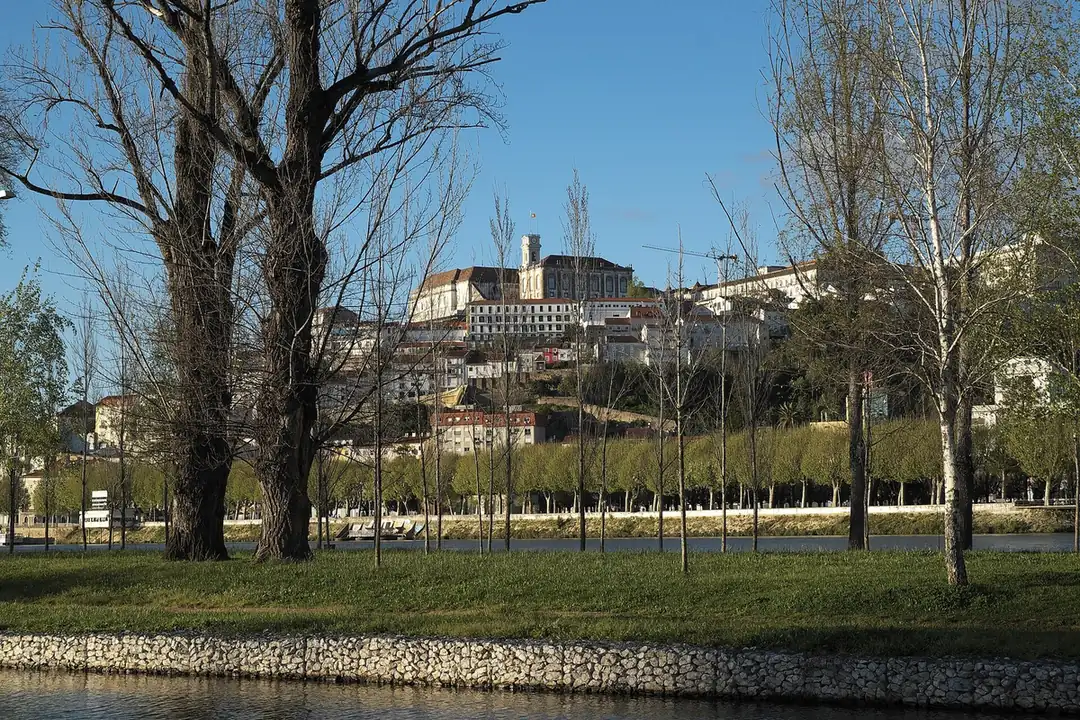
Coimbra is worth a day, and worth two if you use the second for a day trip. It is not worth five. It is a small, steep, working university city on a river, whose principal asset is not a skyline or a beach but an institution: the University of Coimbra, inscribed on the UNESCO World Heritage List in 2013 as “Universidade de Coimbra – Alta e Sofia”, a listing that covers 32 buildings across the upper town and Rua da Sofia rather than one photogenic courtyard.
And right now, in September 2026, three of the things people come for are shut. That is not a detail to bury under the fold. If you are choosing between Coimbra and somewhere else for a short trip, the closures should be part of the choice.
What is closed right now
Three sights, all of them headline entries in every guide to this city, and none of them publishing a reopening date.
The Museu Nacional Machado de Castro — one of Portugal’s most important museums, built over and around the Roman cryptoporticus of Aeminium — has been closed to the public since mid-February 2026 for conservation works under the national recovery plan, with storm damage over the winter on top. In February the director said it would be totally closed until June; by 12 June the reported plan was a phased reopening “after the summer”. As of today the official museum page still carries the closure notice. The museum page tracks it.
The Mosteiro de Santa Clara-a-Velha — the Gothic monastery the Mondego drowned and archaeologists dug back out of the silt in the 1990s — closed on 20 October 2025 for a 1.54 million EUR requalification of its interpretation centre and surroundings. The state ticketing portal shows it as temporarily closed for works. No reopening date. Watch out for a trap while you research: searching for this monument surfaces an official-looking page headed “Reabertura do Mosteiro de Santa Clara-a-Velha”, dated 22 June 2023, which refers to an earlier reopening entirely. Several aggregator guides have picked it up.
The Torre da Universidade, the baroque clock tower that is the silhouette on every Coimbra postcard, is closed. The university’s own visitor page states it flatly and gives neither a reason nor a date. So the tower you will photograph from below is the tower you cannot climb, and the 184-step ascent it publishes accessibility warnings for is theoretical.
What this actually costs you: a museum morning, a riverbank ruin and the best view in the city. That is a real subtraction. It is also, perversely, the reason one day in Coimbra works better in 2026 than it usually would — there is simply less to fit in.
The honest case for going
What survives the closures is still, we think, worth a day of anyone’s trip. Here is what it consists of, without adjectives.
The Joanina Library is not like other libraries. It was finished in 1728, holds roughly 60,000 volumes printed between the fifteenth and eighteenth centuries, has exterior walls 2.11 metres thick holding the interior at a stable temperature without machinery, and is defended at night by two colonies of bats that eat the insects that would eat the books. Entry is capped at fifty people every twenty minutes, it is sold only inside a combined ticket, and you reach it by walking through a medieval prison. Read that list again: almost none of it is about how the room looks. The full page is here.
The university is a working institution, not a monument park. The Sala dos Capelos still hosts doctorates. The chapel still says Sunday mass, which is why it shuts 11:45 to 14:00. Term-time evenings fill the Alta with students in black capes, because the traje académico is daily clothing here rather than a ceremonial costume. Cities that preserve a university are common; cities where the university is still visibly running the place are not.
Two cathedrals, three euros apart. The Sé Velha was begun in 1164 and holds what its parish calls the richest Romanesque carving in Portugal — with no human figures and no biblical scenes anywhere in it. Entry 3.00 EUR. The Sé Nova, a Jesuit church that took a century to build and became the cathedral in 1772 because it was simply bigger, costs 1.00 EUR, the cheapest ticketed interior in the upper town.
A free botanical garden of thirteen hectares, part of the same UNESCO inscription, running downhill from the Alta toward the river. It is the largest free thing in Coimbra by a wide margin.
The student city is the part nobody photographs. Coimbra still runs on an academic calendar, and it shows: black capes on the street in term time, student repúblicas in the old quarter, and two festivals a year large enough to close the monuments. The Museu Académico covers all of it, is included free in every standard university ticket, and is skipped by almost everybody who pays for it. If you want to understand why the library and the prison are in the same building, that is the room to stand in.
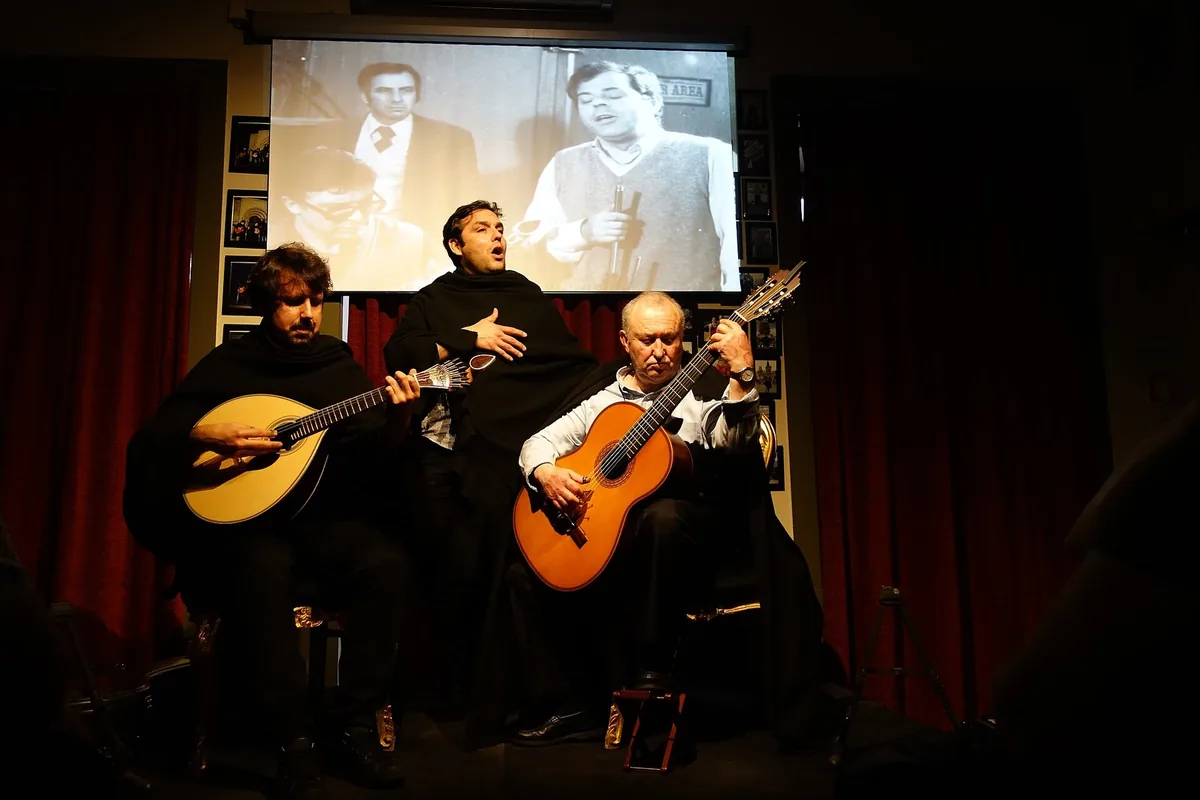
And a music that exists nowhere else. Fado de Coimbra is sung by men, in the academic tradition, on a guitar tuned a tone below the Lisbon instrument. One venue performs it at 18:00 every single day of the year.
Who should skip Coimbra
We would rather lose the booking than waste your day. Skip it, or reduce it to a stop rather than a stay, if any of the following describe you.
You want a museum day. Coimbra’s two most substantial museum experiences are the Machado de Castro, closed, and the Science Museum collections, which are good but bundled into a university ticket and partly closed themselves — the Natural History Gallery is shut, and the Cabinet of Curiosities and Physics Cabinet close for disinfestation for two days every three months. If your ideal city break is three galleries and a long lunch, this is the wrong city this year.
Stairs are a problem. This is a hill town with a river at the bottom and a university on top, connected by stepped medieval lanes, one of which is officially named Rua do Quebra-Costas — Back-Breaker Street. There is a public lift that rises 51 metres, and it helps enormously, but the university circuit itself runs on largely original circulation and the university publishes no step-free route to the Joanina’s Noble Floor.
You are coming only on a Sunday. Sunday is the worst possible single day here. The Torre de Almedina museum is closed all day, Santa Cruz does not open until 13:00, St Michael’s Chapel shuts 11:45–14:00, and the Sé Velha itself does not open to visitors until 11:00. Our weekend itinerary is built backwards from what actually opens.
You want beaches, nightlife or scale. Coimbra has one documented nightclub in any guidebook we trust. The Atlantic is a train ride away at Figueira da Foz, not here. And if you have three days in Portugal and have never seen Lisbon or Porto, see Lisbon or Porto.
You are travelling in the last week of May or the first week of October without checking. The whole university circuit closes for the student festivals — 24 May 2026 for Academic Week, 4 October 2026 for the Latada — and Santa Cruz closes on both parade days too.
How long it actually needs
Answer it with arithmetic rather than opinion, because the university publishes its own durations.
The self-guided Joanina + University + Science Museum programme has a stated average of three hours. Without the Joanina it is 2h30. The guided Palace of Schools tour is 1h30. The Sé Velha takes 30–45 minutes, Santa Cruz 45–60, and a fado show runs approximately 50 minutes.
One day is the city. University circuit, both cathedrals, the royal tombs at Santa Cruz and an 18:00 fado show fit into a single day, on foot, because everything is within a twenty-five-minute walk and the two biggest museums are shut. The one-day itinerary sequences it around the one ticket you cannot move.
Two days is the city plus one day trip, and that is where Coimbra starts to justify a base rather than a stop. Conímbriga, the best-preserved Roman town in Portugal, is the strongest of them — but only three buses a day run each way, and on weekdays the last one back leaves at 17:55. That single timetable decides whether the day works.
Three days is for a specific reason, not a default: a festival, a slow food itinerary, the schist villages now that the Metrobus reaches Lousã again, or simply a preference for one bed and short days. The two-day itinerary and the when to visit guide between them will tell you whether your dates support it.
The day of the week matters more than the number of days. Tuesday to Saturday is the window in which everything on this page is open at once. A Monday closes the municipal museum sites; a Sunday closes considerably more. If you only have one day and it falls at a weekend, read the weekend itinerary before you plan anything, because it is built backwards from the opening hours rather than from the map.
What it is not is a week. There is not a week of Coimbra here, and a guide that tells you otherwise is padding.
What a proper day costs
Admissions, in euros, at published 2026 rates, so you can decide before you commit.
| What | Adult price | Note |
|---|---|---|
| Joanina + University + Science Museum | 16.50 EUR | Stated average 3h; Joanina is a fixed timed slot |
| University + Science Museum, no Joanina | 12.50 EUR | 2h30; the fallback when slots are gone |
| Guided Palace of Schools tour | 25.00 EUR | 1h30; youth 6–25 17.50 EUR, under 6 free |
| Sé Velha | 3.00 EUR | 2.50 EUR for groups over 10 |
| Sé Nova | 1.00 EUR | Cheapest interior in the Alta |
| Mosteiro de Santa Cruz | 5.00 EUR | The nave and royal tombs are free without it |
| Botanical Garden | Free | 13 hectares; guided tour 10.00 EUR if you want one |
| Fado ao Centro show | 16.00 EUR | About 50 min; includes a glass of Port |
A full, unhurried day of everything above comes to around 40 EUR in admissions — university circuit, the Old Cathedral, Santa Cruz and a fado show — and you could halve it by dropping to the 12.50 EUR programme and the free garden.
Two honest gaps in that table. The reduced tiers for the self-guided university programmes are not published online — only the guided tour publishes youth and child rates. Figures for senior and student discounts circulate on aggregator sites and we could not reproduce them from the university, so we are not printing them. And the municipal museum publishes no price list at all for any of its six sites, including the Torre de Almedina and the Torre de Anto fado museum.
Where the money does not go: food. The what to eat guide is honest that most of the famous regional dishes belong to other towns, but the student economy keeps the lower town cheap, and coffee at a counter costs less than coffee at a table in every café in the country.
Coimbra against the alternative
Almost nobody arrives in Portugal intending to visit Coimbra. They arrive intending to visit Lisbon or Porto, and Coimbra is the thing in the middle. So judge it on that basis.
Against a third day in Lisbon or Porto, Coimbra wins on difference and loses on depth. It is not a smaller Porto; it is a different kind of place, a university town where the institution is the attraction. If you have already done a great city and want contrast rather than more of the same, it delivers. If you are still finding new streets in Lisbon, stay in Lisbon.
Against Conímbriga alone. Some travellers really want the Roman town rather than the city, and if that is you, be clear-eyed: the ruins are the best preserved in Portugal, they cost 10.00 EUR, and the bus runs three times a day each way with a 17:55 last weekday return. That is a full day, and Coimbra becomes the place you sleep rather than the place you visit. There is nothing wrong with that plan, but it is a different trip from the one this page is describing.
Against a day trip. This is the real comparison, and it is why we wrote the day trip from Lisbon and day trip from Porto guides as separate pages. Coimbra is genuinely doable in a day from either, because every fast train on the Lisbon–Porto spine stops at Coimbra-B and the transfer into the centre is free with your train ticket. The catch is the Joanina slot: it is fixed to a time on a ticket, and a day trip that misses it has missed the reason for the trip.
Against Aveiro or Figueira da Foz. If what you want from central Portugal is canals, tiles and a beach, go to Aveiro or Figueira da Foz and do not feel guilty about it. Coimbra’s appeal is intellectual and architectural, and pretending otherwise sells nobody a good holiday.
The verdict, stated plainly. Come for one day, built around a booked Joanina slot, walked downhill, ending at an 18:00 fado show. Add a second day only if you want Conímbriga. Do not add a third unless you have a reason with a name.