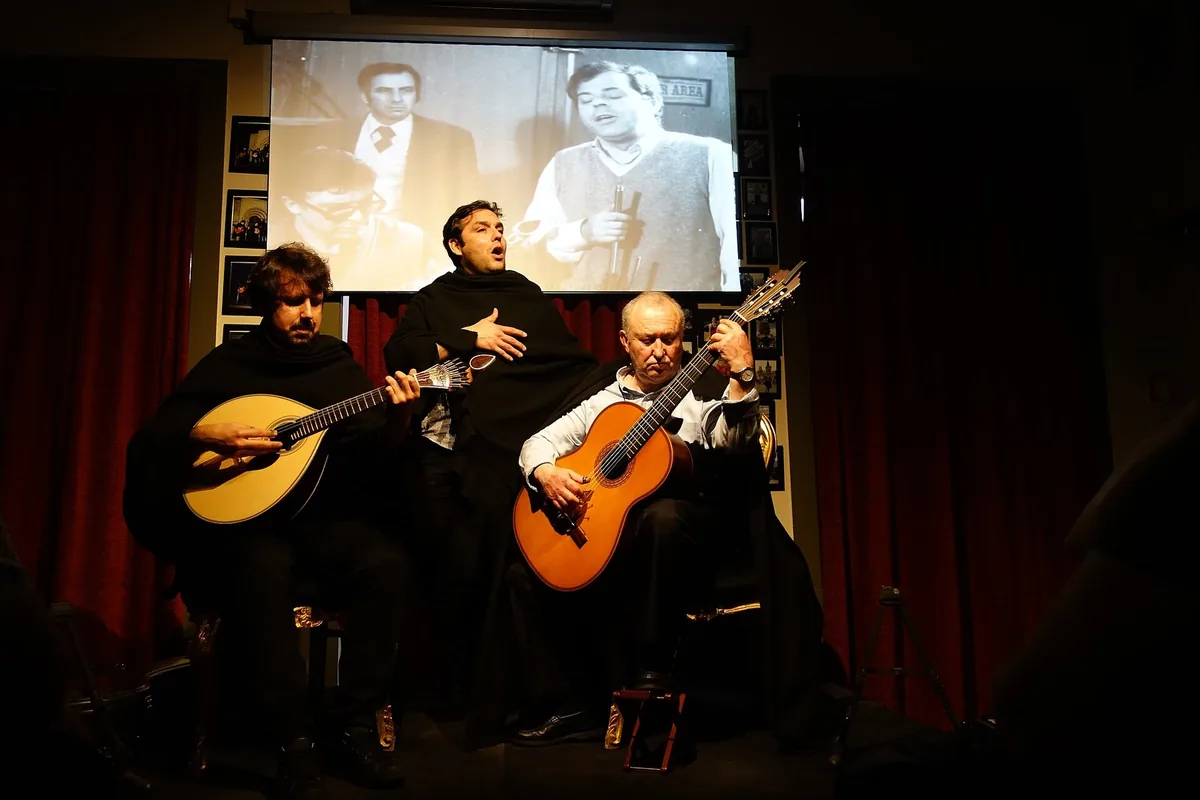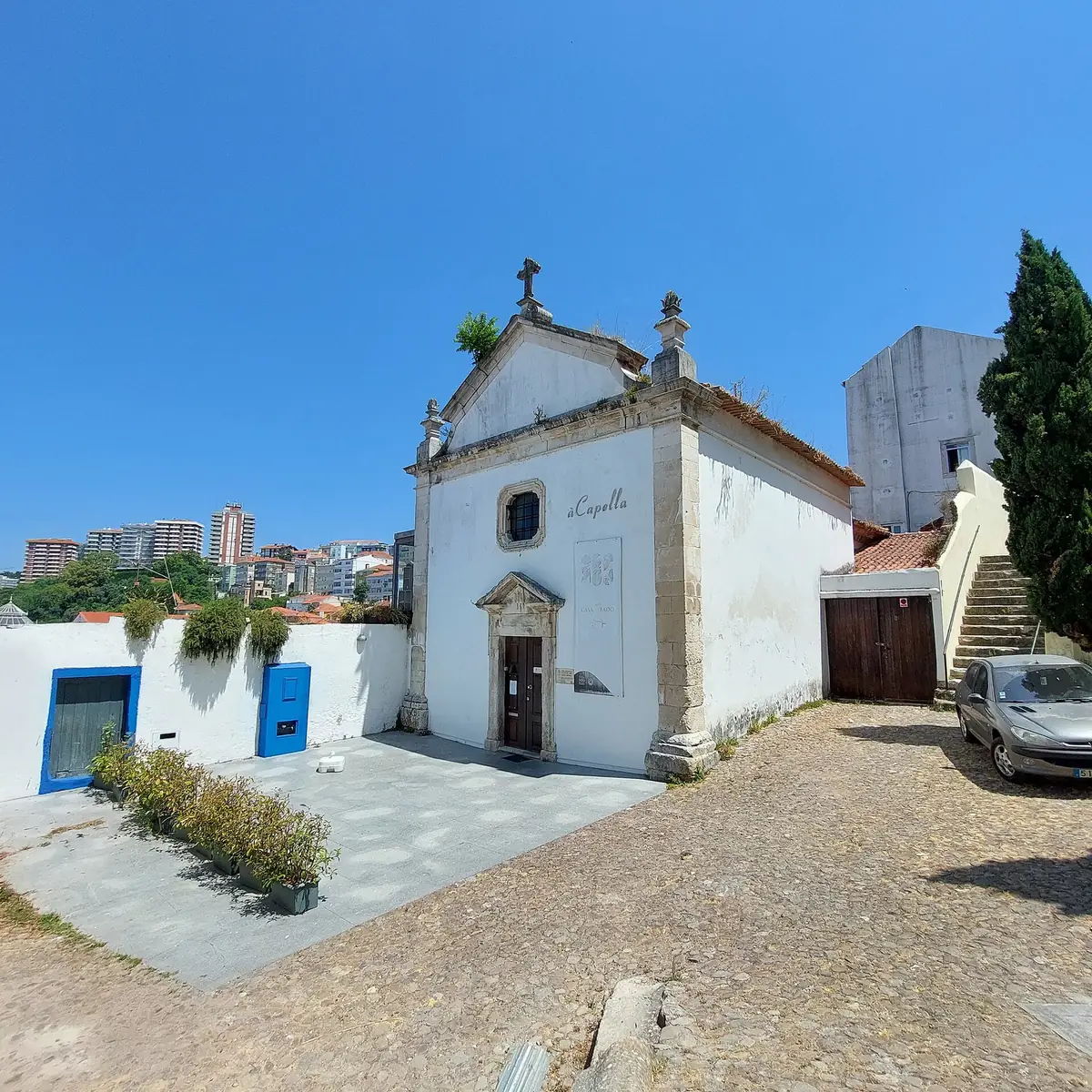

The room was a chapel. Not a converted warehouse dressed as one — an actual chapel, built in 1364, later turned into a café, and now the venue where Coimbra fado is sung three times a night on a hill full of student bars that do not sing anything. The acoustic is the point. A guitar in a stone room with a barrel roof does something no sound system attempts.
À Capella is on Rua Corpo de Deus in the Alta, minutes from the Sé Velha. It is the most atmospheric fado venue in the city and the one whose practical details we are least able to guarantee, for a reason set out below. Read the caveat before you build an evening on the times.
What is published, and the caveat
Frommer’s, the guidebook publisher, reports the following: the venue was “turned into a cafe from a chapel constructed back in 1364”; it opens daily 13:00–03:00; fado runs nightly at 21:30, 22:30 and 23:30; and there is a 5 EUR cover charge.
Here is the caveat, and it is not a small one. Frommer’s destination pages do not carry a visible publication or revision date. We cannot tell whether those times and that price were checked last month or several years ago, and a cover charge is exactly the sort of figure that moves.
So: we print them because a named guidebook published them, and we flag them because we cannot date them. Telephone or message the venue before you go, particularly if the 5 EUR matters to your evening or you are planning around a specific session.
No official website for the venue was located in our research, which is why this page rests on a third-party source in the first place.
That is a recurring pattern in Coimbra nightlife: the venues are small, the owners are running the room rather than a website, and the only published details come from outside writers passing through. It makes for thin pages and it is better to say so than to fill the space with confident guesses.
What Coimbra fado actually is
If you have heard fado in Lisbon, prepare to be corrected. The two traditions share a name and very little else.
Coimbra fado is sung by men, traditionally students and graduates of the university, in the black academic dress that gives the city its silhouette. Lisbon fado is the older city’s tradition and is open to women singers; Coimbra’s grew out of the serenade — music sung up at a window, or on the steps of the Sé Velha, by young men with a guitar and an academic grievance.
The instrument is different too. The Coimbra guitarra has its own tuning and a deeper, more ceremonial sound than the Lisbon version.
You will read that the audience coughs instead of clapping. It is repeated by almost every guide and we could not find a single source for it — no venue, no university department, no published account states it. We mention it because you will meet the claim; we do not repeat it as a rule. Clap if you want to: nobody we asked could point to a source for the alternative.
The annual peak is the Serenata Monumental on the cathedral steps during the Queima das Fitas in May, which is the same tradition at the scale of a city. Full background in our guide to Coimbra fado.
Which fado venue to choose
Coimbra has three documented options and they are genuinely different products.
À Capella is the late one, in the most extraordinary room, with three sessions running to nearly midnight. It suits an evening that starts with dinner and does not need to end early.
Fado ao Centro, on the Quebra-Costas stairway, is the explained one — a short ticketed show that introduces the tradition and the instrument. Its own site publishes neither times nor prices, which we cover on its page.
Café Santa Cruz is the free one: sessions at 18:00 and 22:00 daily, none at 22:00 on Sundays, inside a church deconsecrated in 1834.
If you are only doing one and want the room to be the memory, come here. If you want to understand what you are listening to, go to Fado ao Centro first and come here afterwards.
Practical notes
The address is a climb. Rua Corpo de Deus is in the Alta, and getting up there from the Baixa means either the stepped Rua do Quebra-Costas or the Elevador do Mercado, which rises 51 metres in two stages and runs Monday to Saturday 07:30–21:00 and Sundays and holidays 10:00–21:00.
Note the lift closes at 21:00 and the fado starts at 21:30. You can ride up before a late session but you will be walking down afterwards, on worn limestone cobbles, in the dark. Wear shoes with grip.
Eating first is a problem on this hill — it has very few kitchens. Fangas Mercearia Bar on the approach street does boards and small plates; otherwise eat in the lower town and come up.
No booking system is published. On a summer weekend a small stone room with three sessions will fill, so arrive for the start of one rather than in the middle of it.