
Be clear about what you are buying. Conímbriga itself costs 10.00 EUR and opens daily 10:00–18:00; you do not need a tour to get in. What you might need a tour for is the road, because the public bus runs three times a day in each direction and the last weekday service back leaves the ruins at 17:55.
That is the honest framing. A guided tour to Conímbriga is a transport product with a historian attached, and for travellers on tight schedules, with mobility constraints, or arriving at weekends when returns thin to two, it can be the difference between going and not going.
The independent route, in full
We give this first, because it works and it is cheap.
SIT line 209, Coimbra–Conímbriga, from Coimbra (Portagem). The operator is SIT-RC, not Transdev, whatever older guides say. Journey time about 37 minutes. On the timetable in force from 4 September 2026:
- Weekdays out: 09:00, 09:30, 12:30. Back: 13:25, 16:25, 17:55.
- Saturdays out: 09:30, 12:30, 15:30. Back: 13:25, 18:25.
- Sundays and holidays out: 09:30, 12:30, 15:00. Back: 13:55, 18:25.
The bus also stops at Santa Clara-a-Velha, the Convento de São Francisco and Condeixa-a-Nova bus terminal en route.
The 09:00 weekday out and 17:55 back is the pattern to aim for. The site needs two and a half to three hours; you will have the place largely to yourself in the morning and time in hand at the end. The fare is not published on the SIT pages we could reach, so we do not print one.
The full independent case is in the Conímbriga guide, and the day is built out hour by hour in the two-day itinerary.
When the tour is the right call
Weekends. Only two buses come back. The Saturday 13:25 return leaves you barely three hours on site including the walk from the stop; the alternative is 18:25, which is eight hours for a three-hour site. A tour removes that choice between rushed and stranded.
Mobility. The site states its position plainly and usefully: the museum has no architectural barriers and is accessible, with adapted toilets and a wheelchair available to borrow, while the ruins are not — “as Ruínas ainda não reúnem condições”. If getting to the site is itself difficult, door-to-door transport is worth paying for even though the ruins will remain hard going.
One-day visitors. If Coimbra is a stop rather than a stay — see the day trip from Lisbon — a tour combining the ruins with the Joanina Library compresses the whole region into a day. The platform lists exactly that product.
And the case against: if you have a weekday and a normal pair of legs, the 09:00 bus does the same job for a fraction of the cost.
What the listings say, and do not
The main Coimbra-based product is a private tour combining Conímbriga and the Joanina Library, priced on the platform at around 208 to 209 US dollars. It carries no rating at all.
That is worth stating carefully. Not rated is not the same as badly rated; it means nobody has reviewed it on that platform. But it also means you have no quality signal, at a price that is an order of magnitude above the bus. Ask the operator for references rather than assuming.
There is also a private Coimbra tour from Lisbon covering the university and the library, listed from Condeixa-a-Velha — the village Conímbriga sits beside — at around 599 to 603 US dollars, likewise unrated.
We will not print a firm price for any of these. During our research the same GetYourGuide products showed different “from” prices on pages loaded minutes apart, and review counts drifted too. Take the number from the booking page on the day.
What a guide actually adds at Conímbriga
More than at most Roman sites, because the best thing here is a system rather than an object.
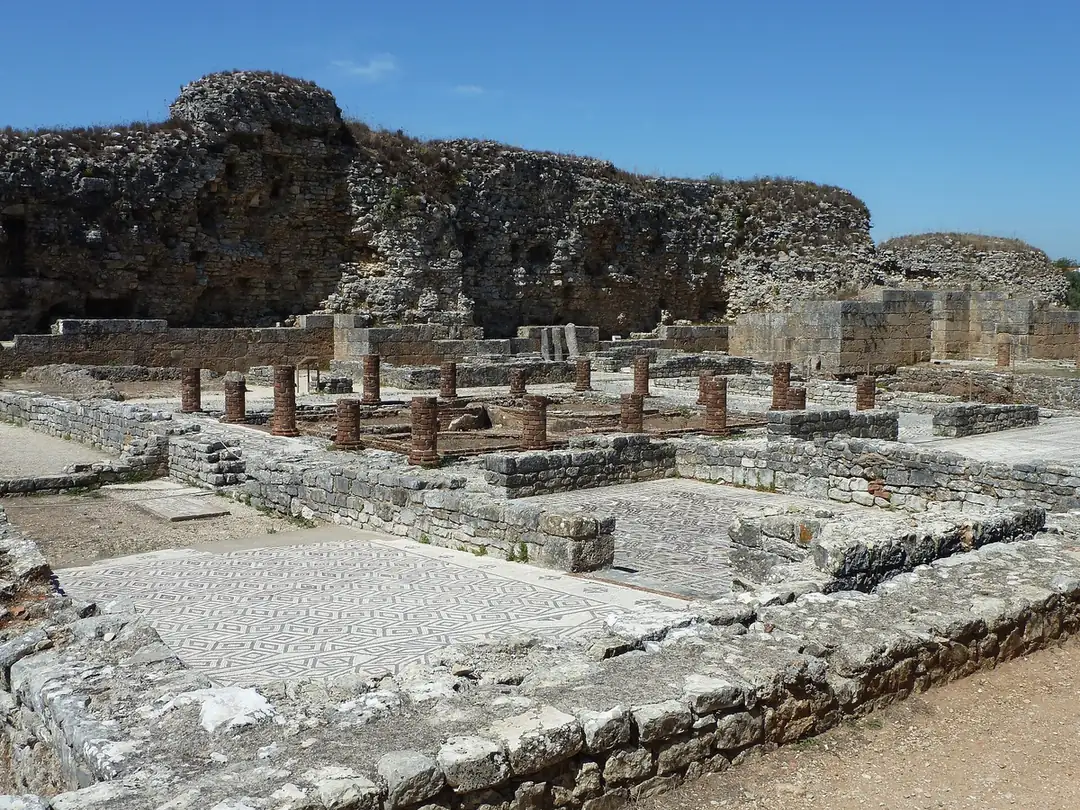
The Casa dos Repuxos — the House of Fountains — has its water gardens still working, and what you are looking at is a piece of engineering: the mosaics are in situ, laid around a hydraulic scheme that still functions. Without someone explaining the plumbing, it reads as decoration.
Then there is the name, which is the single best story on the site and one no label carries well. Coimbra is Conímbriga — the same word, arrived twice, as English Wiktionary puts it in calling them doublets. Roman Coimbra was Aeminium; when Conímbriga declined, the city inherited its neighbour’s name along with the bishopric. The parish history of the Sé Velha records Coimbra as an episcopal seat since the fifth century, succeeding neighbouring Conímbriga.
So the ruins are not a side trip from Coimbra. They are where the name of the city you are staying in came from, about sixteen kilometres down the road — and we say “about” deliberately, because no official source publishes the road distance. The practical guide lists the other figures nobody publishes.